Judo
Judo Techniques
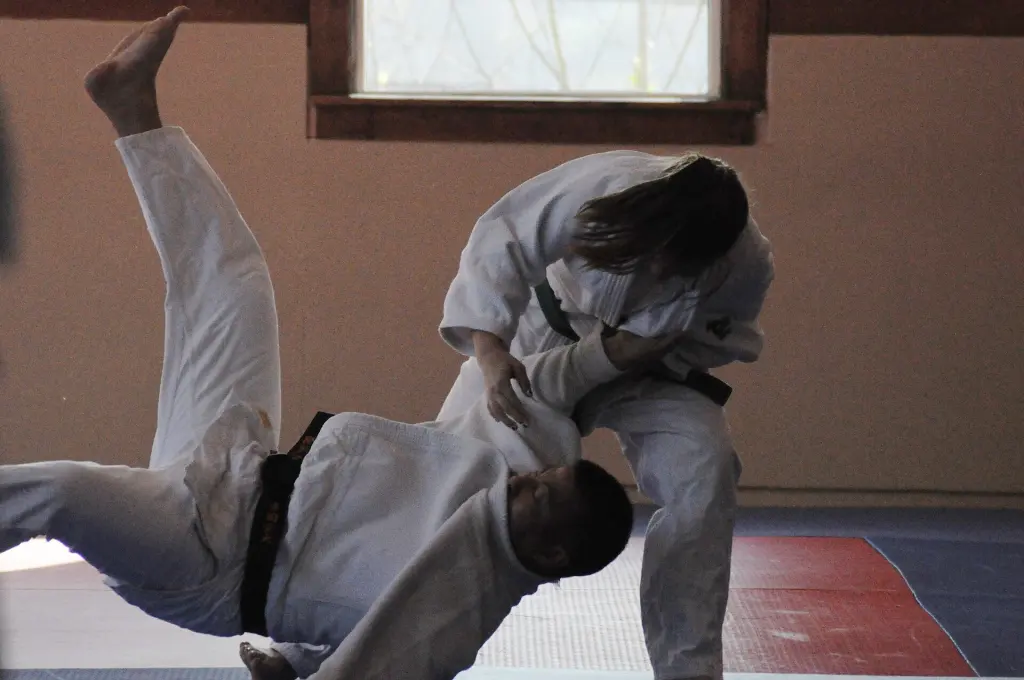
Image: Joe Mabel / Wikimedia Commons · CC BY-SA 3.0
Overview
Three branches. Different questions.
Classification identifies a technique. A syllabus organises learning. Event rules decide whether an action is permitted.
Nage-waza · 68
Tachi-waza · 47
Sutemi-waza · 21
Katame-waza · 32
Control techniques
Atemi-waza
Striking techniques
A separate branch outside the 100-name catalogue. Studied in formal kata; excluded from ordinary randori and contest.
Read the scope of atemi68 throws + 32 control techniques = 100 named techniques. Counts follow the Kodokan list dated 1 April 2017.
Browse the Judo Technique Directory →
At a glance
- Japanese
- 柔道の技
- Reading
- じゅうどうのわざ
- Romanisation
- jūdō no waza
- Martial art
- Judo
- Primary classification
- Nage-waza, katame-waza, atemi-waza
- Kodokan named catalogue
- 68 throwing techniques and 32 control techniques
- Technical authority
- Kodokan Judo Institute
- International contest authority
- International Judo Federation
Context
Judo techniques (柔道の技, jūdō no waza) are the organised methods through which Kodokan Judo studies throwing, control, and striking. The Kodokan's current named catalogue contains 68 nage-waza and 32 katame-waza, while atemi-waza form a separate third branch studied chiefly through kata. This classification preserves a wider technical curriculum than modern contest alone: a technique can remain part of official Kodokan nomenclature even when a particular application is restricted or prohibited by International Judo Federation rules. The catalogue therefore answers what Judo classifies; a competition rulebook answers the separate question of what may be used in a particular event. Together, these systems connect historical syllabus, dojo practice, pedagogy, and modern sport without treating them as identical.
How Judo techniques are classified
Kodokan teaching divides Judo technique into three broad branches. Nage-waza are throwing techniques; katame-waza are methods of holding, constricting, or controlling a joint; and atemi-waza are striking techniques. The Kodokan's published list of 100 named Judo techniques consists specifically of the 68 nage-waza and 32 katame-waza. Atemi remain part of the wider technical system but are not included in that total.
Classification identifies the principal mechanism or most conspicuous action of a standard form. It does not mean that a hand technique uses only the hands, or that a hip technique excludes the legs. Balance, posture, gripping, footwork, and whole-body movement remain involved throughout.
| Branch | Japanese | Function | Current named total |
|---|---|---|---|
| Nage-waza | 投技 | Throwing techniques | 68 |
| Katame-waza | 固技 | Holding, constriction, and joint-control techniques | 32 |
| Atemi-waza | 当身技 | Striking techniques studied in kata | Separate from the 100-technique catalogue |
Classification
Which branch and mechanism? Use the Kodokan taxonomy and Directory.
Learning system
How is material studied? The Gokyō, kata, ukemi, uchikomi and randori organise different aspects of learning.
Competition permission
What may be used here? Check the dated ruleset, age division and event notice.
Nage-waza
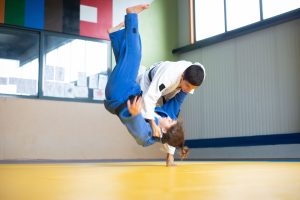
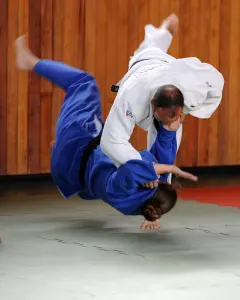
Nage-waza (投技) are throwing techniques. The Kodokan classifies 68: 47 tachi-waza, in which the thrower principally maintains a standing posture, and 21 sutemi-waza, in which the thrower deliberately sacrifices standing position.
The current Kodokan definitions describe representative forms rather than an exclusive execution for each name. Direction, grip, stance, and entry can change according to movement, body type, attack, or counterattack. Classification depends principally on the mechanism that produces the throw.
- Te-waza — hand techniques (16): The decisive action is classified primarily through the work of the hands or arms. Examples include seoi-nage, tai-otoshi, kata-guruma, and morote-gari.
- Koshi-waza — hip techniques (10): The hip or rear waist provides the principal loading, supporting, turning, or projecting mechanism. Examples include uki-goshi, o-goshi, tsurikomi-goshi, and harai-goshi.
- Ashi-waza — foot and leg techniques (21): These include sweeps, reaps, blocks, wheels, and counters. Examples include de-ashi-harai, o-soto-gari, o-uchi-gari, and uchi-mata.
- Ma-sutemi-waza — rear sacrifice techniques (5): The thrower sacrifices standing posture principally by falling onto the back. The group includes tomoe-nage, sumi-gaeshi, and ura-nage.
- Yoko-sutemi-waza — side sacrifice techniques (16): The thrower falls principally onto one side while directing or rotating the receiving partner. The group includes tani-otoshi, soto-makikomi, yoko-guruma, kani-basami, and kawazu-gake.
Katame-waza
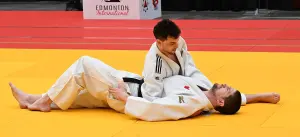
Katame-waza (固技) control the receiving partner's freedom through a hold, constriction, or joint control. The Kodokan recognises 32 techniques in three categories.
Although katame-waza are strongly associated with ne-waza, or groundwork, the terms are not exact synonyms. Ne-waza also includes entries, transitions, turnovers, escapes, and positional movement that may not constitute a named katame-waza.
- Osaekomi-waza — holding or pinning techniques (10): These control the receiving partner's upper body against the mat. Competition rules add positional and time requirements before a hold scores.
- Shime-waza — constriction or strangling techniques (12): These apply controlled pressure around the neck through the arms, legs, or judogi. The classified list includes do-jime, which is prohibited in current IJF competition.
- Kansetsu-waza — joint techniques (10): The Kodokan list includes elbow controls and ashi-garami, a leg-joint technique. Current IJF rules allow joint control only against the elbow and prohibit ashi-garami.
Atemi-waza
Atemi-waza (当身技) are strikes directed at vulnerable anatomical targets using parts of the hand, arm, knee, or foot. They belong to the recognised technical structure of Judo but are excluded from ordinary randori and modern Judo competition.
They are studied in controlled formal contexts, including Kime-no-kata, Kodokan Goshin-jutsu, and Seiryoku-Zen'yō Kokumin Taiiku. Their preservation shows that the technical record of Kodokan Judo is broader than Olympic or tournament practice. It does not provide a basis for introducing strikes into ordinary free practice.
The Gokyo and the modern Kodokan list
The Gokyō no Waza (五教の技, five groups of techniques) is a teaching syllabus for throwing techniques. It is not another name for the complete modern list. The Kodokan established an original 42-throw syllabus in 1895. It revised the syllabus in 1920, removing eight techniques and adding six to produce the present 40 throws, arranged as five groups of eight.
The older and revised Gokyo together accounted for 48 distinct names. As new or previously unnamed methods became common in randori, the Kodokan Technical Research Department formalised 17 additional throwing names in 1982, bringing the recognised total to 65 at that stage. The current Kodokan document, dated 1 April 2017, contains 68 nage-waza. The catalogue therefore records several historical layers rather than a single curriculum created at one moment.
A source discrepancy should be noted. A 2024 Kodokan presidential message gives 1922 for the Gokyo revision, but the dedicated Kodokan technique page, institutional chronology, Ministry of Education guide, and Japanese academic research all give 1920. This entry follows the dedicated institutional chronology and supporting scholarly literature.
How techniques are studied
The Kodokan identifies Kata in Judo and randori as Judo's two principal modes of technical practice. Kata uses agreed attacks, roles, order, and method so that particular principles can be examined. Randori permits freer attack, defence, variation, and adaptation within defined safety limits.
These methods are complementary. Repetition can refine posture and movement, but it does not by itself reproduce an unpredictable exchange. Randori develops adaptation, but it should not replace the controlled study required for difficult or restricted material.
- Ukemi develops the ability to receive falls safely.
- Uchikomi repeats the entry or fitting phase of a technique without completing every throw.
- Nagekomi includes controlled completion of repeated throws.
- Yakusoku-geiko uses agreed technical or movement conditions between partners.
- Randori tests selection, timing, combination, defence, and transition against a responsive partner.
- Shiai, or contest, applies technique within a particular ruleset.
Kuzushi, tsukuri and kake
Throwing instruction commonly analyses technique through three linked concepts. Kuzushi (崩し) is the creation or recognition of instability in the receiving partner's posture, balance, or ability to respond. Tsukuri (作り) is the preparation and positioning of both partners for the intended technique, including distance, body alignment, and entry. Kake (掛け) is the application or completion of the throwing action.
This is an analytical model, not necessarily three visibly separate beats. A practitioner may create imbalance while entering, or continue altering balance during the final action. Japanese movement research has found substantial overlap among the phases in several throws, supporting the view that fluent technique integrates them rather than pausing between them.
Technique and competition rules
The rules reviewed for this entry are the International Judo Federation Sport and Organisation Rules, version 14 August 2026, for IJF World Judo Tour competition. They do not define the whole of Judo practice. National federations, youth competitions, veterans' events, kata events, school programmes, and individual dojo may apply additional or different restrictions.
The current SOR expressly identifies four Kodokan-classified techniques that are not allowed in IJF events: kawazu-gake, kani-basami, do-jime, and ashi-garami. The rules also penalise standing leg grabs with shido. Hooking or holding the legs with a hand or arm, gripping the trousers, or touching below the top of the inner thigh is prohibited while an action remains in tachi-waza.
Consequently, morote-gari, kuchiki-taoshi, kibisu-gaeshi, and leg-gripping forms of sukui-nage remain in the Kodokan catalogue while their standard direct entries cannot be used under current IJF standing rules. Other versions of a classified technique may remain legal if they avoid the prohibited action and satisfy the rules. Legality attaches to what the competitor does, not merely to the technique name later assigned.
For kansetsu-waza, IJF competition permits control of the elbow but not attacks against other joints. Dangerous standing applications, uncontrolled combinations with throws, head-diving actions, and specified neck or spinal pressures can produce penalties up to hansoku-make. Cadet rules add restrictions, including penalties for using the head to throw or defend and for reverse seoi-nage.
Japanese youth rules are more restrictive. The All Japan Judo Federation's rules effective 1 April 2026 prohibit both shime-waza and kansetsu-waza in domestic contests for middle-school-aged competitors and younger, along with specified dropping, gripping, and winding actions. Current rules should always be checked for the governing organisation, age division, and event.
Sources
- Kodokan Judo Institute, Judo Technique Names.
- Kodokan Judo Institute, Names of Judo Techniques.
- Kodokan Judo Institute, Definitions of Judo Techniques.
- Kodokan Judo Institute, History of the Throwing-Technique List.
- Kodokan Judo Institute, Kata.
- All Japan Judo Federation, Number of Judo Techniques.
- All Japan Judo Federation, Regulations and Rules.
- International Judo Federation, Sport and Organisation Rules, 14 August 2026.
- Ministry of Education, Culture, Sports, Science and Technology, Judo Teaching Guide.
- Kodokan Judo Institute, Chronology.
- Kodokan Judo Institute, New Year's Message 2024.
- All Japan Judo Federation, Youth Competition Refereeing Rules, effective 1 April 2026.
- Akiyama Hidehiro, Technical Development of Judo Techniques and the Gokyo no Waza.
- Ishii Takanori et al., A Basic Study of Kuzushi in Judo Nage-waza.
Last updated: