Food Culture
Nattō
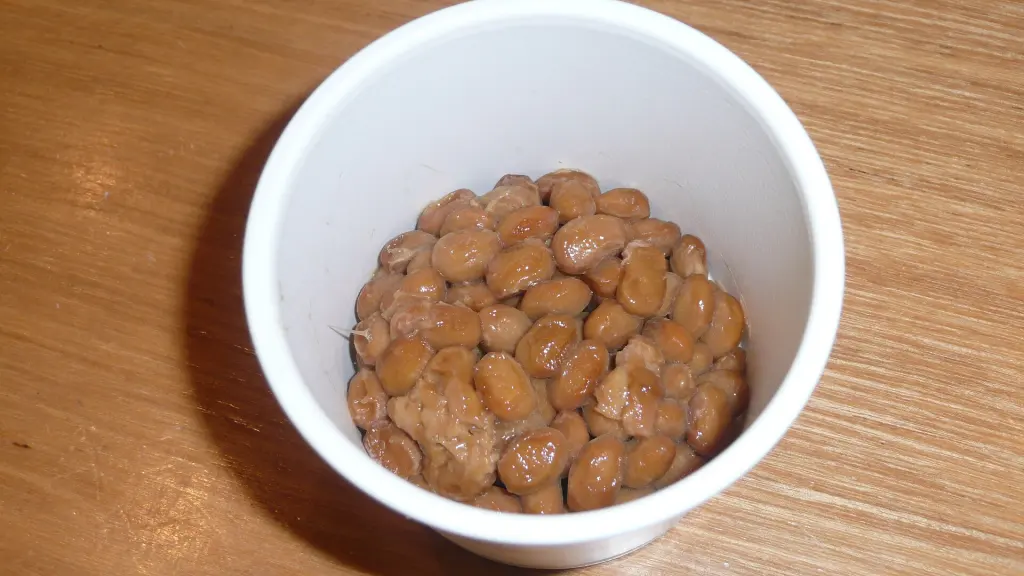
Image: Brücke-Osteuropa / Wikimedia Commons · CC0 1.0
Nattō is a Japanese food made by fermenting cooked soybeans with strains of Bacillus subtilis commonly called nattō bacteria. The best-known form, itohiki nattō, has a strong aroma and elastic threads created largely by poly-γ-glutamic acid. It is often mixed with soy sauce, mustard, or other condiments and eaten with rice, especially at breakfast, but it also appears in sushi, noodles, soups, and regional preparations. Modern production usually inoculates steamed beans with a selected starter, incubates them under controlled conditions, and then cools and matures the product. Earlier makers used rice straw, which naturally carried suitable bacteria, but popular origin stories are not secure historical proof. Nattō belongs to Japanese fermentation while remaining distinct from kōji-based soybean foods such as miso and soy sauce.
Overview
| Japanese name | 納豆 |
|---|---|
| Romanization | Nattō |
| Main ingredient | Cooked soybeans |
| Primary microorganism | Bacillus subtilis var. natto |
| Characteristic texture | Sticky threads rich in poly-γ-glutamic acid |
| Common serving | Mixed with condiments and eaten with cooked rice |
Name and scope
In present-day Japanese, nattō usually means sticky itohiki nattō. The broader historical vocabulary also includes non-sticky fermented soybean products such as tera nattō, hama nattō, and daitokuji nattō. Those saltier products are closer to fermented soybean pastes or preserved beans and follow different microbial processes.
The distinction matters because English descriptions sometimes merge all fermented soybeans into one category. Itohiki nattō is bacterial and generally unsalted during fermentation; miso and soy sauce depend on kōji, salt, and longer maturation.
Production process
Soybeans are cleaned, soaked, and cooked until soft. While still warm, they are inoculated with a selected B. subtilis var. natto culture and placed in shallow containers that allow oxygen exchange. Controlled warm incubation supports bacterial growth across the bean surfaces.
After fermentation, cooling slows activity and a period of refrigerated maturation stabilizes aroma and texture. Bean variety and size, soaking, steaming pressure, starter strain, oxygen, temperature, humidity, and time all affect the product. Commercial procedure is designed around hygiene and consistency rather than spontaneous spoilage.
Threads, aroma, and flavour
The characteristic threads consist largely of poly-γ-glutamic acid together with other extracellular materials produced by the bacteria. Stirring draws the matrix into long strands. Bacterial enzymes also break soybean proteins into smaller compounds that contribute savoriness and aroma.
Flavor varies from mild and nutty to sharp, earthy, or ammonia-like depending on beans, strain, processing, age, and serving temperature. A strong smell is characteristic, but it is not a complete test of quality or safety. Producers manage texture and aroma through strain selection and process control.
History, legends, and straw
Several legends describe cooked soybeans fermenting accidentally in rice straw during military travel, often naming the eleventh-century warrior Minamoto no Yoshiie. Such stories explain the traditional pairing of beans and straw but cannot establish a single inventor or date.
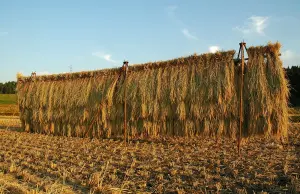
Straw contains Bacillus spores and provided both inoculation and packaging for earlier nattō. Scientific isolation of suitable bacteria and commercial starter production in the late nineteenth and early twentieth centuries made factory production more predictable. Mito became nationally associated with nattō through regional soybean production and railway sales after the Mito Line opened in 1889.
Forms and regional products
Whole-bean nattō varies in soybean size and firmness. Hikiwari nattō uses split, dehulled beans and develops a different surface area and texture. Warazuto nattō is wrapped in straw, while modern retail packs commonly use expanded polystyrene or paper-based containers. Dried nattō is eaten as a snack or ingredient.
Regional products include Mito's small-bean styles and soboro nattō, which combines nattō with dried strips of pickled daikon. These identities may describe ingredients, packaging, or local history rather than different bacterial species.
Eating and cooking
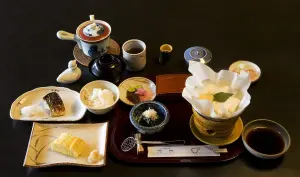
A common serving mixes nattō vigorously with soy sauce or a packaged seasoning and karashi mustard, then places it over rice. Chopped scallion, nori, egg, grated yam, kimchi, or other additions are optional. Preferences for mixing and accompaniments vary among households.
Nattō also appears in makizushi, miso soup, omelettes, pasta, toast, fried dishes, and school or regional meals. Heat changes aroma, texture, and living bacterial counts, but a cooked preparation remains culturally identifiable as nattō; the food is not defined only by probiotic claims.
Nutrition, storage, and health claims
Nattō retains soybean protein and fiber and can contain vitamin K2 and fermentation-derived compounds. Research investigates associations and biological effects, but these findings do not make nattō a treatment or guarantee an outcome for an individual. People taking vitamin K–sensitive anticoagulants should follow professional medical advice.
Packaged nattō is normally refrigerated and carries a date and storage instructions. Continued fermentation can intensify smell, bitterness, and surface changes. Consumers should follow the producer's guidance rather than treating fermentation as protection against all spoilage.
Sources
- Ministry of Agriculture, Forestry and Fisheries, Natto in Traditional Foods in Japan.
- Nagai, Overview of Studies on Bacillus subtilis (natto) Bacteriophages and the Prospects.
- Inatsu, Kimura and Itoh, Characterization of Bacillus subtilis Strains Isolated from Fermented Soybean Foods.
- Katayama, Changes in Bioactive Components During Natto Fermentation and Their Health Benefits.
Last updated: