Japanese Writing
Kanji
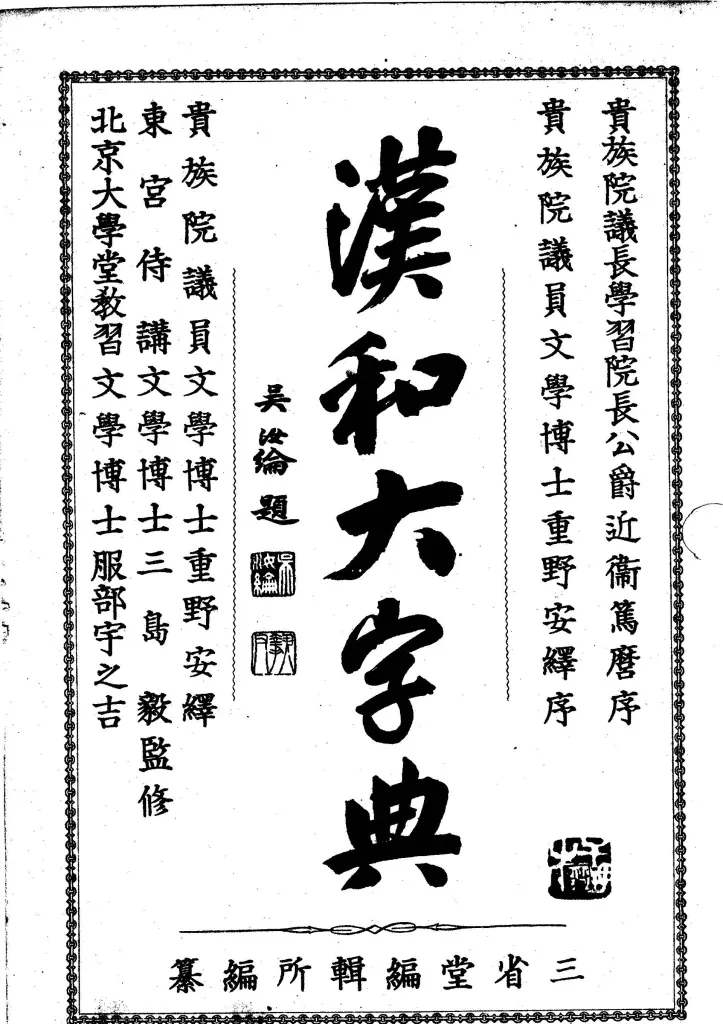
Image: Sanseidō / Wikimedia Commons · Public domain
Kanji are the Chinese-derived characters used within the Japanese writing system to represent words and meaningful word elements. A character can participate in native Japanese readings called kun’yomi, Sino-Japanese readings called on’yomi, and specialized name or historical readings; the correct choice normally depends on the word and context. Kanji combine with one another in compounds and with hiragana in inflected words, annotations, and mixed-script prose. They are not simply pictures, and one character does not always correspond to one meaning or spoken syllable. Official lists such as the Jōyō Kanji Table guide common public usage and education, but names, literature, historical documents, place-names, and specialist fields use characters and forms beyond those lists.
Overview
| Japanese name | 漢字 |
|---|---|
| Romanization | Kanji |
| Literal sense | Han characters |
| Writing-system type | Logographic or morphographic character system |
| Principal reading classes | On’yomi and kun’yomi |
| Common-use reference | Jōyō Kanji Table, 2,136 characters |
Name, definition, and scope
Kanji literally means “Han characters.” The Japanese term identifies Chinese characters as used in Japanese, including inherited forms, Japan-specific forms and usages, and characters shared with other East Asian writing traditions. The English label “ideograph” can be misleading because characters represent morphemes and spoken words, not abstract ideas detached from language.
A printed character is an abstract writing unit realized through particular glyphs. Handwriting, calligraphic styles, typefaces, historical forms, Japanese simplified forms called shinjitai, and older forms called kyūjitai may differ while remaining related. Not every visual difference creates a separate character.
Transmission and adaptation
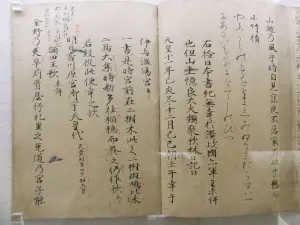
Chinese writing entered the archipelago through exchanges involving the Korean Peninsula and the wider Sinosphere. Inscriptions, diplomatic documents, Buddhist texts, administrative records, and imported books supported its adoption before writing in Japanese became widespread.
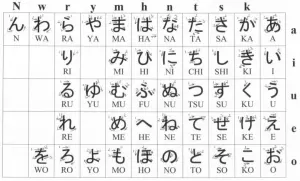
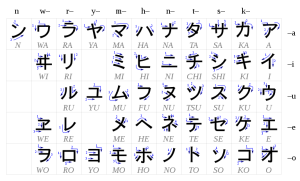
Because Japanese grammar and phonology differ from Chinese, readers developed systems for interpreting Chinese texts in Japanese order and for mapping characters onto Japanese words. Characters were also borrowed for sound in Man’yōgana, a practice central to the later development of kana.
Meanings and readings
On’yomi reflect layers of Sino-Japanese pronunciation borrowed at different times and through different textual traditions. Kun’yomi associate a character's meaning with a native Japanese word. A character may have several readings of either type, while some readings occur only in a few established words.
Readings belong to words and constructions, not to isolated characters alone. 今日 can be read kyō, “today,” even though that pronunciation is not obtained by mechanically joining the most familiar readings of its two characters. Names are especially variable and should not be guessed solely from spelling.
Compounds, okurigana, and furigana
Multi-character compounds often represent Sino-Japanese vocabulary, while a kanji stem followed by hiragana okurigana can show inflection and help distinguish readings. 食べる, taberu, combines 食 with the hiragana ending べる; different forms of the verb change the kana while retaining the stem character.
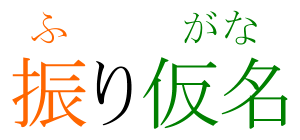
Furigana gives a reading in small kana beside or above kanji. It supports children, language learners, rare characters, names, historical texts, and creative writing. In literature and manga, furigana can deliberately pair one written meaning with a different spoken expression, so it is not always a neutral pronunciation aid.
Forms, radicals, and indexing
Kanji are conventionally described through strokes and components. Radicals provide one historical and practical indexing system, but a component's visual position does not guarantee a fixed meaning or sound. Shape, stroke order, and balance matter for recognition and handwriting without reducing every character to one compositional formula.
Dictionaries may organize kanji by radical and remaining stroke count, pronunciation, school grade, frequency, or electronic code. Digital handwriting recognition and component search offer additional routes. Each system solves a lookup problem; none is a complete theory of character formation.
Common-use lists and education
Japan's 2010 Jōyō Kanji Table lists 2,136 characters and associated readings as a guide for ordinary social use in laws, public documents, newspapers, magazines, broadcasting, and similar contexts. Its preface explicitly leaves room for specialist fields, personal expression, proper names, and historical works.
School curricula stage kanji learning by grade, but knowing a list is not the same as mastering vocabulary. Literacy depends on compounds, readings, register, sentence context, handwriting and recognition skills, and experience with names and subject-specific terms. Characters outside the Jōyō list are not automatically obsolete or incorrect.
Printing, encoding, and variation
Printing technologies encouraged standard type forms while preserving distinctions between handwritten and printed shapes. Twentieth-century character reform introduced simplified shinjitai for many common characters, but traditional forms remain visible in names, historical texts, signage, and cultural contexts.
Unicode encodes Han characters across Chinese, Japanese, Korean, and historical uses through Han unification. A shared code point can be displayed with regionally appropriate glyphs depending on language and font. Encoding unity does not mean that every printed shape, national standard, reading, or usage is identical.
Sources
- Yoko Hasegawa, Writing System, in Japanese: A Linguistic Introduction.
- The Unicode Standard, Chapter 18: East Asia.
- Agency for Cultural Affairs, Japanese Language Policy and Education.
- Agency for Cultural Affairs, Jōyō Kanji Table, 2010.
- National Museum of Japanese History, A Connection through Characters.
Last updated: