Japanese Writing
Katakana
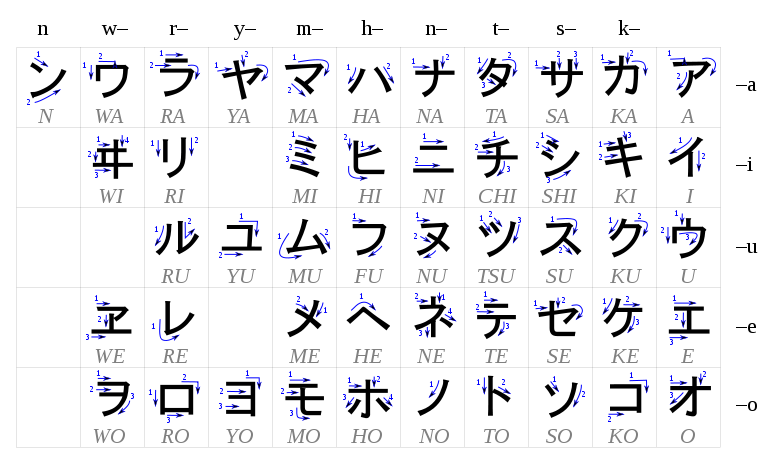
Image: Pmx / Wikimedia Commons · CC BY-SA 3.0
Katakana is one of the two kana scripts used in the Japanese writing system. Its characters represent the same basic morae as hiragana but have different shapes and conventional functions. Katakana developed from abbreviated parts of Chinese characters used as phonetic annotation, particularly in scholarly and religious reading practices. Modern text commonly uses it for words borrowed from languages other than Chinese, many foreign names, scientific and technical terms, animal and plant names in selected contexts, sound symbolism, and visual emphasis. These are tendencies, not a rule that every foreign or emphasized expression must use katakana. Historical documents also employed the script in official, military, educational, and mixed kanji-katakana styles that differ from present-day publishing conventions.
Overview
| Japanese name | 片仮名 or カタカナ |
|---|---|
| Romanization | Katakana |
| Script type | Moraic kana script |
| Historical basis | Abbreviated components of phonographically used kanji |
| Basic modern inventory | 46 commonly taught base signs |
| Common roles | Loanwords, names, transcription, sound symbolism, and emphasis |
Name, form, and scope
Katakana means “fragmentary kana,” referring to forms developed from selected parts of source characters. Its modern printed appearance is comparatively angular, although manuscripts, typefaces, handwriting, and historical forms show substantial variation.
Like hiragana, katakana is better described as moraic than alphabetic. Corresponding signs such as か and カ normally represent the same sound unit, but script choice carries information about word history, register, genre, and visual emphasis.
Development from annotation
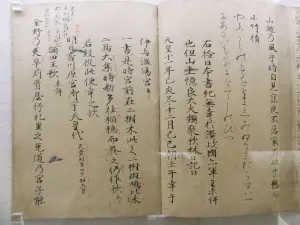
Katakana grew from abbreviated marks based on kanji used phonetically. Buddhist monks and other readers added compact signs to Chinese texts to indicate Japanese readings, grammatical order, or pronunciation. Different communities initially used multiple forms rather than one national inventory.
Recognizable katakana developed during the early medieval centuries alongside hiragana. It should not be described as an instantaneous invention or as the work of a single religious institution; the surviving evidence reflects distributed annotation practices and later standardization.
Historical textual roles
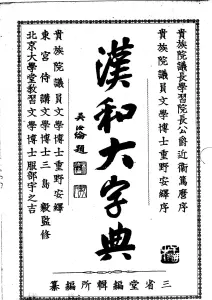
For long periods, katakana appeared with kanji in commentaries, scholarly texts, official writing, legal materials, dictionaries, and language study. Kanbun reading marks and kana helped readers transform the order and grammar of Literary Chinese into a Japanese reading.
Modern associations with foreign loanwords became especially prominent amid expanded translation, science, technology, mass schooling, and print. Before postwar conventions, official and military documents often used kanji-katakana mixtures where contemporary prose would normally use hiragana.
Loanwords and names
Katakana commonly writes gairaigo, words borrowed mainly from languages other than Chinese, such as テレビ, terebi, “television.” It is also widely used to transcribe non-Japanese personal and place-names. Adaptation follows Japanese phonological patterns, so spelling does not reproduce every contrast in the source language.
Not every word of foreign origin appears in katakana. Older borrowings may be written in hiragana or kanji, and Chinese-derived vocabulary usually follows kanji conventions. Brand names and personal preferences can choose among scripts for identity or design.
Technical terms, emphasis, and sound symbolism
Scientific writing may use katakana for taxonomic names, technical labels, or terms whose visual separation aids reading. Advertising, signage, fiction, and manga can use it for emphasis, mechanical or nonhuman speech, accents, and stylistic distance.
Sound-symbolic words frequently appear in katakana, especially for sharp, external, or visually emphatic effects, but hiragana is also common. The choice can influence tone and texture; it does not classify every sound word by an objective acoustic rule.
Sounds, small kana, and prolonged vowels
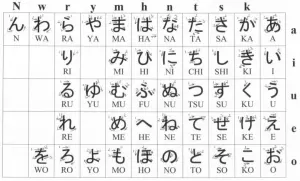
The basic katakana inventory parallels hiragana, with dakuten, handakuten, small ャ・ュ・ョ, and small ッ. The prolonged sound mark ー is especially common in katakana. Combinations such as ファ, ティ, and ヴァ expand transcription options for foreign sounds.
These combinations approximate sounds within Japanese phonology and vary by era, dictionary, community, and lexical convention. Katakana extensions also support the transcription of Ainu and other languages, demonstrating that the script's uses extend beyond borrowed English vocabulary.
Standardization and digital forms
Print and education reduced earlier variant forms and established the modern gojūon inventory. ヰ and ヱ are obsolete in ordinary modern spelling, though they persist in historical text, names, and deliberate stylistic use. Orthographic guidance also addresses how foreign sounds should be represented.
Unicode includes standard katakana, phonetic extensions, small kana extensions, and compatibility forms. Halfwidth katakana arose from constrained telecommunications and computer environments and remains encoded for compatibility. Fullwidth and halfwidth are typographic forms, not separate spoken syllabaries.
Sources
- Yoko Hasegawa, Writing System, in Japanese: A Linguistic Introduction.
- The Unicode Standard, Chapter 18: East Asia.
- Bjarke Frellesvig, Writing and Sources, in A History of the Japanese Language.
- NINJAL, A Discovery in the History of Research on Japanese Kana Orthography.
- The Japan Foundation, Hiragana and Katakana Syllabary Chart.
Last updated: