Japanese Writing
Man’yōgana
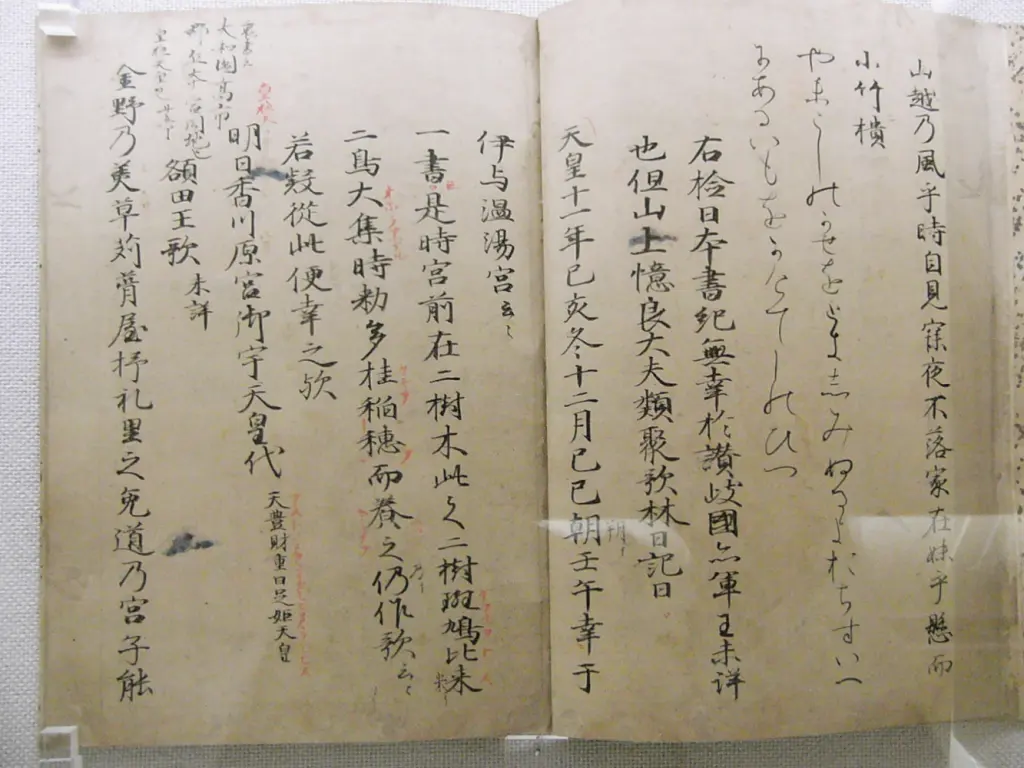
Image: Tokyo National Museum; photograph by ReijiYamashina / Wikimedia Commons · CC BY-SA 3.0
Man’yōgana is a modern scholarly term for the use of Chinese characters chiefly for their phonetic value in writing early Japanese. It is named after the eighth-century Man’yōshū, where characters can represent Japanese words through meaning, sound, or combinations of both. Unlike modern hiragana and katakana, Man’yōgana used complex full characters and allowed multiple signs for the same mora. The evidence is crucial for reconstructing Old Japanese pronunciation and grammar, but the system was not one uniform alphabet with a fixed national chart. Cursive transformations of some phonographic characters contributed to hiragana, while abbreviated components contributed to katakana. Related phonographic uses of Chinese characters elsewhere in East Asia also complicate stories of a purely isolated invention.
Overview
| Japanese name | 万葉仮名 |
|---|---|
| Romanization | Man’yōgana |
| Principal period | Especially the Nara period and early Heian period |
| Writing principle | Chinese characters used chiefly for phonetic value |
| Named after | The Man’yōshū poetry anthology |
| Historical legacy | A major source for the development of hiragana and katakana |
Definition and terminology
Man’yōgana combines Man’yō, referring to the Man’yōshū, and kana, phonographic signs. The label was created after the historical practice it describes. Writers of the eighth century did not necessarily understand themselves as using one system under this name.
A character counted as Man’yōgana when its sound value, rather than its ordinary lexical meaning, performs the relevant writing function. The same graph may be used semantically in one passage and phonetically in another, so classification depends on context.
Early writing in Japanese
Chinese characters first served texts in Chinese and names or inscriptions associated with the archipelago. As writers sought to record Japanese language material, they developed combinations of semantic character use, phonetic borrowing, reading marks, and syntactic adaptation.
Writing in Japanese is attested from the fifth century, while substantial surviving materials become more common from the seventh and eighth centuries. Wooden tablets, inscriptions, chronicles, poems, ritual texts, and administrative records reveal practices that differ by medium and purpose.
Sound values and graphic choice
A character could be selected because a Chinese-derived or Japanese reading approximated the desired Japanese sound. Writers sometimes used one character for one mora and sometimes combined strategies. Multiple characters could represent the same mora, creating a large and variable inventory.
Graphic choice could also interact with meaning, association, visual play, and poetic effect. Modern transcriptions that replace each sign with standardized kana make a poem easier to read but conceal some of the original orthographic decisions.
The Man’yōshū
The Man’yōshū contains more than 4,500 poems compiled in the eighth century from materials spanning several generations. Its writing mixes logographic characters, phonographic characters, and forms of abbreviation, making the anthology central to the study of Man’yōgana.
The surviving text comes through later manuscripts and editorial traditions rather than one original compilation copy. Readers rely on philology, commentary, historical spelling, meter, and comparison among witnesses. A later manuscript image can illustrate transmission but should not be mistaken for the lost eighth-century page.
Old Japanese and phonological evidence
Patterns in character choice preserve sound distinctions that later disappeared. Scholars use these distributions to reconstruct the vowel system and morphology of Old Japanese, often described through the distinction between A and B series in certain syllables.
Reconstruction is an analytical model, not a recording of speech. Character values, dialect differences, scribal convention, chronology, and the limits of surviving evidence create continuing debate. Modern kana pronunciation should not simply be projected backward onto every Man’yōgana sign.
Korean Peninsula and East Asian context
The transmission of literacy to the archipelago involved scribes, texts, teachers, religious communities, and diplomatic relations across the Korean Peninsula and China. Korean writing traditions also adapted Chinese characters phonographically and semantically to represent local languages.
Scholars disagree over how particular peninsular practices relate to the formation of Man’yōgana. Evidence supports a connected East Asian history, but it does not justify reducing Japanese practice to a single imported table or assigning it to one legendary inventor.
From Man’yōgana to kana
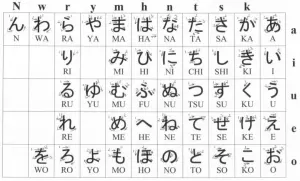
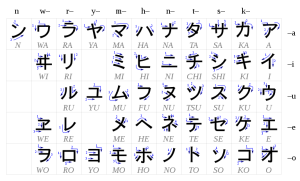
From the late Nara into the Heian period, cursive writing of whole phonographic characters gradually produced forms associated with hiragana. Abbreviating selected components in textual annotation contributed to katakana. Both processes simplified writing while separating phonographic signs more clearly from full kanji.
Development was neither linear nor immediately standardized. Full phonographic characters, cursive forms, abbreviated marks, and mixed practices coexisted. Later print and education selected principal kana shapes, while hentaigana and historic katakana forms preserve traces of the earlier diversity.
Sources
- Bjarke Frellesvig, Writing and Sources, in A History of the Japanese Language.
- NINJAL, A Discovery in the History of Research on Japanese Kana Orthography.
- John R. Bentley, The Origin of Man’yōgana.
- National Diet Library Newsletter, Why Was Man’yōshū Written Using Only Kanji?.
- NINJAL, Corpus of Historical Japanese: Nara Period Series.
Last updated: