People
Ishikawa Kazumasa
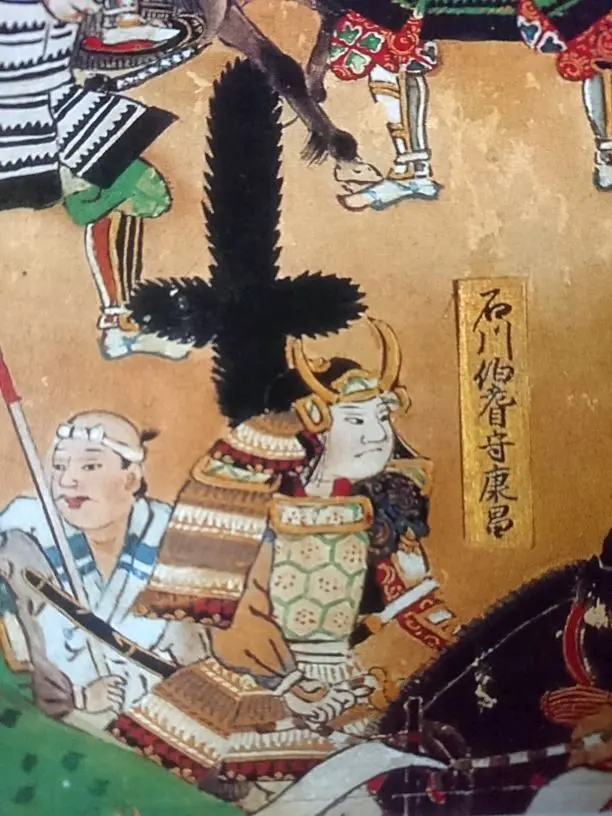
Image: Unknown artist / Wikimedia Commons / Nagashino Battle Screens, Naruse family version · Public domain
Ishikawa Kazumasa (石川数正, died 1592) was a Sengoku-period warrior and administrator who served Matsudaira Motoyasu, later Tokugawa Ieyasu, before leaving Tokugawa service for Toyotomi Hideyoshi in 1585. He acted in command and diplomatic roles in Mikawa, became castellan of Okazaki, and entered Matsumoto under Hideyoshi in 1590. There he and his son Yasunaga advanced the castle and castle-town works associated with Matsumoto Castle. Kazumasa's birth year and the reason for his departure remain uncertain; later narratives that present him simply as a traitor, secret peace broker, or cause of a Tokugawa military reorganisation go beyond what surviving evidence securely proves. His career shows how service, negotiation, territory, and allegiance shifted during Japan's unification wars.
Overview
| Japanese | 石川数正 |
|---|---|
| Romanization | Ishikawa Kazumasa |
| Born | Year uncertain; traditionally associated with Ogawa Castle in Mikawa |
| Died | 1592 |
| Period | Sengoku and Azuchi-Momoyama periods |
| Early allegiance | Matsudaira Motoyasu / Tokugawa Ieyasu |
| Principal roles | Senior retainer, negotiator, West Mikawa commander, Okazaki castellan |
| Change of allegiance | Left Okazaki for Toyotomi Hideyoshi on November 13, 1585 |
| Later lordship | Matsumoto, from 1590 |
Names, dates, and evidence
Kazumasa's name is written 石川数正. He held court and provincial titles recorded in later sources, but the common English form uses his personal and family names. Aichi Prefecture's historical guide gives his life as an unknown birth year to 1592; the frequently repeated year 1533 should therefore not be treated as secure.
Accounts of his life combine contemporary or near-contemporary records, later military chronicles, domain histories, genealogies, and modern interpretation. They agree on major career transitions more readily than on motives, private conversations, or a continuous portrait of personality.
Early service in Mikawa
The Ishikawa family belonged to the Mikawa networks that served the Matsudaira house. Kazumasa accompanied the young Matsudaira Motoyasu during the years when the Imagawa held him in Suruga and continued in service as Motoyasu established independence after 1560.
Official regional accounts connect Kazumasa with negotiations involving Motoyasu's wife and son, who remained in Imagawa territory, and with the Matsudaira alliance with Oda Nobunaga. These episodes show the importance of hostages and diplomacy, but compressed commemorative narratives should not be read as complete transcripts of who decided every term.
Command, negotiation, and Okazaki
Kazumasa rose alongside Sakai Tadatsugu as one of Ieyasu's senior retainers. Sources describe him as a leader in western Mikawa, a participant in military campaigns, and an intermediary in negotiations with other powers. The combination of armed command and correspondence was normal for high-ranking retainers rather than a contradiction between soldier and diplomat.
After Ieyasu shifted his principal residence eastward, Kazumasa served at Okazaki, the older Matsudaira centre. By 1585 the National Archives identifies him as Okazaki castellan. His access to plans, personnel, and negotiations later gave his departure political and military significance.
The departure of 1585
After the Komaki-Nagakute campaign, Ieyasu and Hideyoshi continued a tense process of negotiation. The National Archives records that on November 13, 1585, Kazumasa left Okazaki with members of his family and placed himself under Hideyoshi. Contemporary political pressure explains why the event mattered, but it does not by itself disclose his motive.
Later explanations describe ambition, fear of factional rivals, recognition of Hideyoshi's supremacy, a deliberate sacrifice for peace, or some combination of these. None should be presented as proven without attribution. The claim that Ieyasu changed his military system because Kazumasa knew Tokugawa methods is likewise a later report, not a directly documented order caused by one man.
Service under Hideyoshi
Hideyoshi accepted Kazumasa and granted him territory in Izumi. The transfer made him part of a rapidly expanding Toyotomi order that reassigned lords, demanded service, and reorganised strategic regions after conquest. It also turned a former Tokugawa insider into a visible symbol of changing allegiance.
In 1590, after the Odawara campaign and Ieyasu's transfer to the Kantō, Hideyoshi moved Kazumasa to Matsumoto in Shinano with a holding recorded at about 80,000 koku. The move placed him in a former Ogasawara territory on routes connecting central Honshū.
Matsumoto Castle and town
Kazumasa and his son Yasunaga continued work begun under Ogasawara Sadayoshi, enlarging the castle, moats, gates, warrior districts, and town. Cultural Heritage Online credits the Ishikawa father and son with major advances in construction of Matsumoto Castle and its castle town.
Attribution must distinguish planning and phases of work. The Matsumoto Castle chronology says Kazumasa began castle construction in 1591 and died in 1592; Yasunaga then accelerated the tower works from 1593. Saying that Kazumasa alone built the entire surviving tower group erases his son's role and the earlier Ogasawara layout.
Death, memory, and interpretation
Kazumasa died in 1592 while mobilised for Hideyoshi's invasion of Korea. Yasunaga succeeded him at Matsumoto and continued construction. The Ishikawa house later lost the domain, but its brief rule became central to accounts of the castle's formation.
Kazumasa's modern reputation often turns on the unresolved departure. Tokugawa-centred narratives can make loyalty the only measure, while heroic retellings can transform uncertainty into a secret mission. Historical treatment is stronger when it separates the documented change of allegiance, the consequences reported by later texts, and modern judgements about character.
Timeline
- Birth year uncertain — Born in Mikawa; regional tradition associates him with Ogawa Castle in present-day Anjō.
- 1560s — Continues Matsudaira service as Motoyasu establishes independence and takes the Tokugawa name.
- 1569 — Commonly identified as a senior commander for western Mikawa.
- 1570s–1580s — Serves in military, administrative, and diplomatic roles and becomes associated with Okazaki Castle.
- November 13, 1585 — Leaves Tokugawa service and joins Toyotomi Hideyoshi.
- 1590 — Enters Matsumoto after Ieyasu's transfer to the Kantō.
- 1591 — Matsumoto's official chronology records the beginning of Ishikawa castle works.
- 1592 — Dies while mobilised for Hideyoshi's overseas campaign; Yasunaga succeeds him.
Sources
- Aichi Prefecture, Warriors and Princesses Connected with Aichi—Tokugawa Family.
- National Archives of Japan, Ishikawa Kazumasa's Departure.
- Matsumoto Castle Official Website, History of Matsumoto Castle.
- Cultural Heritage Online, Matsumoto Castle.
- Okazaki City Tourism Association, The Mikawa Hereditary Retainers Who Supported Ieyasu.
- CiNii Research, The Ishikawa Kazumasa Departure Incident.
- CiNii Research, Formation of Tokugawa Power and the Ishikawa Kazumasa Departure Incident.
Last updated: