Edo Print & Poetry
Haiku
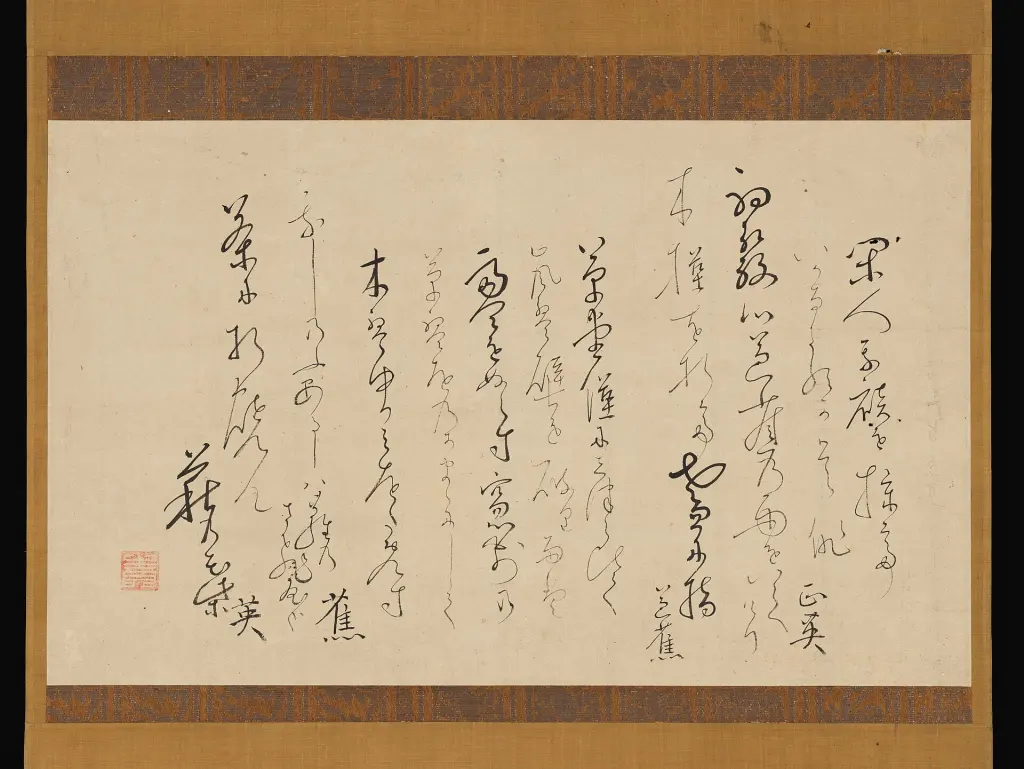
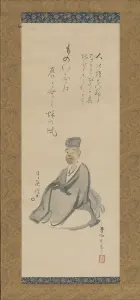
Image: Matsuo Bashō / The Metropolitan Museum of Art via Wikimedia Commons · CC0 1.0
Haiku is a short Japanese poetic form whose modern name and identity emerged from the older hokku, the opening verse of collaborative linked poetry. In Japanese, a conventional haiku has seventeen sound units, or on, often arranged 5–7–5, and usually includes a season word, kigo, together with a cutting word, kireji, that structures a pause or turn. These features do not transfer mechanically into other languages: Japanese on are not identical to English syllables, and translators often choose compression, rhythm, or juxtaposition over a strict count. Matsuo Bashō transformed hokku and haikai practice in the seventeenth century, while Masaoka Shiki popularized the modern term haiku and redirected the form in the late nineteenth century.
Overview
| Japanese name | 俳句 |
|---|---|
| Historical precursor | Hokku, the opening verse of linked poetry |
| Conventional Japanese pattern | Seventeen on in a 5–7–5 rhythm |
| Seasonal element | Kigo, often organized through a saijiki |
| Structural element | Kireji, a cutting word or verbal marker |
| Modern naming | Popularized by Masaoka Shiki in the Meiji period |
Name and historical terminology
The word haiku is modern. It joins elements of haikai and hokku and became standard through the reforms associated with Masaoka Shiki in the late nineteenth century. Calling every earlier seventeen-on poem “haiku” is convenient, but it can hide the social and literary setting in which it was composed.
Bashō and his contemporaries ordinarily wrote hokku and participated in haikai no renga, comic or unorthodox linked verse. A hokku opened a sequence, acknowledged the occasion and participants, and established a season and tone. Later independence changed how such verses were written and read.
From linked verse to an independent poem
The Man’yōshū belongs to a much earlier layer of classical Japanese literature. It did not contain haiku, but its waka and longer poems formed part of the poetic archive later writers inherited before linked verse, haikai, and the modern haiku developed.
Japanese linked verse grew from the alternation of 5–7–5 and 7–7 units. In renga and haikai gatherings, participants composed successive links that responded to the immediately preceding verse while moving the sequence into a new scene. The opening 5–7–5 verse was the hokku.
Hokku circulated outside complete sequences in anthologies, travel writing, inscriptions, and social exchange. Shiki's modern reform treated the short poem as an independent literary form and renamed it haiku, while retaining and reinterpreting inherited conventions.
Form, on, and the 5–7–5 pattern
Traditional Japanese counting uses on, often translated as sound units or morae. A word that appears to have two English syllables may occupy more than two on in Japanese. Japanese haiku are also commonly written in one vertical line rather than three horizontal lines.
The familiar three-line 5–7–5 pattern is therefore an adaptation when used in English. Many English-language poets keep it, while others aim for comparable brevity and movement without reproducing seventeen syllables. The choice should be understood as a poetics of translation, not a simple test of authenticity.
Kigo and the seasonal almanac
A kigo is a word or phrase that places a poem within a season and activates a body of cultural associations. Cherry blossoms suggest spring, cicadas summer, the harvest moon autumn, and the year's first sunrise the New Year. Less obvious words also carry conventional seasonal classifications.
A saijiki is an organized almanac of season words, often with explanations and sample verses. Kigo do more than date a scene: they connect an individual perception to shared calendars, earlier poems, local practice, and recurring changes in the natural and social world.
Kireji and juxtaposition
Japanese hokku and haiku often use a kireji, or cutting word. Depending on its position and force, it may mark emphasis, closure, wonder, or a turn between two parts of the poem. No single punctuation mark or English word reproduces every kireji.
The cut supports juxtaposition: two perceptions or fields of meaning meet without a fully stated explanation. Readers supply the relationship among them. This structure helps a very short poem suggest duration, contrast, emotional resonance, or a change in perspective.
Bashō, Shiki, and changing poetics
Bashō elevated haikai through travel, disciplined group practice, allusion, ordinary language, and a search for freshness within tradition. His prose-and-verse travel works made hokku part of a larger art of place, memory, and encounter. His school became influential, but his work should not be reduced to one rule or a generalized “Zen” mood.
Shiki criticized the uncritical worship of Bashō and advocated shasei, “sketching from life.” His criticism, teaching, and publishing helped establish haiku as a modern genre. Later poets expanded its subjects and debated whether season words and fixed form were essential.
Translation and global practice
Haiku became an international form through translation, education, literary networks, and adaptation. Languages differ in rhythm, grammar, sound length, and seasonal vocabulary, so translators must choose among literal detail, brevity, formal count, ambiguity, and the force of a cut.
Contemporary haiku includes traditional season-based practice, urban and experimental writing, and multilingual communities. Its global reach is best understood as an ongoing family of adaptations grounded in, but not identical to, Japanese literary history.
Sources
- Government of Japan, Matsuo Basho: The Unparalleled Haiku Poet.
- Government of Japan, Masaoka Shiki: A Poet Who Brought Innovation to Haiku.
- Poetry Foundation, Haiku (or Hokku).
- Stanford Program on International and Cross-Cultural Education, The History and Artistry of Haiku.
- Government of Japan, Literary History Seen in a Seasonal Word.
Last updated: