Clothing & Formality
Yukata
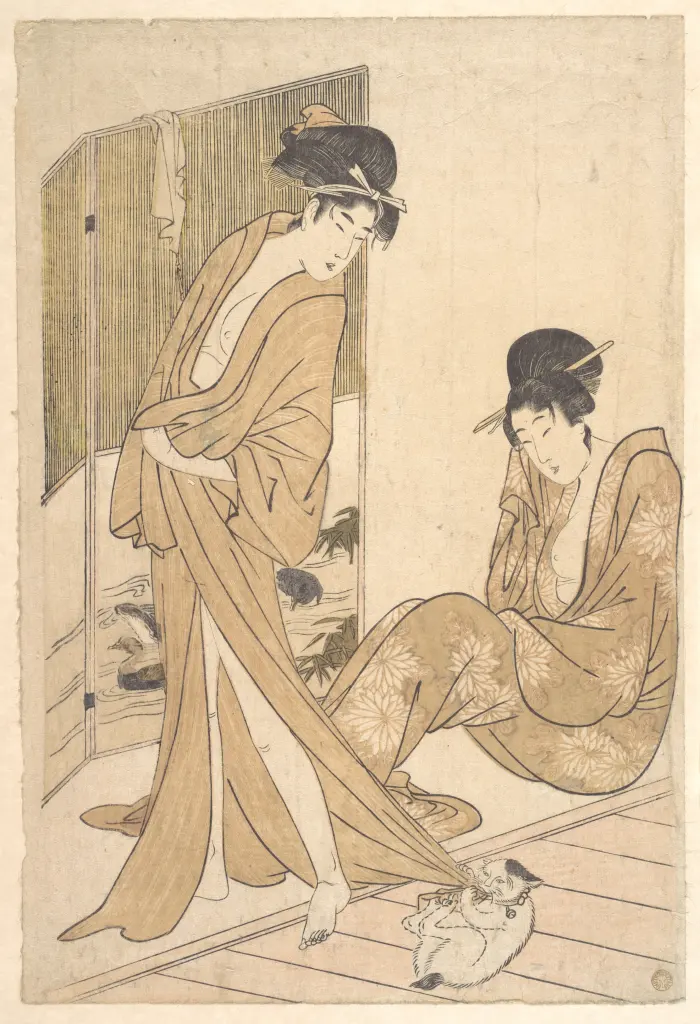
Image: Kitagawa Utamaro / The Metropolitan Museum of Art · Public domain / Open Access
Yukata (浴衣) are unlined casual kimono now strongly associated with summer festivals, fireworks, bon dance, inns, and bathing culture. The name derives from yukatabira, a light robe connected with bathing, and cotton versions spread widely during the Edo period. Modern yukata are commonly worn next to a simple underlayer and tied with an informal obi, making them easier to dress than many formal kimono ensembles. They are not merely bathrobes: festival yukata can be carefully styled, while ryokan garments function as relaxed indoor wear and may be worn around the property. Material, construction, setting, and coordination distinguish yukata from more formal kimono, but the boundary is historical and practical rather than an absolute difference in silhouette. Customs vary by venue, generation, and contemporary fashion.
Overview
| Japanese name | 浴衣 |
|---|---|
| Earlier term | Yukatabira |
| Classification | Unlined casual kimono |
| Common material | Cotton; modern examples may use blends or synthetics |
| Common contexts | Summer events, ryokan, bathing, and bon dance |
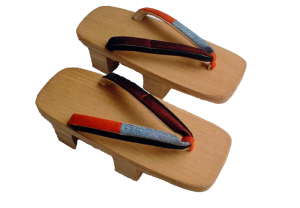
| Typical footwear | Geta, sandals, or venue-appropriate alternatives |
Name and bathing origins
The characters 浴衣 literally connect bathing and clothing. Earlier yukatabira were light garments used around bathing, especially when communal bathing and steam-bath customs made a covering useful. The history was not a simple change from one modern bathrobe to festival fashion; materials, users, bathing facilities, and urban clothing practices changed over centuries.
Edo-period expansion
As cotton became more available and public bathing expanded in early modern cities, washable cotton yukata spread beyond elite bathing contexts. They served after-bath, household, and warm-weather uses and could carry bold resist-dyed patterns. Inns, entertainment districts, theatre, and urban fashion helped turn the garment into a visible part of popular culture.
Construction and materials
A yukata uses the rectangular-panel structure of kimono but is normally unlined and comparatively informal. Cotton is traditional, while hemp blends and easy-care synthetic fabrics also appear. It is worn left over right, held by ties, and finished with an informal obi. Men’s, women’s, and children’s styling differ, but retail labels do not capture every regional or individual choice.
Festivals, fireworks, and Obon
The association is especially visible at hanabi displays, where summer dress, rail travel, food stalls, reserved viewing spaces, and riverside crowds shape the evening as much as the aerial shells.
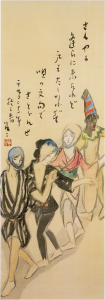
Yukata are conspicuous at summer matsuri, firework displays, Tanabata, and Obon dance events. The garment provides seasonal atmosphere but is optional; ordinary clothes are equally acceptable at most public festivals. Styling may include a decorative obi, drawstring bag, hair ornament, and geta, with contemporary colours and prints alongside traditional patterns.
Ryokan and bathing culture
Ryokan and hot-spring hotels commonly provide washable yukata for guests. These may be worn to meals, baths, and shared spaces according to house practice, often with a jacket in cool weather. They are hospitality garments designed for repeated laundering and size flexibility, not necessarily equivalent in fabric or styling to a privately owned festival yukata.
Yukata and kimono
A haori is an open-front outer jacket, whereas a yukata is the wrapped base garment secured by an obi. The short jackets provided with some inn yukata are practical over-layers but are not all classified as formal haori.
Yukata are a kind of kimono, but everyday English often contrasts “yukata” with formal or lined kimono. Useful clues include unlined construction, casual fabric, simplified underlayers, informal obi, warm-weather use, and bathing or festival context. No single clue works alone: light summer kimono can be unlined, and elaborately styled yukata can look more formal than a basic description suggests.
Wearing and mobility
The overlap should remain secure, the hem should allow manageable steps, and the obi should support rather than restrict breathing. Rental shops and festivals often offer dressing help. Footwear is a choice of context and comfort rather than a test of authenticity. Visitors should avoid copying the right-over-left overlap used for the deceased and should follow venue guidance in shared baths or formal settings.
Contemporary design and misconceptions
Yukata participate in fashion, tourism, dance, character merchandising, and regional branding. Machine printing and synthetic fabrics coexist with hand-dyed craft. Calling every yukata a “summer kimono” hides its bathing history, while calling it only a bathrobe ignores public festival and fashion use. Its apparent simplicity is a defined mode of dress, not the absence of cultural convention.
Sources
- Victoria and Albert Museum, Kimono.
- The Metropolitan Museum of Art, Kimono: A Modern History.
- Web Japan, Fashion: From Court Dress to Designer Brands.
- Government of Japan, Timeless Appeal of the Yukata.
- Yokohama National University, Kimono and Yukata.
- The Metropolitan Museum of Art, Two Young Women Wrapped in Yukata After a Bath.
Last updated: