Food Culture
Udon
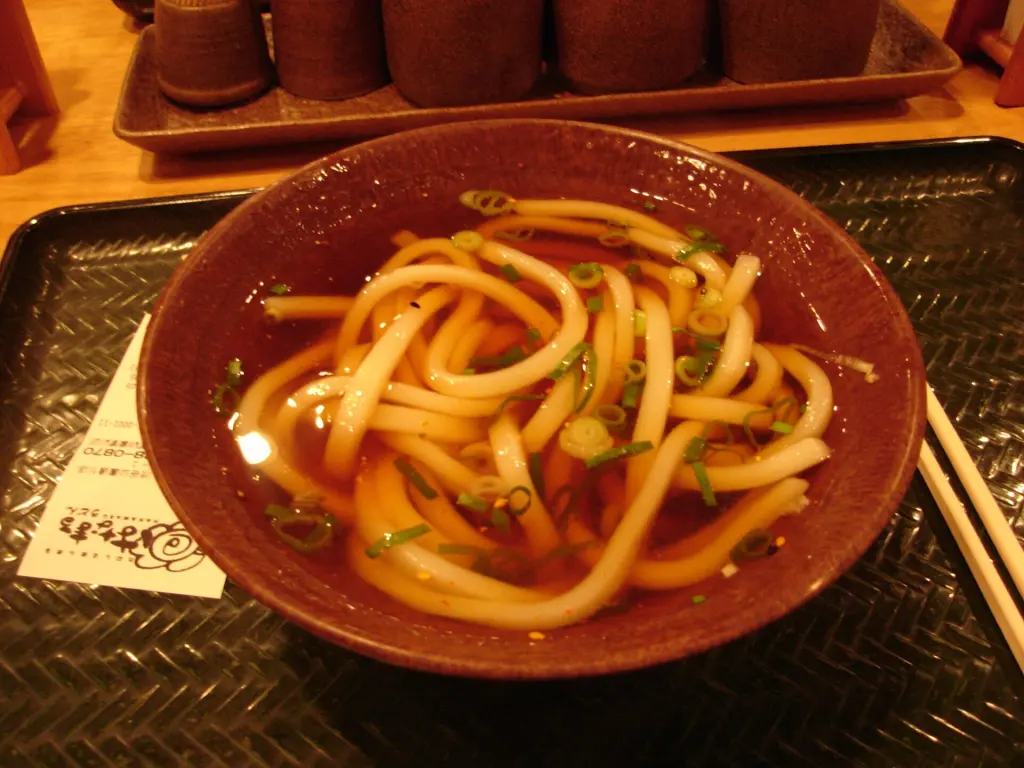
Image: Joe Jones / Wikimedia Commons / Flickr · CC BY 2.0
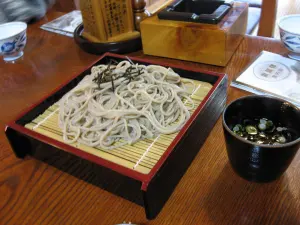
Udon are Japanese noodles made primarily from wheat flour, water, and salt. The dough is kneaded and rested to develop structure, then commonly rolled and cut, although regional and manufactured forms use different methods. Udon are often described simply as thick white noodles, but their width, shape, firmness, surface texture, and colour vary substantially. They may be served hot in broth, chilled with dipping sauce, mixed with soy sauce, simmered in a pot, or stir-fried. Sanuki, Inaniwa, Ise, Hakata, and kishimen illustrate distinct regional traditions rather than a single ranking of authenticity. Broth and toppings are part of a dish’s identity, while the noodle itself remains a wheat product distinct from buckwheat soba and alkaline ramen.
Overview
| Japanese | Udon (うどん・饂飩) |
|---|---|
| Primary grain | Wheat |
| Basic dough | Wheat flour, water, and salt |
| Common shaping | Rolled and cut, with other regional processes |
| Service | Hot, chilled, dipped, mixed, simmered, or stir-fried |
| Major regional names | Sanuki, Inaniwa, Ise, Hakata, and kishimen |
Definition and boundaries
Udon is a wheat-noodle family, not merely any thick noodle. Many examples are broad and pale, yet Inaniwa udon is thin and smooth, kishimen is flat, and regional products differ in texture. Ramen uses alkaline dough; soba most often contains buckwheat. Sōmen is generally finer and traditionally stretched with oil, though manufactured classifications introduce further detail.
History and transmission
Several legends credit individual monks with bringing udon from China, but the development of Japanese wheat noodles involved multiple introductions and changing terminology. Documentary evidence connects medieval cut wheat noodles with later udon forms. Hot service in seasoned liquid developed over time, and commercial noodle shops expanded strongly in early-modern cities, especially Osaka and western Japan.
Dough and making
Salted water is mixed with wheat flour, and the dough is kneaded, rested, rolled, folded, and cut. Resting and salt help manage gluten and extensibility. Some producers tread bagged dough as part of kneading; this is a controlled technique rather than casual contact with food. Fresh, boiled, frozen, dried, and hand-stretched commercial forms differ in production and cooking.
Broth, sauce, and service
Kake udon is served in hot seasoned broth, while zaru and bukkake forms use concentrated sauce in different amounts. Kama-age udon is served directly from cooking water with dipping sauce; kamatama combines hot noodles with egg and seasoning. Dashi, soy sauce, mirin, salt, and regional dried fish or kelp shape the liquid.
Toppings and dishes
Kitsune udon carries sweet-seasoned fried tofu; tempura udon, curry udon, meat udon, and nabeyaki udon create different meals around the noodle. Names and recipes vary locally: “tanuki” can identify different toppings in different regions. Udon-suki, miso-nikomi, and yaki udon further show that udon is not limited to a bowl of clear soup.
Regional styles
Kagawa’s Sanuki udon is known for firm texture and self-service shop culture. Akita’s Inaniwa udon is thin and hand-stretched; Mie’s Ise udon is very soft with dark sauce; Hakata udon is also associated with softness; Nagoya’s kishimen is flat. These shorthand descriptions conceal variation among producers and should not be used as rigid quality standards.
Kagawa and local resources
Kagawa’s udon culture joins wheat, coastal salt, dried anchovies used for broth, soy-sauce production, household practice, shops, and tourism. The often-repeated claim that one monk introduced udon to Kagawa is a tradition rather than a settled origin. The regional system is better understood through interacting agriculture, processing, trade, labour, and modern promotion.
Modern production and allergens
Frozen udon can reproduce a firm texture through industrial temperature control, while dried and precooked products serve different storage needs. Restaurant and home versions are both part of modern food culture. Udon normally contains wheat and is unsuitable for people with wheat allergy or coeliac disease unless a specifically formulated alternative is verified; broth and toppings can add further allergens.
Sources
- Ministry of Agriculture, Forestry and Fisheries, Grain Products in Traditional Foods.
- Kikkoman Food Forum, Japanese Noodles No. 2: Udon.
- Japan National Tourism Organization, Udon and Soba.
- Ministry of Agriculture, Forestry and Fisheries, Kagawa Regional Food Culture.
- Ministry of Agriculture, Forestry and Fisheries, Japanese Food Culture.
- Japan National Tourism Organization, The Art of Noodles.
- Oxford Research Encyclopedia of Food Studies, Noodle Nation Japan.
Last updated: