Social Customs
Japanese Bathing Culture
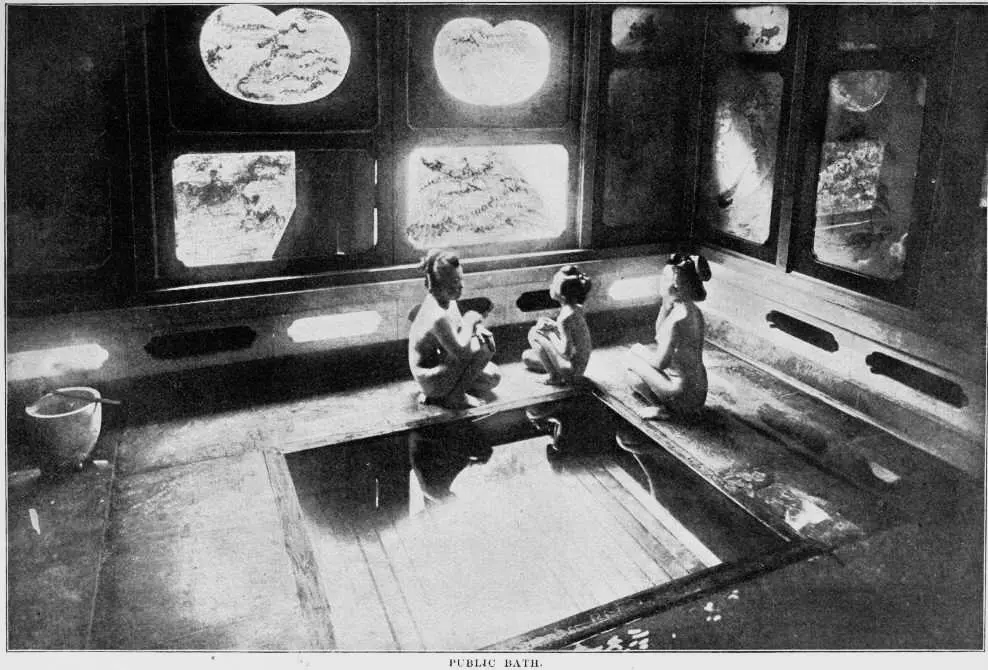
Image: George Waldo Browne / Wikimedia Commons / Japan: The Place and the People · Public domain
Japanese bathing culture comprises several related but distinct practices: washing and soaking at home, visiting a neighbourhood sentō, and bathing in hot-spring water at an onsen. A widely shared pattern is to clean the body outside the tub and then enter clean hot water for soaking, allowing family or communal bathers to share the water. The practice has religious, charitable, urban, technological, and domestic histories, but ordinary bathing is not itself a single religious rite. Buddhist temple baths contributed to early public bathing, Edo cities supported a dense bathhouse culture, and twentieth-century housing made the private bathroom increasingly common. Today, bathing can serve hygiene, warmth, rest, sociability, travel, and routine, with rules varying by household and facility.
Overview
| Japanese terms | Nyūyoku (入浴), furo or ofuro (風呂・お風呂) |
|---|---|
| Classification | Domestic and communal social practice |
| Main settings | Home bath, sento, onsen, ryokan, and bathing facility |
| Common sequence | Wash and rinse outside the tub, then soak |
| Historical influences | Hot springs, Buddhist bath charity, urban bathhouses, and modern housing |
| Important distinction | Ordinary bathing is not the same as Shinto misogi |
Terms and scope
Nyūyoku means entering a bath, while furo and the polite everyday form ofuro can refer to a bath, tub, bathing room, or the act of taking a bath. Sentō identifies a public bathhouse, and onsen refers to a legally defined hot spring or to facilities and destinations built around hot-spring water. These words overlap in conversation but do not name one interchangeable institution.
Buddhist and charitable origins
Bathing existed in ancient Japan in many forms, including use of natural hot springs. Buddhist institutions added an influential charitable dimension. Temple baths served clergy and could be opened to the sick or poor as a meritorious act. Later accounts connect these facilities with the development of baths used by a wider public, although no single temple practice created every later bathhouse.
Sento and the urban public bath
For the institution itself, see Sento, the Japanese public bathhouse whose history joins paid bathing, neighbourhood infrastructure, regulation, and changing urban routines.
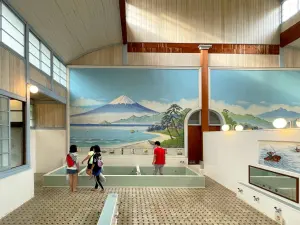
Commercial public baths became a conspicuous part of early-modern urban life. In Edo, where many dwellings did not contain a private bath, bathhouses supplied hot water, washing space, and a regular meeting place. The sento later developed recognisable entrance areas, changing rooms, washing stations, tubs, wall paintings, and neighbourhood relationships, while layouts and local customs remained diverse.
Home bathing and the ofuro
See Ofuro for the domestic bath, the separation of washing and soaking, household water sharing, and the development of the modern Japanese bathroom.
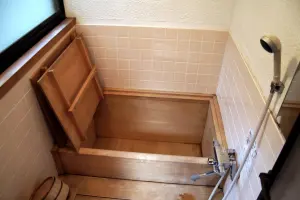
Private bathrooms spread with changing housing, water, gas, and heating systems during the twentieth century. A typical Japanese bathroom separates the washing area from a relatively deep tub. Household members normally wash before soaking, and the bathwater may be reheated or used by more than one person. This sequence explains why soap and shampoo are kept out of the tub.
Onsen and hot-spring travel
Ryokan and hot-spring hotels commonly provide yukata as washable guest clothing for baths, meals, and shared spaces according to house custom.
See Onsen for the legal definition of Japanese hot springs, their geological sources, regulation, bathing settings, and relationship to travel.
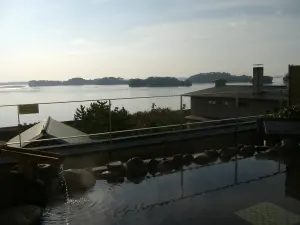
Hot springs connect bathing with geology, local economies, inns, and travel. An onsen may be a simple local bath, a ryokan facility, an outdoor rotenburo, or part of a large resort. The water must meet the Hot Springs Act definition, but architecture, access, water handling, and bathing rules differ by establishment. Claims about particular health effects should be read with attention to evidence and individual medical circumstances.
Shared-water etiquette
For a step-by-step account of preparation, washing, soaking, privacy, variable tattoo rules, and safety, see Bathing Etiquette in Japan.
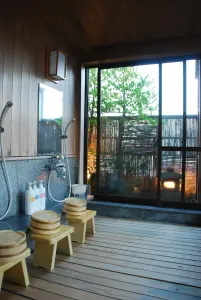
The central convention in communal baths is to keep shared water clean. Bathers undress in the changing area, wash and rinse at a shower or tap, tie up long hair, and keep the small towel out of the tub. Photography is normally prohibited, and vigorous swimming or loud behaviour is inappropriate. Tattoo, child, mixed-bathing, towel, and amenity policies vary, so facility instructions take priority.
Bathing and purification
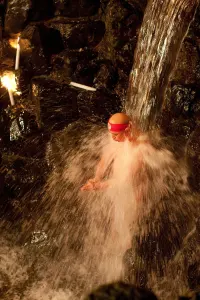
Water can have ritual significance in Japan, but daily bathing should not be reduced to purification theology. Misogi is a Shinto practice associated with ritual purification, while ordinary bathing chiefly concerns hygiene, warmth, rest, and social routine. Buddhist bath charity, Shinto water rites, home bathing, sento, and onsen belong to intersecting histories rather than one continuous national ritual.
Health, safety, and change
Warm-water immersion can support relaxation and subjective well-being, but very hot water also places demands on circulation and can contribute to dizziness, dehydration, or falls. Alcohol and bathing are a hazardous combination. Older adults, pregnant people, children, and people with medical conditions should follow professional advice and facility warnings. Bathing culture continues to change through ageing communities, renovated sento, tourism, accessibility work, and more varied household routines.
Sources
- Tokyo Sento Association, History of Sento.
- Kokugakuin University, How Did the Japanese Come to Love Their Baths?.
- Japan National Tourism Organization, Enjoy Bath Culture in Japan.
- Watanabe et al., Physical and Mental Effects of Bathing: A Randomized Intervention Study.
- Tokyo Sento Association, About Sento.
- Tokyo Metropolitan Government, Sento: Tradition and Innovation in Tokyo's Public Baths.
- GO TOKYO, Japanese Bathing Culture: A Guide to Sento.
- Ministry of Health, Labour and Welfare, Public Bath Houses Act and Bathing Facilities.
- Ministry of the Environment, Overview of the Hot Springs Act.
- Japanese Law Translation, Hot Springs Act.
- Japan National Tourism Organization, How to Best Enjoy Onsen.
- Japan National Tourism Organization, Onsen, Tattoos and Etiquette.
Last updated: