
Places
Tokyo National Museum
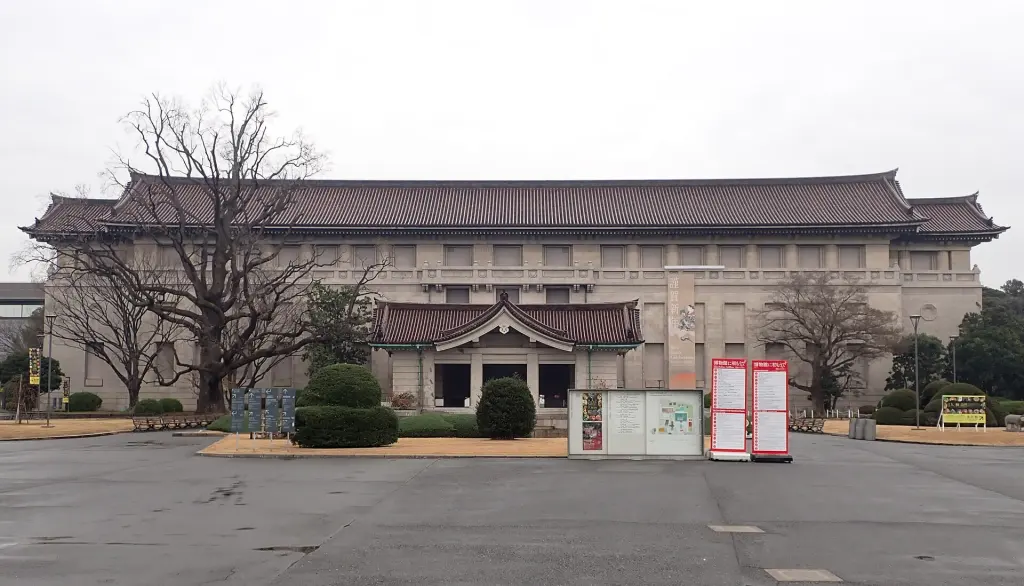
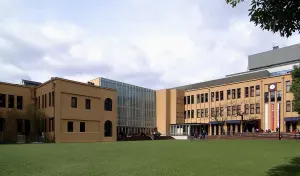
Image: Ryan Sharpe / Wikimedia Commons · CC BY-SA 4.0
The Tokyo National Museum is Japan’s oldest national museum and a central institution for the collection, conservation, research, and display of art and archaeological materials from Japan and other parts of Asia. It traces its origin to an exhibition at Yushima Seidō in 1872 and moved to its present Ueno Park site in 1882. The campus contains several exhibition buildings, including the Honkan for Japanese art, the Toyokan for Asian collections, the Heiseikan for archaeology and special exhibitions, and the Gallery of Hōryūji Treasures. Its holdings exceed 120,000 objects, but only a changing selection is displayed at one time because many works on paper, textiles, lacquer, and other materials require limited exposure and conservation care.
Overview
| Japanese name | 東京国立博物館 |
|---|---|
| Romanization | Tōkyō Kokuritsu Hakubutsukan |
| Type | National museum |
| Location | Ueno Park, Taitō, Tokyo |
| Origin | Yushima Seidō exhibition, 1872 |
| Present site | Ueno Park since 1882 |
| Institutional group | National Institutes for Cultural Heritage |
| Holdings | About 120,000 objects, focused on Japan and Asia |
Origins in 1872
The museum traces its beginning to the Museum Department of the Ministry of Education’s exhibition at the Taiseiden Hall of Yushima Seidō in 1872. Its early history was tied to the emergence of modern museums, industrial exhibitions, surveys of cultural properties, and state collection policy in Meiji Japan. The institution changed names and administrative structures several times before becoming the Tokyo National Museum after the Second World War.
Move to Ueno and rebuilding
After operating at other sites, the museum moved to Ueno Park in 1882. The original main building designed by Josiah Conder was severely damaged by the 1923 Great Kantō Earthquake. The present Honkan, designed by Watanabe Jin, opened in 1938. Its architecture and the surrounding campus record several generations of Japanese museum planning rather than a single founding moment.
Museum campus and galleries
The Honkan presents Japanese art by chronology and medium. The Toyokan covers art and archaeology from across Asia; the Heiseikan includes Japanese archaeology and major special-exhibition spaces; and the Gallery of Hōryūji Treasures houses works transferred from Hōryūji through the Imperial Household. The Hyokeikan and Kuroda Memorial Hall add further architectural and collection histories. Not every building is open for the same purposes at all times.
Collection scope
The collection comprises about 120,000 objects, with Japanese materials at its center and substantial holdings from East Asia and other Asian regions. Painting, calligraphy, sculpture, ceramics, lacquerware, textiles, metalwork, arms and armor, archaeological finds, and historical documents appear alongside deposited works from temples, shrines, and private owners. Counts of National Treasures and Important Cultural Properties change as acquisitions and designations are updated.
Rotation and conservation
Only a fraction of the holdings can be shown at once. Paintings, calligraphy, textiles, lacquer, and other light-sensitive materials are rotated frequently, sometimes after only several weeks. Low lighting, environmental controls, mounting, storage, documentation, and restoration are therefore part of how visitors encounter the collection. A work not currently on display remains part of the museum’s research and conservation responsibilities.
Research and public access
Curatorial research supports catalogues, collection databases, exhibitions, conservation decisions, lectures, educational programs, and digital access. The Research and Information Center provides library resources related to art, archaeology, and museum collections. Public interpretation ranges from chronological galleries to focused thematic displays, enabling the same object to be understood through material, period, religious, social, or transregional contexts.
Role and interpretive limits
As a national institution, the museum has strongly shaped public narratives of Japanese art and cultural heritage. Those narratives are selections rather than a complete representation of Japan: regional museums, religious institutions, archives, living artists, and communities preserve other objects and forms of knowledge. The Tokyo National Museum is most useful as a major research and collection center whose displays can be compared with those different custodians and contexts.
Sources
Last updated:


.jpg)