Aesthetic Concepts
Mono no aware
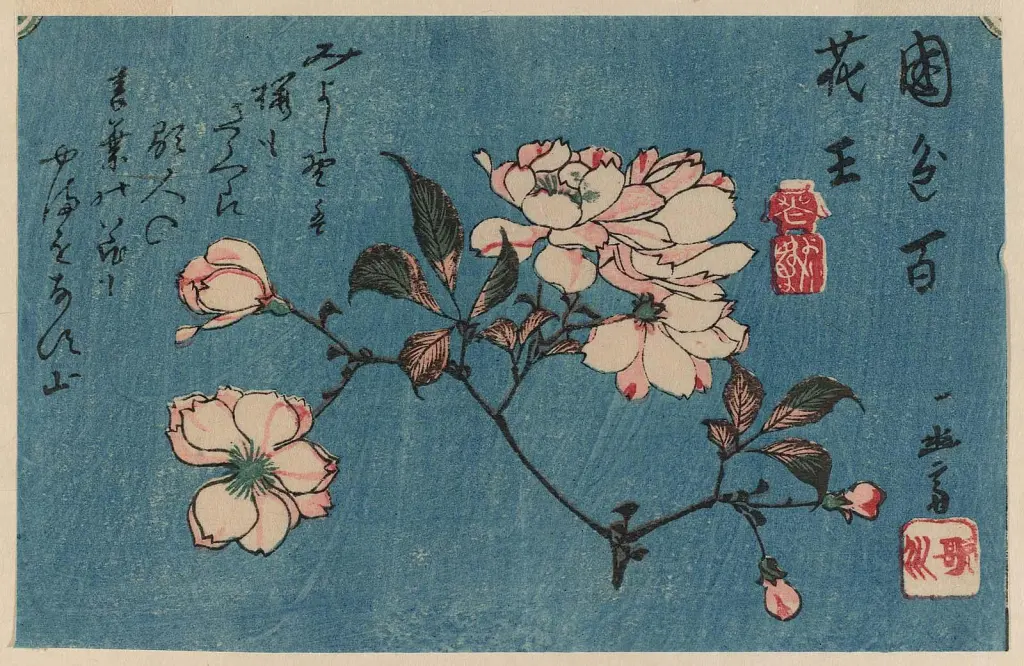
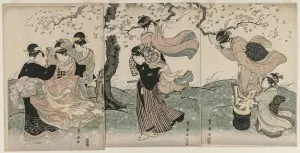
Image: Utagawa Hiroshige I / Wikimedia Commons; Museum of Fine Arts Boston · Public domain
Mono no aware (物の哀れ) is an aesthetic and literary idea concerning sensitivity to things, events, and the movements of feeling they awaken. It is often translated as “the pathos of things,” especially when beauty is intensified by transience. The expression draws on the older exclamation aware, which could voice being deeply moved, and it became central to the literary theory of Motoori Norinaga (1730–1801). In his interpretation of The Tale of Genji, knowing mono no aware meant understanding and responding to the emotions of human life rather than applying a narrow moral judgment. Cherry blossoms are a familiar illustration because their brief flowering encourages attentive appreciation, but the concept is broader than sadness, impermanence, or a single seasonal image.
Overview
| Japanese | 物の哀れ |
|---|---|
| Common translation | The pathos of things |
| Central theorist | Motoori Norinaga (1730–1801) |
| Major literary context | The Tale of Genji and waka poetry |
| Key concern | Emotional responsiveness to things, people, and change |
| Typical but not exclusive image | Short-lived cherry blossoms |
Name and meaning
Mono can mean things or phenomena, while aware developed from an exclamation of emotion. The phrase therefore resists a literal one-word translation. “Pathos” captures its affective depth but may sound exclusively sorrowful; mono no aware can also include delight, affection, wonder, sympathy, and recognition that a moment cannot last.
Aware before Norinaga
Forms of aware appear in early poetry and prose long before the phrase became a formal critical term. Calls of birds, partings, journeys, changing seasons, and courtly relationships could prompt an exclamation of being moved. This history matters because Norinaga did not invent emotional sensitivity in Japanese literature; he reorganized it into a powerful theory.
The Tale of Genji and Norinaga
Norinaga's eighteenth-century studies argued that The Tale of Genji excelled at portraying people who “know” mono no aware. For him, literary understanding required sympathy with complex feeling rather than reducing the narrative to moral instruction. His reading helped establish the term as a major account of classical Japanese literature.
Impermanence and Buddhism
Buddhist ideas of impermanence provide an important context for Japanese literature, especially works such as The Tale of the Heike. Yet mono no aware is not simply a translation of the Buddhist term mujō. One refers to a mode of affective understanding; the other names the impermanent condition of compounded existence. They frequently interact without being identical.
Cherry blossoms and seasons
Hanami supplies the most familiar modern example. Blossoms attract attention not only through color and abundance but because wind and rain may quickly scatter them. Seasonal poetry, however, uses many other triggers—autumn grasses, moonlight, insects, snow, and departing birds—to shape emotional awareness of time.
Modern literature and film
Modern critics have applied mono no aware to novels, cinema, animation, and everyday life. Films by Ozu Yasujirō are often discussed through their attention to ordinary objects, family separation, and quiet transitions. Such applications are interpretations rather than proof that every understated Japanese work consciously follows Norinaga's theory.
Common misunderstandings
Mono no aware is not a claim that Japanese people are naturally more sensitive to transience. It is a historically developed vocabulary of literary and aesthetic interpretation. It also differs from wabi-sabi, which is more closely associated with austere settings, aged materials, tea, and related arts.
Sources
- Stanford Encyclopedia of Philosophy, Japanese Aesthetics.
- JAANUS, Japanese Architecture and Art Net Users System.
- International Research Center for Japanese Studies, Aware as the Essence of Japanese Literature.
- National Diet Library, Motoori Norinaga.
- The Metropolitan Museum of Art, The Tale of Genji: A Japanese Classic Illuminated.
Last updated: