Crafts & Skills
Urushi
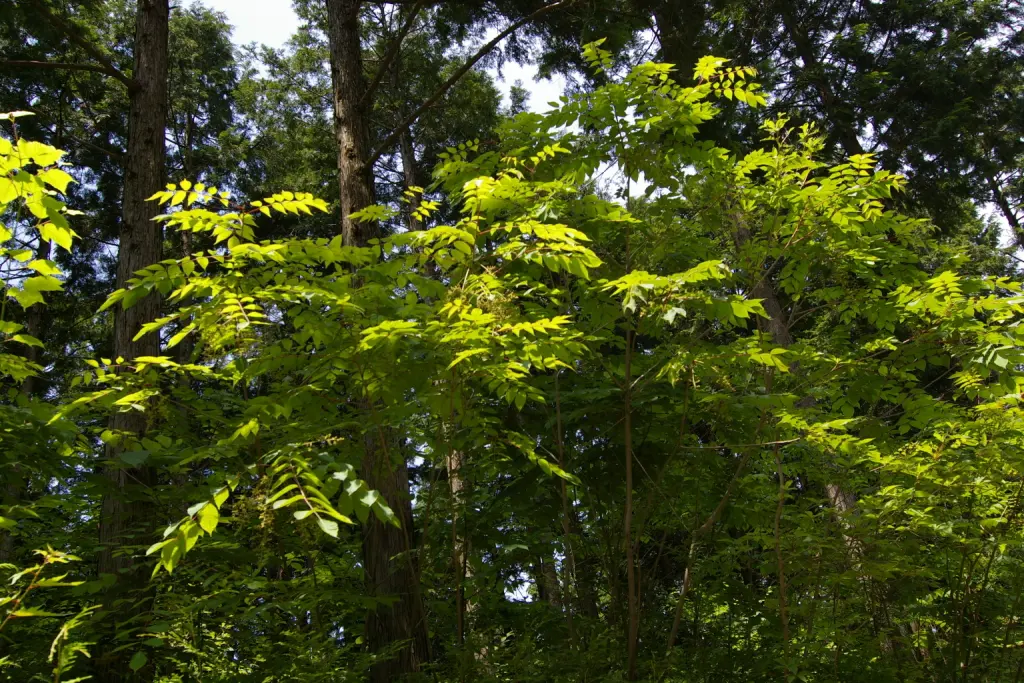
Image: takami torao (Koiroha) / Wikimedia Commons · Public domain
Urushi (漆) is natural lacquer derived from the sap of the lacquer tree, Toxicodendron vernicifluum. In Japan it has been used for millennia to coat, protect, join, and decorate objects made from wood, bamboo, cloth, paper, leather, ceramic, and metal. Raw sap is refined and applied in carefully controlled layers that cure through humidity-dependent chemical processes rather than simply drying by evaporation. Finished lacquer can be light, durable, water-resistant, and capable of deep gloss, but the uncured material can cause severe skin irritation. Urushi is both a material and a field of specialised craftsmanship. Regional lacquerwares and techniques differ in substrate, undercoating, colour, polishing, and decoration; Maki-e and Kintsugi are prominent uses, not synonyms for urushi itself.
Overview
| Japanese name | 漆 |
|---|---|
| Romanization | Urushi |
| Source | Sap of Toxicodendron vernicifluum |
| Main roles | Coating, adhesive, consolidation, and decoration |
| Common substrates | Wood, bamboo, cloth, paper, ceramic, and metal |
| Handling concern | Uncured sap can cause contact dermatitis |
Material and name
The word urushi can refer to the lacquer tree, its processed sap, and the craft material applied to an object. English lacquer also covers unrelated coatings, including synthetic products, so descriptions such as natural urushi lacquer are useful. Japanese lacquerware is commonly called shikki, but not every lacquered object belongs to the same regional ware or method.
Tapping and refining
Sap is collected through cuts made in mature lacquer trees during a limited season. The yield from one tree is small, and cultivation requires years before tapping. Collected sap is filtered, stirred, and adjusted for the intended layer or colour. Japanese production also uses imported raw lacquer. The origin and processing of the material matter to craftspeople, but they cannot always be inferred from a finished object.
Curing and layering
Urushi hardens through enzymatic oxidation and polymerisation under suitable warmth and humidity. Workshops therefore use enclosed curing cabinets or rooms with controlled moisture. A durable finish may require substrate preparation, reinforcing cloth, ground layers, intermediate coats, polishing, and a topcoat. The exact sequence differs among objects and traditions; the visible surface represents only the last part of a longer construction process.
Archaeology and history
Archaeological finds show lacquer used in the Japanese archipelago during the Jōmon period on vessels, combs, ornaments, and other objects. Later court, temple, warrior, and urban cultures supported increasingly specialised production. During the early modern period, lacquerware ranged from everyday bowls to armour, architectural fittings, luxury furnishings, and export commissions made for European patrons.
Colour and decoration
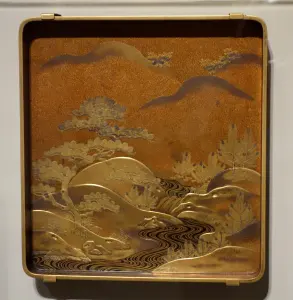
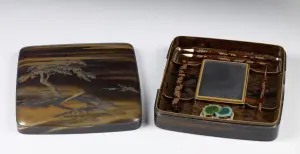
Black and red are strongly associated with Japanese lacquer, but pigments, translucent finishes, polishing, carved surfaces, metal foil, eggshell, and shell inlay produce a wider range of effects. Maki-e uses metallic powders over designs drawn in lacquer, while raden sets pieces of nacre into or onto a lacquered surface. These methods can be combined on one object.
Objects and regional wares
National collections, including those of the Tokyo National Museum, preserve lacquer objects across periods and regions while rotating fragile works according to conservation needs.
Lacquer appears on bowls, trays, boxes, tea utensils, writing equipment, furniture, sculpture, musical instruments, and weapon fittings. Wajima-nuri, Aizu-nuri, Tsugaru-nuri, and other regional names identify particular production histories and methods. They should not be reduced to surface patterns alone, because substrates, ground preparation, division of labour, and standards of transmission can be central to their identity.
Care, safety, and repair
Fresh urushi contains compounds that can cause allergic contact dermatitis, so professional handling requires training and protective practice. Cured lacquer is used safely as a finished surface, but heat, dryness, ultraviolet light, abrasion, and rapid humidity change can damage historic work. Repair of important lacquerware is a conservation problem; casual application of modern coatings or an improvised gold repair can obscure original materials.
Sources
Last updated: