Karate
Kyokushin Karate
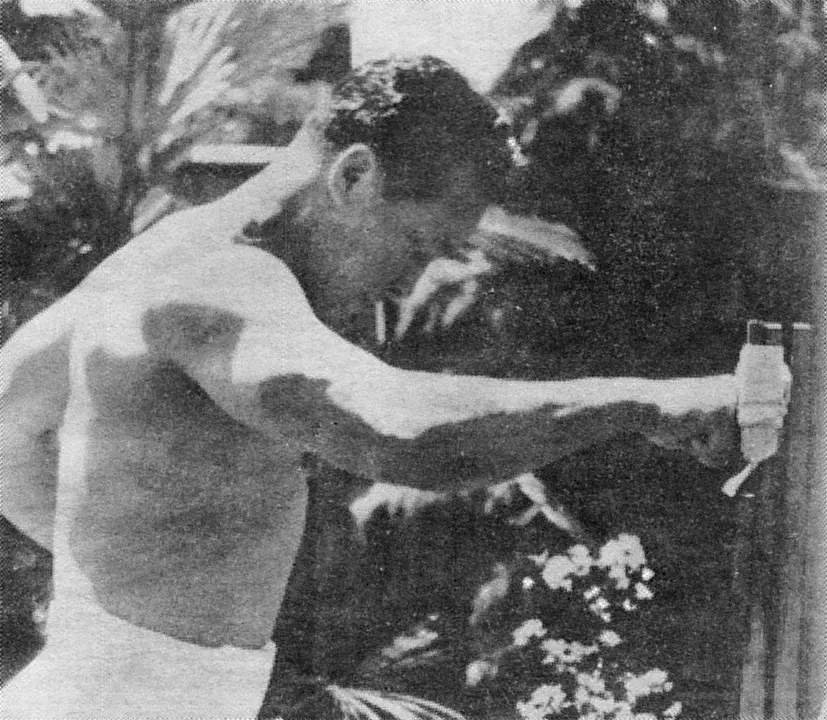
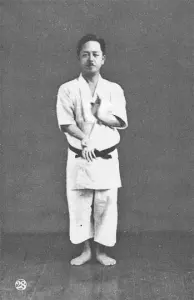
Image: Nihon Sports Publications / Wikimedia Commons / Gong Kakutogi · Public domain
Overview
Kyokushin joins a mixed Karate inheritance to a distinctive full-contact culture.
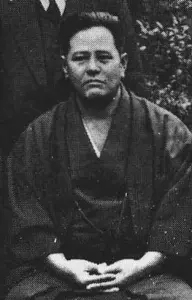
Kyokushin (極真) is a post-war Karate tradition founded by Masutatsu Ōyama. His training history included Shotokan-associated and Gōjū-ryū-associated Karate; the resulting system should therefore not be reduced to a single straight line of descent. Ōyama’s Tokyo teaching developed into Kyokushinkaikan in 1964. The tradition became known for demanding conditioning, kata, breaking demonstrations, and continuous knockdown competition. After Ōyama’s death in 1994, several organisations inherited overlapping curricula, symbols, and tournament cultures without reaching one universally accepted succession.
Ōyama Dōjō becomes the International Karate Organization Kyokushinkaikan.
- Japanese
- 極真
- Founder
- Masutatsu Ōyama (1923–1994)
- Organisation
- Kyokushinkaikan, 1964
- Karate inputs
- Shotokan- and Gōjū-ryū-associated study
- Best-known ruleset
- Continuous knockdown kumite
- Present structure
- Several related organisations
01Name & scope
“Ultimate truth” names both a school and a wider organisational family.
Shared terminology does not make every present-day branch one administration.
Ultimate
The extreme, highest point, or limit toward which practice is directed.
Truth
The name is commonly translated together as “ultimate truth”.
Organisation or association hall
Kyokushinkaikan identifies the institution founded in 1964.
02Masutatsu Ōyama
A mixed training history became a powerful public model of tested Karate.
Historical importance does not require treating every promotional story as documented fact.
Teacher, author, organiser
Ōyama built a durable international institution through dōjō teaching, publications, grading, camps, and tournaments.
Legends and demonstrations
Breaking feats and austere training stories shaped his public image, but individual episodes vary in verifiability.
His Karate study crossed more than one modern school network. This mixed background helps explain why Kyokushin contains kata and methods associated with both Shotokan and Gōjū-ryū histories.
03Ōyama Dōjō to Kyokushinkaikan
A demanding local dōjō became an international teaching system.
Organisation, instructor networks, and public events made the style reproducible.
Ōyama Dōjō
Early Tokyo groups developed a reputation for hard training and direct sparring.
Kyokushinkaikan
A permanent headquarters and international organisation formalised the movement.
Instructors and events
Camps, grading, publications, and tournaments carried the system abroad.
04Kihon, kata & conditioning
Physical preparation supports technical repetition; it does not replace it.
Safe progression matters more than copying spectacular demonstrations.
Kihon
Stances, receiving, strikes, and kicks developed through repeated technical correction.
Kata
Forms from major Karate lines, with details and lists that vary among later organisations.
Conditioning and tameshiwari
Bag, pad, bodyweight, impact, and breaking work require progressive supervision.
05Knockdown kumite
Continuous contact creates its own specialised distance, posture, and tactics.
The classic tournament rules are demanding, but they are still a restricted ruleset.
Body punches · kicks · continuous pressure
A knockdown or clearly decisive effect can determine a bout; exact scoring differs by organisation and event.
No hand or elbow strikes to the head
This absence changes guard, range, combinations, and tactical incentives compared with other combat sports.
06Tournaments & influence
Open events turned one dōjō culture into an internationally recognisable pathway.
Later schools and combat sports adapted parts of that pathway under different rules.
First All Japan Open
Continuous knockdown competition becomes a defining public test.
First World Open
An open-weight international event strengthens the global identity.
Knockdown schools · kickboxing · K-1
Historical exchange does not erase the separate rules and institutions of each system.
07Post-1994 organisations
Shared inheritance continued through several competing institutions.
No succession account is accepted by every senior line.
Name · symbols · kata · grading · events
Overlap makes the modern bodies recognisably related.
Leadership · policy · technique · governance
A neutral description names the organisation rather than presenting one branch as the whole family.
Kyokushin also inspired distinct systems including Ashihara, Enshin, and Seidō. These are historical descendants or offshoots, not interchangeable labels for Kyokushin itself.
Sources and further reading
Last updated: