Cultural Geography
Castle Structure
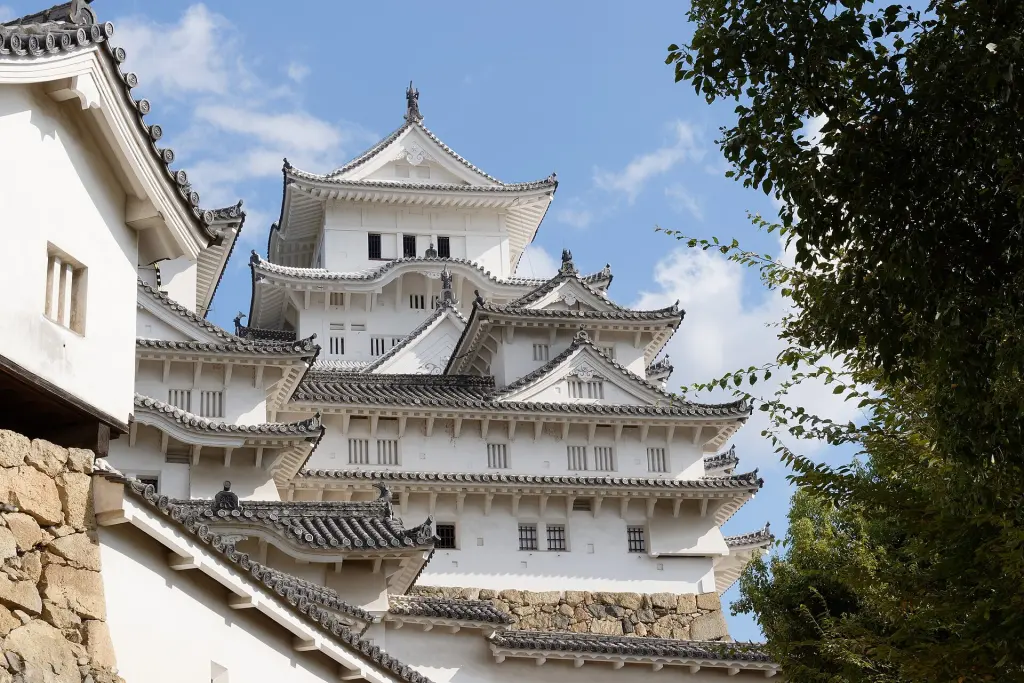
Image: Gilles Desjardins / Wikimedia Commons · CC BY-SA 4.0
Overview
Four terms. Four different kinds of thing.
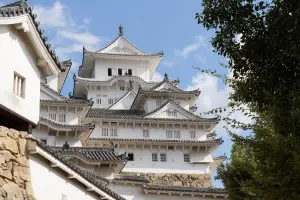
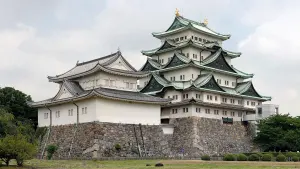
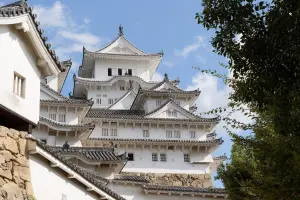
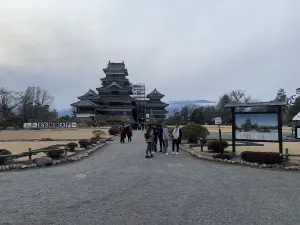
Japanese castle structure is best understood as a relationship between spaces, buildings and defensive works. A tenshu is the main keep; a honmaru is the principal enclosure; yagura are turrets and related structures; and ishigaki are stone retaining walls. These words are not interchangeable, and they do not describe four successive layers found in every castle. Layouts depend on terrain, building period, political needs and later alteration. The examples here draw chiefly on early modern sites, including Nagoya, Himeji and Matsumoto. Their surviving or reconstructed elements show how a castle could combine defence, storage, residence, administration and the display of authority.
Main keep
Principal enclosure
Turret or related building
Stone retaining walls
At a glance
- Tenshu
- 天守 — main keep
- Honmaru
- 本丸 — principal enclosure
- Yagura
- 櫓 — turret or related structure
- Ishigaki
- 石垣 — stone retaining walls
01
Tenshu: the main keep
A tenshu is a prominent multi-storey building within a castle complex. Its internal floors do not necessarily match the number of external roof tiers. Matsumoto’s connected keep group shows why the principal tower should be read together with adjoining structures. A keep should not automatically be described as the lord’s everyday home.
02
Honmaru: an enclosure, not a building
Honmaru names the principal enclosed area. A palace within it is a honmaru goten, a separate architectural object. Nagoya’s official English materials use the spelling Hommaru Palace. The enclosure and the palace therefore need separate labels, just as a courtyard and a house do.
03
Yagura: defence, storage and connected rooms
Yagura include corner turrets and long gallery-like structures. Their use varied: Nagoya’s turrets served lookout and storage functions, while Himeji’s West Bailey gallery also accommodated women of the household. The English word watchtower conveys only part of this range. Exterior appearance alone does not settle a building’s use.
04
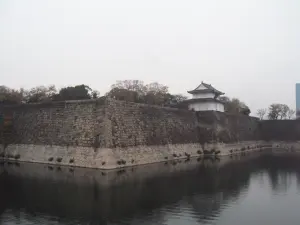
Ishigaki: the stone face of an engineered earthwork
Ishigaki retain and support earth rather than making the entire castle a solid stone structure. Behind the visible face are materials that help stability and drainage. Masonry can range from comparatively unshaped stones to roughly dressed or closely cut blocks. Differences can record construction phases and repairs, but are not a precise dating system on their own.
05
How the four parts relate
Honmaru
- Kind of thing
- Enclosed space
- Relationship
- Can contain palace buildings and a keep or keep compound.
Tenshu
- Kind of thing
- Main building
- Relationship
- May stand on a stone base and connect with smaller towers.
Yagura
- Kind of thing
- Building type
- Relationship
- May guard a corner, gate or edge, or form a long gallery.
Ishigaki
- Kind of thing
- Retaining structure
- Relationship
- Supports elevated ground and can carry walls or buildings.
06
Gates and moats complete the system
Moats, gateways and changes in direction controlled access between defended areas. A useful reading sequence moves from the site plan to the enclosure, then to the building and its construction details. This sequence is an interpretive aid, not a claim that every castle had concentric rings or the same route to its keep.
07
Check the age of each visible element
Azuchi’s surviving foundations belong to a castle whose construction was supervised by Niwa Nagahide; the archaeological site should be distinguished from later visual reconstructions.
Nagoya Castle contains a post-war keep and a reconstructed palace alongside surviving structures. Himeji Castle and Matsumoto Castle preserve historic timber buildings through conservation. Structure, original function and present material age are separate questions.
Sources
Last updated: