Karate
Naha-te
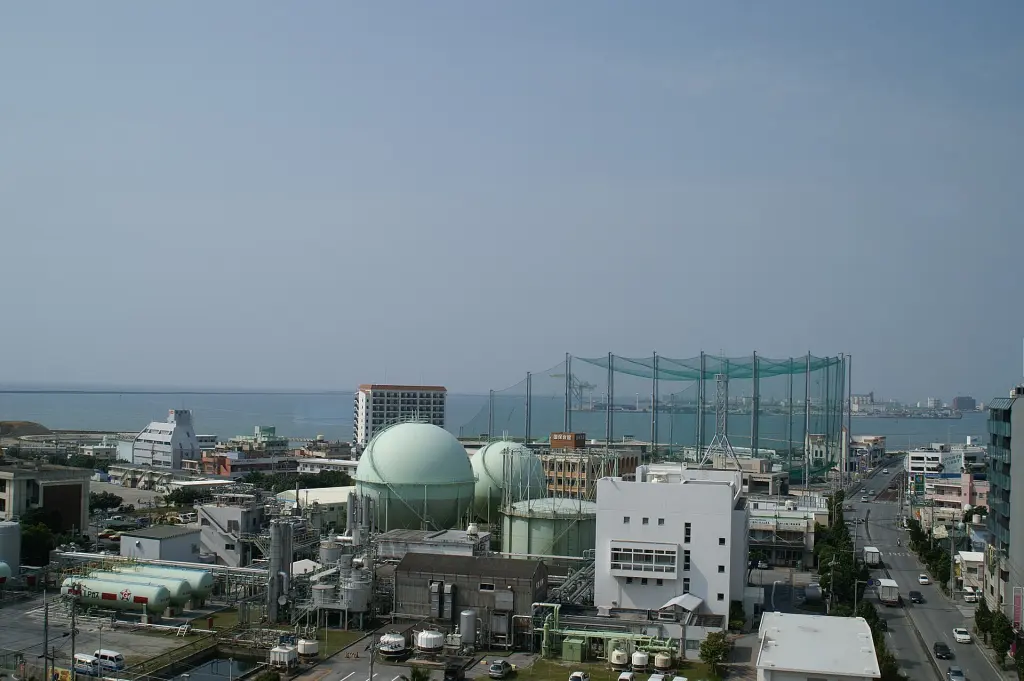
Image: Hideyuki Kamon / Wikimedia Commons · CC BY-SA 2.0
Overview
A port-city network turned maritime exchange into a major modern Karate inheritance.
Naha-te (那覇手) is a historical label for te transmission associated with Naha, the principal commercial port of the Ryukyu Kingdom. Okinawan forms include Naafadī or Naafa-dii. The label is connected especially with Kanryō Higaonna and students including Chōjun Miyagi, whose later work shaped Gōjū-ryū. Naha’s maritime setting makes exchange with China essential to the history, but it does not reduce the network to one unchanged imported system. Place, teacher, kata, and later organisation must be read together.
Movement through the Ryukyu trading world created repeated opportunities for contact and adaptation.
Travel and Chinese contact matter; details of one exact source lineage remain debated.
- Japanese
- 那覇手
- Okinawan reading
- Naafadī or Naafa-dii
- Place
- Naha, Ryukyu commercial port
- Associated teacher
- Kanryō Higaonna (1853–1915)
- Later connections
- Gōjū-ryū · Shitō-ryū
- Best understood as
- A regional and genealogical guide
01Name & port-city context
“Naha hand” connects a place of exchange with changing teaching networks.
Geography explains opportunity for contact; it does not determine one universal technique.
Naafadī / Naafa-dii
The Okinawan-language form used in institutional presentation.
那覇手
Naha plus te, “hand”.
Transmission grouping
A guide to teachers and material associated with Naha.
Naha was a commercial and diplomatic port. Movement of people and knowledge is therefore necessary to the subject, but individual curricula still depended on teachers, travel, kata transmission, and later institutional choices.
02Kanryō Higaonna & transmission
Higaonna is the central documented name; the Fuzhou story needs careful boundaries.
Evidence for travel and Chinese contact should be separated from later claims about one exact teacher or school.
Naha transmission
Okinawan institutional histories identify Higaonna as the major figure associated with the network.
Fuzhou details vary
Accounts differ when naming teachers, schools, dates, and the extent of an unchanged imported curriculum.
Higaonna’s students carried the inheritance into modern named systems. That process involved selection, pedagogy, and organisation rather than simple duplication.
03Kata & training material
Sanchin is prominent, but no one performance is the universal historical original.
Names can persist while sequence, breathing, posture, emphasis, and application change.
Sanchin
Central to many discussions of Naha-derived practice and later Gōjū-ryū curricula.
Compare the full context rather than one visible feature.
Breathing and structure
Later schools organise these elements differently.
Application and conditioning
Intensity and interpretation belong to a qualified teacher and a specific school.
Naha-linked forms also appear in Gōjū-ryū and Shitō-ryū. Their presence supports historical comparison without proving identical transmission or execution.
04Chōjun Miyagi & Gōjū-ryū
Miyagi organised a modern system from Naha-linked inheritance.
Gōjū-ryū is the strongest widely recognised later connection, not a substitute name for every earlier Naha practice.
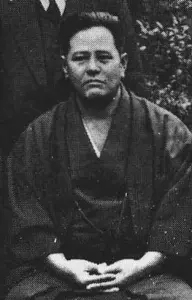
Kanryō Higaonna
A central transmitter of Naha-associated practice.
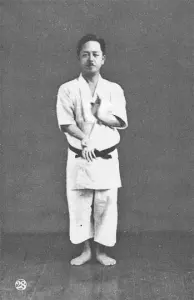
Chōjun Miyagi
Developed terminology, pedagogy, and institutional continuity.
Gōjū-ryū Karate
“Hard-soft style,” with later branches and differing interpretations.
Gōjū-ryū combines kata, breathing and body training, partner work, and organisational transmission. Its internal variation is another reason not to use Naha-te as a timeless technical synonym.
05Connections beyond Gōjū-ryū
Mabuni’s dual study shows why modern styles cross regional labels.
Sharing a kata, breathing exercise, or broad Chinese connection does not by itself prove one descent route.
Studied across networks rather than inside one closed regional box.
Other Okinawan lineages also developed through Chinese study, local exchange, or separate teachers. Similarity is a question to investigate, not a complete genealogy.
06Comparison & stereotypes
Technical tendencies must be tied to a period, teacher, form, and organisation.
Labels such as rooted, circular, close-range, or breathing-centred may describe later curricula but cannot define every historical practitioner.
Shuri-te
Court-town and educational networks connected especially with Matsumura and Itosu.
Not simply “linear”Naha-te
Higaonna’s transmission and its later Gōjū-ryū connection.
This pageTomari-te
A smaller grouping with substantial overlap among teachers and kata.
Not an isolated third styleA useful comparison specifies the period, instructor, form, drill, and organisation. It also separates historical genealogy from a modern school’s explanation of body mechanics.
07Historical significance
Naha-te joins Ryukyuan maritime history to the formation of major modern styles.
Its history shows why “Chinese influence” should be studied as repeated exchange and adaptation.
Teacher and kata relationships
The label helps connect Higaonna, Miyagi, Mabuni, Gōjū-ryū, and Shitō-ryū.
One unchanged import
Later branch accounts and institutional teaching require attribution and comparison.
Sources and further reading
- Okinawa Prefecture, Okinawa—The Birthplace of Karate.
- Okinawa Karate and Kobudo Record Production Committee, The History of Karate.
- Naha City Assembly, Declaration of Naha as the Town of Karate and Kobudo.
- Akiyuki Abe, “The Process of Establishing Karate in the Modern Okinawan Youth Education System”.
- Japan Karatedo Federation, Karate terminology and major styles.
Last updated: