Japanese Writing
Japanese Writing System
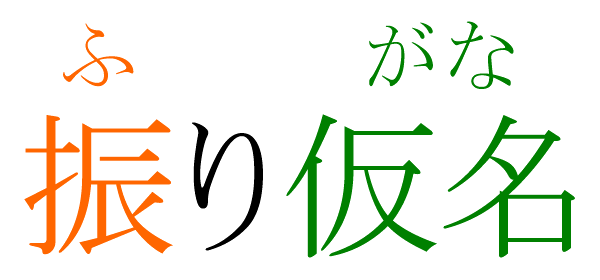
Image: Tokigun / Wikimedia Commons · Public domain
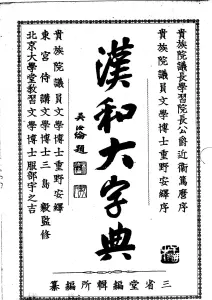
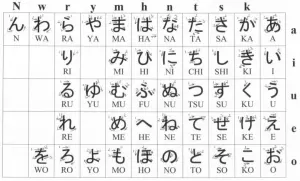
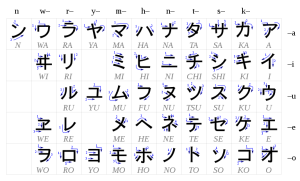
The Japanese writing system is a mixed orthography that combines kanji, hiragana, and katakana, alongside punctuation, Arabic numerals, and the Roman alphabet. Kanji generally carry lexical meaning and may have several context-dependent readings; hiragana commonly writes grammatical endings, particles, and many native words; katakana often marks loanwords, names, technical vocabulary, sound symbolism, or emphasis. These are not three interchangeable alphabets. Their present relationship developed after Chinese characters reached the archipelago and were adapted both for meaning and for sound, including the historical practice now called Man’yōgana. Actual usage varies by genre, audience, period, typography, and individual choice, so simple division-of-labor rules describe tendencies rather than absolute boundaries.
Overview
| Japanese name | 日本語の表記体系 |
|---|---|
| Romanization | Nihongo no hyōki taikei |
| Principal scripts | Kanji, hiragana, and katakana |
| Historical source | Chinese characters adapted to write Japanese |
| Writing directions | Horizontal left-to-right and vertical top-to-bottom |
| Additional signs | Punctuation, Arabic numerals, rōmaji, and reading marks |
Components and scope
Modern Japanese usually places several graphic systems in the same sentence. In 私はコーヒーを飲みます, for example, kanji write lexical elements, hiragana writes a topic particle and inflectional material, and katakana writes the borrowed word kōhī, “coffee.” This distribution helps readers identify word structure as well as pronunciation and meaning.
The word kana covers hiragana and katakana collectively. Both represent morae, rhythmic units that include vowel-only forms, consonant-vowel sequences, and the moraic nasal, but their shapes and conventional functions differ. Kanji are logographic or morphographic characters rather than pictorial “ideas,” and rōmaji is a supporting romanization rather than the normal replacement for mixed Japanese text.
Arrival and adaptation of Chinese writing
Writing reached the Japanese archipelago through long contact with the Chinese cultural sphere and the Korean Peninsula. Early inscriptions and imported texts used Chinese characters, while court, diplomatic, Buddhist, and administrative institutions expanded literacy and textual production during the first millennium.
Chinese and Japanese differ substantially in grammar and sound structure. Writers therefore developed ways to read Chinese texts in Japanese order, to use characters for Japanese words with related meanings, and to borrow characters for their sounds. No single event or inventor created the resulting system.
Man’yōgana and the development of kana
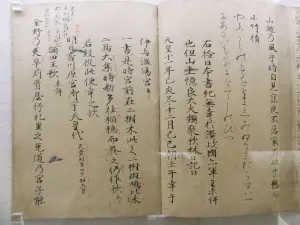
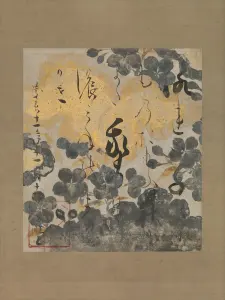
In Man’yōgana, Chinese characters were used chiefly for their phonetic value to record Japanese. The practice is especially visible in eighth-century materials, including the Man’yōshū, but it was never one perfectly standardized table of signs.
Over time, cursive forms of whole phonographic characters contributed to hiragana, while abbreviated components used in scholarly annotation contributed to katakana. These developments accelerated from the late Nara through the early Heian period. The familiar modern inventories emerged only after further selection and standardization.
Mixed-script reading
Kanji commonly identify stems of nouns, verbs, and adjectives, while hiragana supplies particles and okurigana endings. This visual alternation makes grammatical boundaries easier to recognize in text that normally lacks spaces between words. Katakana can set off foreign-derived vocabulary or create a distinct visual register.
The divisions are conventional, not absolute. A word may be written in kanji, kana, or a mixture depending on readability, age level, tone, technical field, branding, or personal preference. Furigana places small kana beside or above kanji to show a reading and can also create interpretive effects beyond simple pronunciation.
Direction, layout, and punctuation
Japanese can be written horizontally from left to right or vertically from top to bottom, with vertical columns conventionally ordered from right to left. Books, newspapers, signs, manga, academic work, and digital interfaces choose direction according to format and genre; a single publication may combine both.
Modern punctuation includes the Japanese comma and full stop, brackets, quotation marks, iteration marks, prolonged-sound marks, and symbols shared with international typography. Numerals may appear as kanji or Arabic digits. Layout is therefore part of the writing system's practice rather than a neutral container for characters.
Standardization, education, and variation
Government guidance addresses common-use kanji, kana orthography, official documents, and education. The Jōyō Kanji Table provides a reference for ordinary social use, not a prohibition on every character outside it. Personal names, specialist fields, historical texts, literature, and local practice require additional characters and readings.
Children generally learn kana before a staged school sequence of kanji, while adult literacy continues through exposure to compounds, names, and specialist vocabulary. Historical spellings, variant kana, old character forms, and regional or stylistic choices remain important for archives and cultural heritage.
Printing, digital text, and accessibility
Woodblock printing, movable type, modern typecasting, typewriters, phototypesetting, and computers each changed which characters could be reproduced efficiently. Digital input commonly begins with phonetic typing and converts candidate strings into kanji and mixed text, requiring the writer to select the intended word and reading.
Unicode encodes kanji, kana, punctuation, compatibility forms, and historic extensions, but a code point does not determine every regional glyph shape or typographic design. Fonts, line breaking, ruby text, vertical layout, screen readers, and clear language choices all affect whether encoded Japanese is legible and accessible.
Sources
- Yoko Hasegawa, Writing System, in Japanese: A Linguistic Introduction.
- The Unicode Standard, Chapter 18: East Asia.
- Bjarke Frellesvig, Writing and Sources, in A History of the Japanese Language.
- NINJAL, A Discovery in the History of Research on Japanese Kana Orthography.
- Agency for Cultural Affairs, Japanese Language Policy and Education.
- National Museum of Japanese History, A Connection through Characters.
Last updated: