
Historic Cities
Kyoto
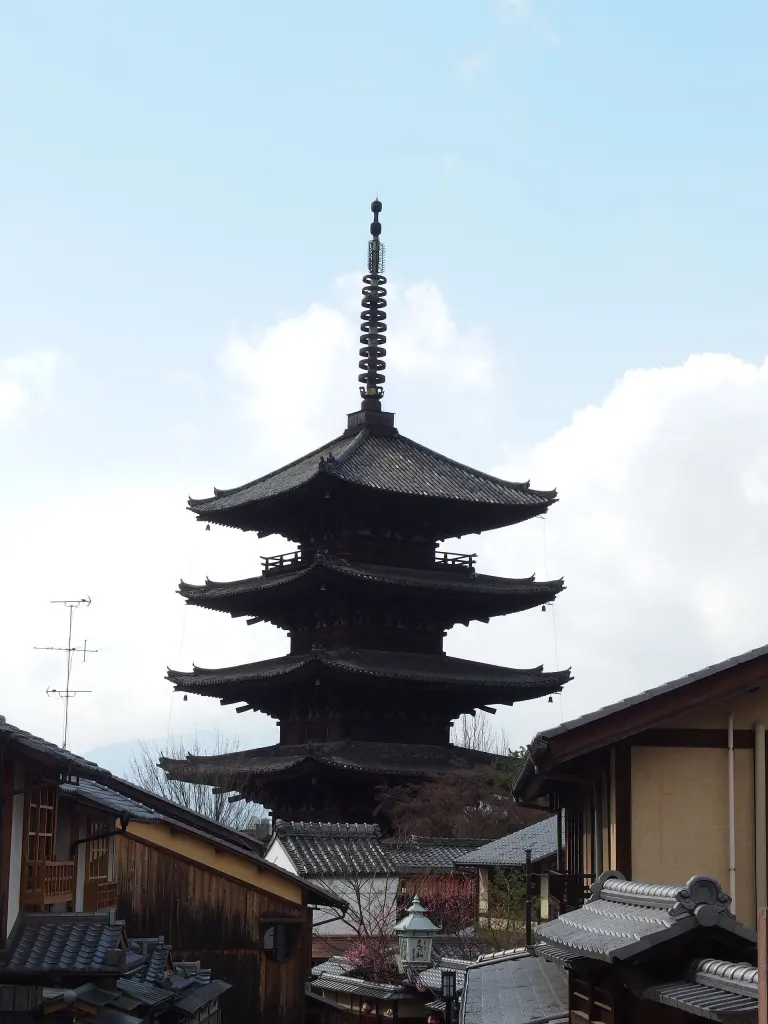
Image: Guilhem Vellut / Wikimedia Commons · CC BY 2.0
Kyoto is a city in the Kansai region and the capital of Kyoto Prefecture. Founded as Heian-kyō in 794, it served as the principal imperial capital for more than a millennium and became a major center of court culture, Buddhism, Shinto practice, literature, craft, cuisine, and the performing arts. Its cultural history is not confined to monuments: festivals, workshops, markets, universities, residential districts, and living religious communities remain part of the modern city. Seventeen properties in Kyoto, Uji, and Ōtsu form the UNESCO site called the Historic Monuments of Ancient Kyoto, but that designation does not cover Kyoto as a whole. Kyoto can also mean the surrounding prefecture; this article focuses on Kyoto City and the historical layers visible within its urban landscape.
Overview
| Japanese name | 京都市 |
|---|---|
| Romanization | Kyōto-shi |
| Prefecture | Kyoto Prefecture |
| Region | Kansai |
| Historical foundation | Heian-kyō established in 794 |
| Heritage context | Fourteen UNESCO component properties lie in Kyoto City; the serial property also extends to Uji and Ōtsu |
Name and geography
Kyoto means “capital city,” reflecting its long political and ceremonial role. The modern municipality occupies a basin enclosed on three sides by mountains, with the Kamo and Katsura river systems shaping settlement, transport, agriculture, and seasonal life.
Kyoto City should be distinguished from Kyoto Prefecture, which extends north to the Sea of Japan. Areas marketed as “Kyoto” may therefore lie well beyond the city. Within the municipality, the dense center, Higashiyama foothills, northern temple districts, western Arashiyama, and southern Fushimi have different histories and spatial character.
Heian-kyō and the imperial capital
The planned capital founded in 794 is treated separately as Heian-kyō. It forms a central chapter in the geography of Japan’s historic capitals, but its original grid should not be equated with all of modern Kyoto.
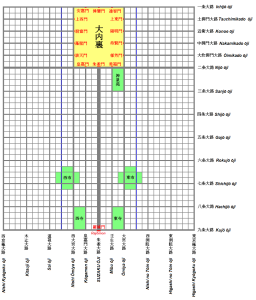
Emperor Kanmu established Heian-kyō in 794. Its rectilinear plan drew on East Asian capital models, with a central avenue and numbered streets, although the city’s inhabited center shifted eastward over time. The imperial court fostered institutions and literary cultures associated with the Heian period.
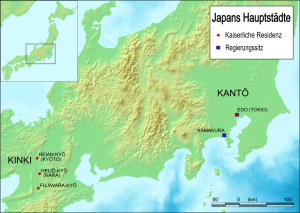
War, fire, political change, and rebuilding repeatedly altered the capital. The court remained in Kyoto until the imperial residence and central political functions moved to Tokyo during the Meiji Restoration. Kyoto then pursued new infrastructure, education, and industry while presenting its historical culture as a civic resource.
Urban form and neighborhoods
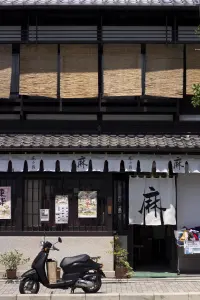
The central street grid still influences addresses and movement, but Kyoto is not a uniformly preserved old city. Modern buildings, railways, commercial streets, and postwar neighborhoods stand beside temple precincts, palace grounds, canals, and rows of machiya townhouses.
Historic character is especially visible in parts of Gion, Higashiyama, Nishijin, Kamigyo, Arashiyama, and Fushimi. These are lived-in districts rather than open-air museums. Landscape rules and conservation programs address building height, design, views, and historic streetscapes while the city continues to change.
Religious and cultural landscapes
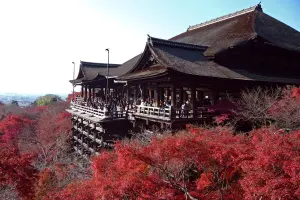
Kyoto contains temples and shrines associated with different periods, schools, patrons, and communities. Kiyomizu-dera, Fushimi Inari Taisha, Kinkaku-ji, Ginkaku-ji, Nishi Hongwan-ji, and many less famous sites express distinct religious histories rather than one uniform tradition.
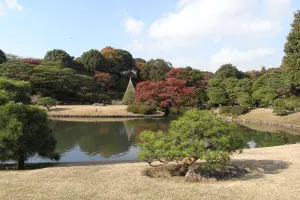
The UNESCO inscription comprises seventeen component properties in three cities. Fourteen are in Kyoto City; the others are in Uji and Ōtsu. The serial site documents architecture and Japanese gardens across centuries, but thousands of other cultural properties and everyday landscapes lie outside its formal boundary.
Arts, literature, and craft
Court poetry, monogatari, temple scholarship, tea culture, Noh, textile production, ceramics, lacquer, confectionery, and cuisine all have important Kyoto histories. The city is central to classical Japanese literature, but many works known through Kyoto circulated through wider regional and transnational networks.
Craft traditions survive through workshops, family firms, schools, museums, and new design businesses. Nishijin textiles, Kiyomizu ceramics, lacquer, metalwork, fans, and ritual objects have different production systems. “Kyoto craft” is therefore a collective label, not a single style or unchanged inheritance.
Festivals and living culture
The Gion Matsuri, Aoi Matsuri, Jidai Matsuri, and Gozan Okuribi connect neighborhoods, religious institutions, historical representation, and seasonal calendars. Their present forms reflect long histories of interruption, adaptation, sponsorship, and civic organization.
Kyoto’s living culture also includes markets, university communities, contemporary art, independent publishing, manufacturing, and ordinary residential life. Treating the city only as a repository of tradition can obscure the people and institutions that maintain, debate, and remake that tradition.
Visiting and stewardship
Major sites are dispersed, and the city’s buses and narrow historic streets can become congested. Rail, subway, walking, and routes beyond the most famous districts can distribute movement more effectively. Opening hours, photography rules, worship areas, and reservation systems vary by site and should be checked with official sources.
Visitors share temples, shrines, streets, and transport with residents. Quiet conduct, respect for private property, responsible disposal of waste, and following local signs are part of cultural stewardship. A longer stay can reveal differences among districts that a checklist of monuments cannot.
Four scales for reading Kyoto
“Kyoto” works at four overlapping but non-identical scales. Keeping them separate prevents a common reading error: treating the modern city, the wider prefecture, the capital founded in 794, and a serial World Heritage property as if they shared one boundary.
| Scale | What it means | Best used for |
|---|---|---|
| Kyoto City | The modern municipality centered on the Kyoto basin and its urban grid. | Neighborhoods, civic policy, everyday life, and urban change. |
| Kyoto Prefecture | The wider administrative region that contains Kyoto City but extends beyond the urban basin. | Regional travel and places outside the city boundary. |
| Heian-kyō | The planned capital established in 794, whose grid still shapes central Kyoto. | Imperial history and the wider story of Japan’s historic capitals. |
| Historic Monuments of Ancient Kyoto | A UNESCO serial property of 17 components across Kyoto, Uji, and Ōtsu—not the whole city. | Specifically inscribed temples, shrines, buildings, and gardens. |
This distinction also changes how individual subjects connect. Machiya and Japanese gardens belong to larger systems of urban life and landscape design, while Kiyomizu-dera can be read simultaneously as a living religious site, part of the modern city, and one component of the UNESCO property. The result is a route through Kyoto’s relationships, rather than a checklist of landmarks.
Sources
Last updated:
.jpg)