Shrines & Temples
Kiyomizu-dera
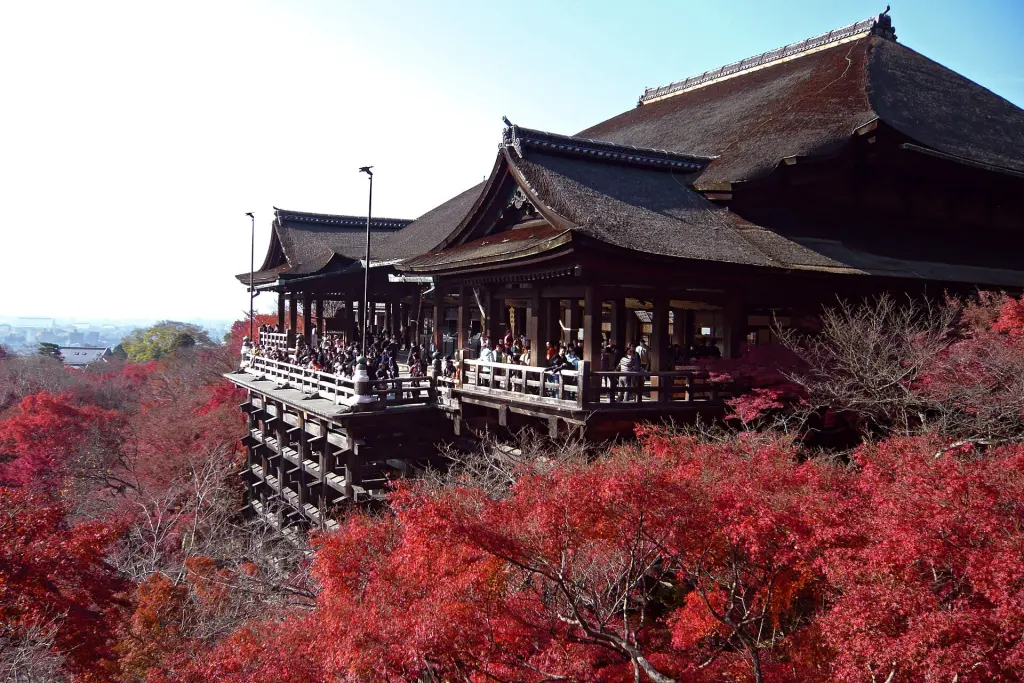
Image: Oilstreet / Wikimedia Commons · CC BY-SA 3.0
Kiyomizu-dera (清水寺) is a Buddhist temple on Mount Otowa in eastern Kyoto. Founded in 778, it is dedicated to an Eleven-Headed, Thousand-Armed form of Kannon, the bodhisattva of compassion. The temple's name means “Pure Water Temple” and refers to the Otowa waterfall that shaped its sacred geography. Its best-known structure is the Main Hall and the projecting wooden stage supported above the slope by a lattice of timber columns. Most present buildings were reconstructed in 1633 after repeated fires, and the Main Hall underwent a major modern conservation campaign completed in 2020. Kiyomizu-dera is the head temple of the Kita-Hossō school and a component of UNESCO's Historic Monuments of Ancient Kyoto. The site remains a place of worship and pilgrimage; its architecture is not merely a viewing platform over the city.
Overview
| Japanese name | 清水寺 |
|---|---|
| Location | Mount Otowa, Higashiyama, Kyoto |
| Classification | Buddhist temple |
| School | Kita-Hossō |
| Principal devotion | Eleven-Headed, Thousand-Armed Kannon |
| Foundation | 778 |
| World Heritage status | Historic Monuments of Ancient Kyoto, 1994 |
Name, water, and sacred site
Kiyomizu means ‘pure water,’ referring to the spring and waterfall on Mount Otowa. The temple developed around a place understood as sacred before it became a large architectural complex. Water is used in the continuing experience of the precinct, while the wooded slope frames approach, worship, and seasonal scenery. The name does not refer to architectural transparency or to a modern brand; it joins the temple's religious identity to a specific source of water.
Foundation narrative
Temple tradition recounts that the monk Kenshin, later called Enchin, followed a dream north from Nara and met the ascetic Gyōei beside the Otowa waterfall. Gyōei entrusted him with sacred wood for an image of Kannon. In 780 the warrior Sakanoue no Tamuramaro encountered Kenshin and, with his wife Miyoshino Takako, supported the construction of a hall. The narrative links ascetic practice, Kannon devotion, water, and elite patronage.
Kannon devotion and pilgrimage
Kiyomizu-dera presents itself as a Kannon reijō, a sacred place where Kannon's compassion is encountered through worship. Its principal image is normally concealed and shown only on exceptional occasions. The temple is the sixteenth station of the Saigoku Kannon Pilgrimage. Historical literature records visitors from different social groups, helping explain why the site appears repeatedly in painting, travel, performance, and popular sayings.
Main Hall and stage
The Main Hall projects over the hillside on a timber substructure assembled without nails in its major framing. The stage supported ceremonies and performances offered to Kannon; its urban view is a later visitor emphasis, not its sole purpose. The expression ‘to jump from the stage of Kiyomizu’ means to make a bold decision. Historical incidents behind the phrase should not be romanticized as a current custom: jumping has long been prohibited.
Fire and seventeenth-century rebuilding
Fire destroyed temple buildings more than ten times across the site's history. Most structures now visible were reconstructed in 1633 under Tokugawa patronage, including the present Main Hall. Gates, pagoda, halls, and subsidiary spaces form a sequence across the slope rather than one isolated monument. Repeated rebuilding allowed worship to continue while producing an ensemble in which foundation date and surviving architectural date must be stated separately.
Kita-Hossō school
Kiyomizu-dera historically belonged to the Hossō tradition and was connected to Kōfuku-ji in Nara. In 1965 it became the head temple of the independent Kita-Hossō school under Ōnishi Ryōkei. The school identifies Kannon devotion and service to society as central concerns. This modern institutional change does not erase the temple's much older religious history; it defines its present administrative and doctrinal position.
World Heritage and conservation
Kiyomizu-dera is one component of the Historic Monuments of Ancient Kyoto. That serial World Heritage property spans Kyoto, Uji, and Ōtsu and should not be confused with either the whole of Kyoto City or every historic building within it.
In 1994 Kiyomizu-dera was included in the UNESCO property Historic Monuments of Ancient Kyoto. The designation concerns a group of sites across Kyoto, Uji, and Ōtsu rather than one temple alone. A major conservation programme concluded in 2020 after repairs to the Main Hall roof and other structures. Conservation replaces damaged material through documented traditional methods, so authenticity at a living wooden temple depends on skilled renewal as well as retaining older fabric.
Visiting and living practice
Visitors pass through gates and halls, worship Kannon, encounter the Otowa waterfall, receive amulets or goshuin, and attend seasonal observances or special night openings. Cherry blossom and autumn foliage attract large crowds, but the grounds remain a religious precinct. Photography restrictions, worship areas, one-way routes, and opening conditions can change. Current practical information should therefore be checked on the official temple site rather than treated as permanent encyclopedic fact.
Sources
Last updated: