Classical Literature
Man’yōshū
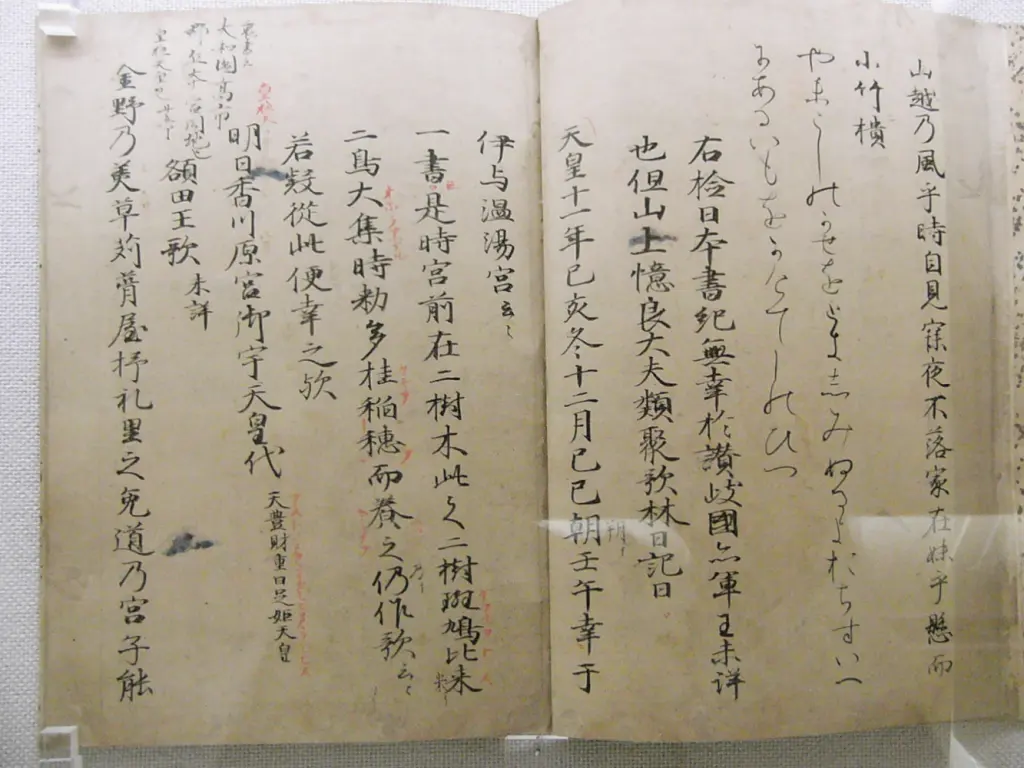
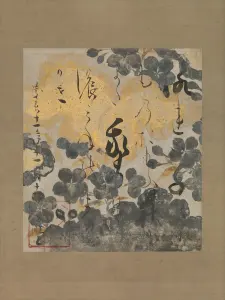
Image: Tokyo National Museum; digital file by ReijiYamashina / Wikimedia Commons · CC BY-SA 3.0
The Man’yōshū, or Collection of Ten Thousand Leaves, is the earliest surviving anthology of Japanese-language poetry. Compiled in stages during the eighth century, its twenty books preserve more than 4,500 poems attributed to emperors, courtiers, frontier guards, travelers, officials, and anonymous speakers, though attribution and historical voice require caution. The collection includes short tanka, long chōka, and other forms written through complex uses of Chinese characters now studied under the name man’yōgana. Ōtomo no Yakamochi is closely associated with the later books and the final dated poem, but he should not be presented as the anthology’s sole certain compiler. The Man’yōshū is both a literary collection and a major source for Old Japanese, social memory, place, ritual, travel, grief, and the later construction of a national poetic past.
Overview
| Japanese title | 万葉集 or 萬葉集 |
|---|---|
| Romanization | Man’yōshū |
| Date | Compiled in stages during the eighth century |
| Structure | Twenty books |
| Contents | More than 4,500 poems |
| Major forms | Tanka, chōka, sedōka, and related song forms |
Name and scope
Man’yōshū is conventionally translated as Collection of Ten Thousand Leaves, although the title’s intended nuance has been debated. “Ten thousand” can suggest a very large or enduring collection, while “leaves” may evoke pages, generations, or words. No single explanation is universally accepted.
The anthology gathers poetry connected with several reigns and regions rather than documenting one moment. Some poems may preserve earlier oral or court traditions, but the dates attached to voices and events do not automatically establish when every text reached its surviving form.
Compilation and structure
The twenty books were assembled from earlier collections, court records, personal archives, and groups of poems. Their organization mixes chronology, genre, authorship, occasion, and source. Books do not all follow one editorial plan, indicating multiple stages of compilation.
Ōtomo no Yakamochi’s poems and records dominate portions of the final books, and the latest securely dated poem is associated with 759. He was an important compiler or editor, but the anthology as a whole reflects earlier collections and several hands.
Poets and social voices
Named poets include Kakinomoto no Hitomaro, Yamabe no Akahito, Yamanoe no Okura, Ōtomo no Tabito, Ōtomo no Yakamochi, and Nukata no Ōkimi. Imperial figures, officials, women, travelers, frontier guards, and anonymous speakers also appear across the collection.
The apparent social breadth is important, but a poem’s heading and speaker may have been shaped by transmission and editorial framing. “Songs of the people” should not be treated as unmediated recordings. The anthology constructs voices as well as preserving them.
Poetic forms
Tanka, built around a 5–7–5–7–7 rhythmic pattern, is the collection’s most numerous form. Chōka extends alternating 5- and 7-unit phrases before a concluding pattern and often accompanies one or more shorter envoy poems. Sedōka and a small number of other forms add to the anthology’s variety.
Counting Japanese on as English syllables can misrepresent the sound structure. Formulaic phrases, parallelism, place names, repetition, pivoting meanings, and sequences of poems also shape form. A single poem may depend on its heading and neighboring poems for context.
Man’yōgana and Old Japanese
Man’yōgana is the later scholarly name for phonographic uses of kanji found throughout the anthology. Because the same character can function for sound or meaning, identifying these usages depends on context, meter, manuscript comparison, and historical linguistics.
The poems use Chinese characters semantically, phonetically, and in mixed strategies. The phonographic uses are grouped under the modern term man’yōgana. They preserve distinctions in Old Japanese that later writing and pronunciation no longer maintain.
Reading the text requires editorial reconstruction. Scholars identify character values, grammar, textual variants, and historical pronunciation, then provide normalized readings. A modern kana transcription is an interpretation supported by philology, not simply the original text rewritten mechanically.
Themes, places, and memory
Love, separation, death, travel, military duty, court ceremony, landscape, and seasonal change recur throughout the anthology. Poems linked to Yoshino, Nara, Dazaifu, the eastern provinces, and frontier service create a geography of movement and remembered place.
Nature is rarely only scenery. Mountains, bays, birds, plants, weather, and roads carry political, ritual, and personal associations. Later readers turned many of these places into poetic landmarks, while local communities use Man’yō connections in museums, monuments, gardens, and tourism.
Transmission, reception, and legacy
The anthology became difficult to read as language changed. Medieval scholars, including the monk Sengaku, worked on readings and commentary, while manuscript families preserved differing texts. Early modern philology and kokugaku scholarship made the Man’yōshū central to arguments about ancient language and feeling.
Modern editions, translations, school curricula, calligraphy, place studies, and digital corpora continue to reshape access. The collection influenced later ideas of waka and literary history, but haiku developed through much later linked-verse and haikai traditions rather than directly from Man’yōshū form.
Sources
- Columbia University Press, Traditional Japanese Literature: An Anthology, Beginnings to 1600.
- Cambridge University Press, The Cambridge History of Japanese Literature: Man’yōshū.
- University of Virginia Japanese Text Initiative, Man’yōshū.
- National Diet Library Newsletter, The Challenge of Reading the Man’yōshū.
- The Government of Japan, Man’yōshū and the Classical Waka Tradition.
Last updated: