
Classical Literature
The Tale of Genji
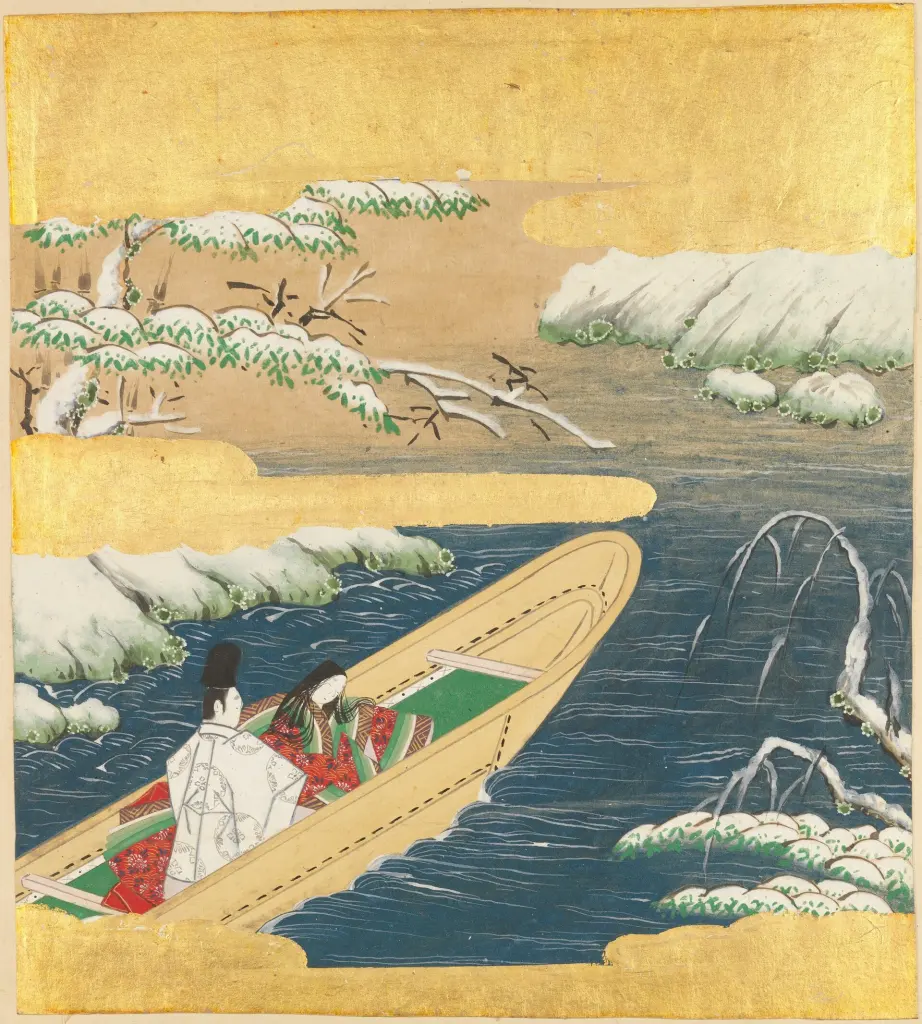
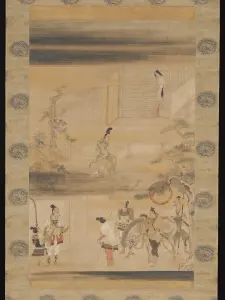
Image: Formerly attributed to Tosa Mitsusada; inscription by Shōren’in Sonjun Shinnō / The Metropolitan Museum of Art via Wikimedia Commons · CC0 1.0
The Tale of Genji, or Genji monogatari, is an early eleventh-century Japanese narrative attributed to the court writer Murasaki Shikibu. Its fifty-four chapters follow the life and relationships of Hikaru Genji, an emperor’s son made a commoner, and then shift to a later generation associated with Uji. Court rank, marriage politics, ritual, music, clothing, landscape, and hundreds of waka poems shape a fictional world in which private feeling is inseparable from social position. The work is often called the world’s first novel, but that modern label is debated and can obscure its roots in monogatari, poetry, and courtly storytelling. No authorial manuscript survives. The text known today depends on later copies, commentaries, editions, illustrations, translations, and centuries of creative reinterpretation within classical Japanese literature.
Overview
| Japanese title | 源氏物語 |
|---|---|
| Romanization | Genji monogatari |
| Attributed author | Murasaki Shikibu |
| Date | Early eleventh century |
| Form | Extended monogatari narrative with embedded waka |
| Structure | Fifty-four chapters, including the later Uji sequence |
Title and authorship
Genji monogatari means the tale or narrative of Genji. The name Hikaru Genji identifies the radiant fictional courtier at the work’s center. Early references and Murasaki Shikibu’s diary support the traditional attribution, although the surviving text cannot be compared with an autograph manuscript.
Murasaki Shikibu was a lady-in-waiting in Empress Shōshi’s household. Her personal name is unknown; the name used today combines a court title with Murasaki, a character associated with the tale. Claims about assistants or multiple authors remain hypotheses rather than settled fact.
Composition and manuscripts
Genji’s language belongs to a Heian court culture in which hiragana enabled extended phonographic writing in Japanese. No authorial manuscript survives, however, so the spelling and script forms seen in modern editions reflect later copying and editorial work.
The tale was probably written and circulated in sections during the early eleventh century. References from the period show that parts were being read at court, but the sequence and stages of composition are not fully recoverable. Paper, copying, and patronage shaped how such a long work could circulate.
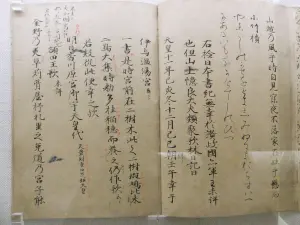
No original manuscript survives. Later textual families, especially those associated with Fujiwara no Teika and other medieval editors, differ in wording and arrangement. Modern editions compare manuscripts and commentaries; the neat fifty-four-chapter book encountered today is the result of that transmission history.
Narrative structure
The opening chapters trace Genji’s youth, relationships, exile, return, political ascent, and losses. Later chapters focus more closely on the consequences of his household and on characters who inherit unstable positions. The final ten chapters move to Uji and center on Kaoru, Niou, and several women caught between them.
The story does not follow a modern adventure plot. Time passes through ceremonies, promotions, births, illnesses, seasonal change, memory, and poetic exchange. Important events may be narrated indirectly or through their emotional aftermath, requiring readers to track kinship, rank, residence, and shifting points of view.
Court culture, gender, and power
Characters communicate through letters, waka, gifts, clothing, incense, screens, and controlled visits. Architecture and custom separate people while enabling overheard speech, glimpses, and intermediaries. Political advancement depends heavily on family alliances and the placement of daughters within imperial marriage networks.
The tale’s refined surfaces do not eliminate coercion or inequality. Rank, gender, age, kinship, and limited mobility shape relationships that modern readers may judge differently from historical court audiences. Interpretation benefits from attending to both emotional complexity and the structures of power represented by the narrative.
Poetry and aesthetics
Waka poems are actions within the story rather than decorative interruptions. Characters use them to answer visits, negotiate intimacy, recall earlier texts, signal education, and conceal as much as they reveal. Seasonal plants, moonlight, mist, color, fragrance, and sound connect present scenes with remembered poems.
Later readers have associated the tale with mono no aware and other concepts in Japanese aesthetics. Such terms can illuminate reception, but they should not reduce the work to one timeless philosophy. Humor, rivalry, embarrassment, political calculation, and narrative irony are also central.
The Uji chapters and ending
The Uji sequence changes place, generation, and emotional tone. Kaoru believes himself marked by an uncertain birth, while Prince Niou pursues many of the same women. The sisters Ōigimi and Nakanokimi and the later figure Ukifune face severe constraints within these relationships.
The final chapter, Yume no ukihashi, ends without a simple resolution. Readers and commentators have long debated whether this reflects a deliberate open ending, loss, or another stage of composition. A later sequel called Yamaji no tsuyu shows that dissatisfaction and creative continuation began early.
Reception, translation, and visual culture
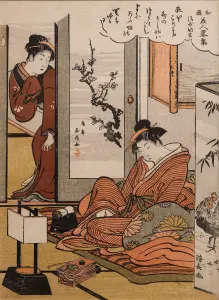
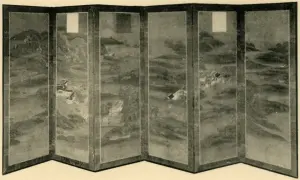
Poets, scholars, and commentators treated Genji as a major archive of language and court culture. Illustrated handscrolls, album leaves, screens, printed books, ukiyo-e, Noh plays, parody, manga, film, and museum exhibitions repeatedly remade its episodes and characters.
Modern Japanese editions and translations differ in how they identify unnamed characters, render titles, and explain allusion. International claims that Genji is the first novel helped establish its global status, but its most secure description is a foundational long-form narrative whose meanings have changed with its readers.
Sources
- Columbia University Press, Traditional Japanese Literature: An Anthology, Beginnings to 1600.
- Columbia University Asia for Educators, The Tale of Genji by Murasaki Shikibu.
- Columbia University Press, Reading The Tale of Genji: Sources from the First Millennium.
- The Metropolitan Museum of Art, The Tale of Genji: A Japanese Classic Illuminated.
- National Diet Library, Japanese Literary Classics in Translation.
Last updated:
_MET_DP227845.jpg)