Classical Literature
The Pillow Book
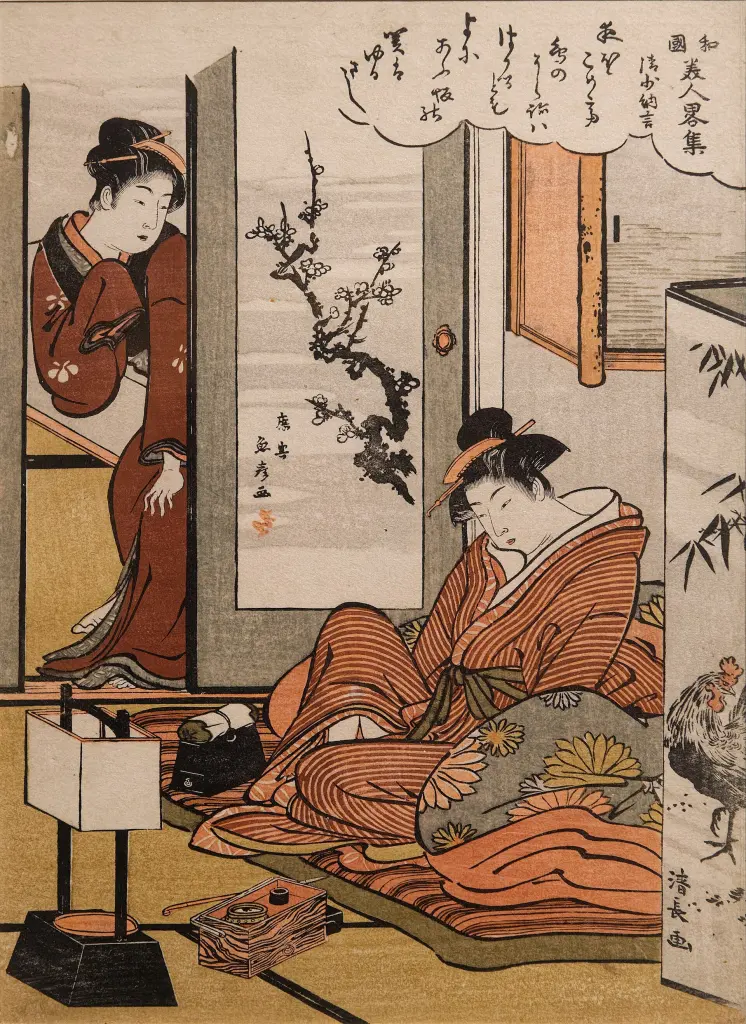
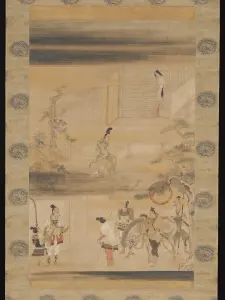
Image: Torii Kiyonaga; photograph by Marie-Lan Nguyen / Musée Guimet via Wikimedia Commons · Public domain
The Pillow Book, or Makura no sōshi, is a collection attributed to Sei Shōnagon, a lady-in-waiting to Empress Teishi around the year 1000. Its hundreds of passages range from famous seasonal observations and sharply categorized lists to court anecdotes, poetic exchanges, complaints, and scenes designed to preserve the brilliance of Teishi’s salon. The work is often described as a diary or the origin of the zuihitsu essay, but neither label fully captures its mixed forms or complicated textual history. Sei Shōnagon’s voice is observant, witty, competitive, and highly conscious of rank, language, clothing, and performance. The surviving book is not a neutral transcript of daily life: later manuscript families arrange and number its sections differently, and the narrator’s carefully fashioned memory belongs to the literary culture of the Heian court.
Overview
| Japanese title | 枕草子 |
|---|---|
| Romanization | Makura no sōshi |
| Attributed author | Sei Shōnagon |
| Date | Around the turn of the eleventh century |
| Setting | The court salon of Empress Teishi |
| Forms | Lists, observations, anecdotes, poetry, and reflective passages |
Title and scope
Makura no sōshi is conventionally translated as The Pillow Book, but the historical meaning of makura in the title is uncertain. It may suggest a personal notebook kept near at hand, a literary heading, or another association. The title should not be used as proof that the work was a private diary.
The collection contains passages of very different scale and purpose. Lists name elegant, irritating, rare, or moving things; anecdotes stage court interactions; descriptive sections organize seasons and sensory impressions; other passages defend the reputation of Empress Teishi’s circle.
Sei Shōnagon and Teishi’s court
Sei Shōnagon served Empress Teishi, a consort of Emperor Ichijō. Her name is a court appellation rather than a securely known personal name. The text presents her as skilled in Chinese learning, waka, repartee, and the rapid judgments expected in competitive aristocratic sociability.
Teishi’s political position weakened after the death and disgrace of close male relatives. The Pillow Book often preserves her salon at its most cultivated and confident. Scholars therefore read the work not only as personality writing but also as selective commemoration shaped by court rivalry and loss.
Lists, anecdotes, and observation
Lists are among the book’s most recognizable forms. Their headings invite classification, but the items can accumulate through sound, association, social judgment, and surprise rather than through a modern logical system. The shift between short entries and extended narrative is part of the work’s rhythm.
Anecdotes often turn on whether someone recognizes a quotation, chooses an appropriate color, responds quickly, or violates etiquette. The narrator’s judgments can be funny and cruel. They reveal elite values while reminding readers that the speaker is a crafted participant, not an impartial ethnographer.
Seasons, senses, and aesthetics
The opening sequence pairs spring dawn, summer night, autumn evening, and winter morning with changing light, birds, insects, clouds, and weather. Elsewhere, sound, texture, fragrance, paper, fans, clothing, and the timing of a message determine whether an event feels elegant or disappointing.
These passages have strongly influenced ideas about Japanese aesthetics, but their preferences are neither universal nor detached from status. Beauty often depends on the court’s material resources and on knowing conventions well enough to judge another person’s performance.
Poetry, language, and learning
Waka exchange tests memory, timing, handwriting, and social tact. Chinese poetry and allusion also matter, despite later stereotypes that separate women’s kana writing from men’s Chinese learning. Sei Shōnagon repeatedly presents literary knowledge as a form of social power.
The text’s wordplay and compressed references create difficulties for translation. A phrase may simultaneously evoke an earlier poem, a place name, and a judgment about the present scene. Explanatory notes are therefore part of responsible modern reading rather than an obstacle to the book’s immediacy.
Textual history
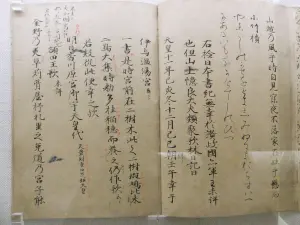
No autograph manuscript survives. Copies are grouped into textual families that differ in arrangement, wording, and the presence of passages. Some organize material more systematically than others, and section numbers vary across Japanese editions and translations.
The book may have circulated beyond the author’s control, but accounts of accidental discovery belong partly to the text’s own self-presentation. Editors must decide how to order heterogeneous material without pretending that one later copy transparently reproduces a final authorial book.
Reception and translation
The Pillow Book has been paired with The Tale of Genji because both emerged from women’s literary salons at Emperor Ichijō’s court. The comparison is productive, but stories of direct personal rivalry between Sei Shōnagon and Murasaki Shikibu are harder to establish than later retellings suggest.
Early modern commentary, school editions, illustration, and modern translations reshaped the work. Translators choose different arrangements and tones, especially for lists and sharp judgments. Its global afterlife includes essays, fiction, film, and digital list culture, yet the historical court setting remains essential.
Sources
- Columbia University Press, Traditional Japanese Literature: An Anthology, Beginnings to 1600.
- Columbia University Asia for Educators, Court Literature of the Heian Period.
- Columbia University Press, Unbinding The Pillow Book: The Many Lives of a Japanese Classic.
- Columbia University Press, The Pillow Book of Sei Shōnagon.
- National Diet Library, Go in Literary Works from Ancient to Middle Ages.
Last updated: