Classical Literature
Classical Literature
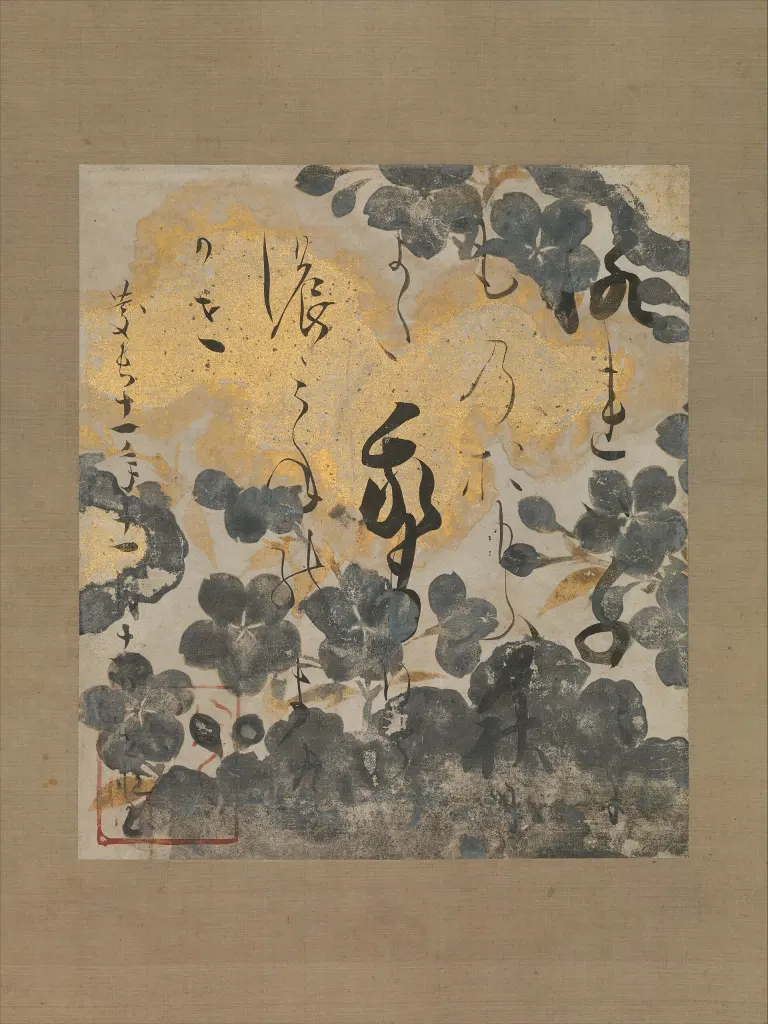
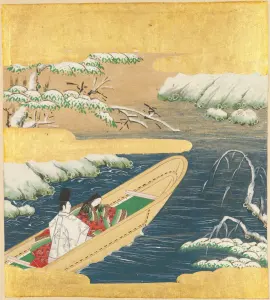
Image: Hon’ami Kōetsu; underpainting attributed to Tawaraya Sōtatsu / The Metropolitan Museum of Art via Wikimedia Commons · CC0 1.0
Classical Japanese literature is a broad field of poetry and prose produced from the earliest surviving texts through the medieval centuries. It includes court anthologies such as the Man’yōshū, Heian narratives including The Tale of Genji, observational writing such as The Pillow Book, and medieval war tales represented by The Tale of the Heike. These works arose in different political, linguistic, religious, and performative settings rather than forming one continuous genre. Their modern forms also depend on centuries of copying, commentary, recitation, printing, canon formation, and translation. “Classical” is therefore a later organizing category: it helps connect works across time, but it should not erase differences between court poetry, women’s writing, Buddhist narrative, oral performance, and warrior memory.
Overview
| Japanese name | 日本古典文学 |
|---|---|
| Romanization | Nihon koten bungaku |
| Broad period | Ancient through medieval Japan, with boundaries varying by literary history |
| Major forms | Waka, monogatari, nikki, zuihitsu, setsuwa, and gunki monogatari |
| Written languages | Classical Japanese, mixed kanji-kana styles, and literary Chinese |
| Transmission | Manuscript copying, commentary, recitation, performance, print, and translation |
Scope and periodization
Japanese literary histories divide the field in several ways. Ancient literature commonly includes the Nara period and the earliest chronicles and poetry collections; classical or chūko literature often centers on the Heian court; medieval literature extends through the Kamakura and Muromachi periods. English-language surveys sometimes use “traditional literature” for the whole span before 1600.
These boundaries are scholarly tools, not fixed labels used by every historical writer. Works continued to be recopied and reinterpreted long after their composition, and genres crossed political period lines. This article uses classical literature as a gateway to ancient, Heian, and medieval works while identifying each text’s more precise setting.
Language and writing
The wider Japanese writing system developed through changing relationships among literary Chinese, meaning-based kanji use, phonographic Man’yōgana, and the later kana scripts. Literary practice helped shape this history but did not follow one fixed script rule.
Early Japanese writing adapted Chinese characters to different tasks. Literary Chinese served government, scholarship, and composition, while characters were also used for their sounds in systems now described as man’yōgana. The development of kana enabled new ways of recording Japanese grammar, speech, poetry, diaries, and narrative prose.
The familiar contrast between men writing Chinese and women writing kana is useful only as a starting point. Court authors of different genders moved within multilingual literary cultures, drew on Chinese texts, and used mixed scripts. Surviving works often reflect later scribal conventions rather than an author’s lost original manuscript.
Poetry and anthologies
Poetry organized court communication, ritual, travel, memory, and literary reputation. The Man’yōshū preserves long and short poems from varied social settings, while later imperial anthologies helped establish waka conventions, seasonal categories, poetic places, and networks of quotation.
Poems frequently appear inside narratives, diaries, and tales. Their effect depends on shared vocabulary and allusion as well as meter. Later linked verse, haikai, and haiku developed from different social and formal settings but continued to engage the classical archive.
Heian court prose
The Heian court fostered diaries, tales, memoirs, and collections shaped by aristocratic service and literary salons. The Tale of Genji builds an extended fictional world around kinship, rank, desire, ritual, and poetry. The Pillow Book combines lists, observations, anecdotes, and crafted scenes associated with Empress Teishi’s household.
These works illuminate elite culture but do not describe all life in Heian Japan. Their narrators are selective, status-conscious, and literary. Modern readers should distinguish represented experience from transparent autobiography and avoid treating the court as an unchanging national culture.
Medieval war and religious writing
Medieval literature developed amid warrior government, conflict, temple networks, pilgrimage, and new forms of performance. The Tale of the Heike recounts the Taira clan’s rise and fall through battle narrative, courtly memory, lament, and Buddhist reflections on impermanence.
War tales existed alongside religious narratives, anecdote collections, travel accounts, poetic treatises, and works of reclusion. Noh later transformed many classical and medieval stories for the stage. “Warrior literature” and “Buddhist literature” overlap but are not interchangeable categories.
Transmission and performance
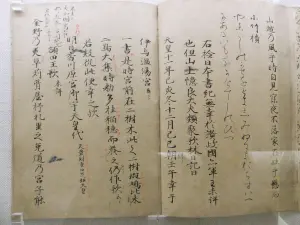
No authorial manuscript survives for many famous works. Texts reached later readers through hand-copied manuscripts, variant recensions, excerpt books, commentaries, illustrated scrolls, and early modern printed editions. Editors reconstruct readable texts by comparing witnesses whose differences may reflect copying, revision, or performance.
Literature was also heard and seen. Poetry was recited, tales were read aloud, and Heike narratives circulated through biwa-accompanied performance. Calligraphy, paper, painting, and book design made texts visual objects, while theatrical and pictorial adaptations kept particular episodes active across centuries.
Canon, translation, and modern reading
The category of national classics was reshaped by early modern scholarship, modern education, museums, publishing, and academic literary history. Some works became central while others were marginalized or recovered. Modern punctuation, chapter divisions, standardized titles, and school excerpts can make historically fluid texts appear more settled than they are.
Translation involves choices about names, honorifics, grammar, poetic allusion, gendered speech, and cultural explanation. Multiple translations may represent the same passage differently without one being simply literal and another false. Reading translations alongside introductions, notes, and manuscript history makes the works’ layered transmission visible.
Sources
- Columbia University Press, Traditional Japanese Literature: An Anthology, Beginnings to 1600.
- University of Virginia Japanese Text Initiative, Scope and Goals.
- The Metropolitan Museum of Art, Kyoto: Capital of Artistic Imagination.
- National Diet Library, How to Find Japanese Literature in Foreign-Language Translation.
- Cambridge University Press, The Cambridge History of Japanese Literature: Man’yōshū.
Last updated: