Karate
Japan Karatedo Federation
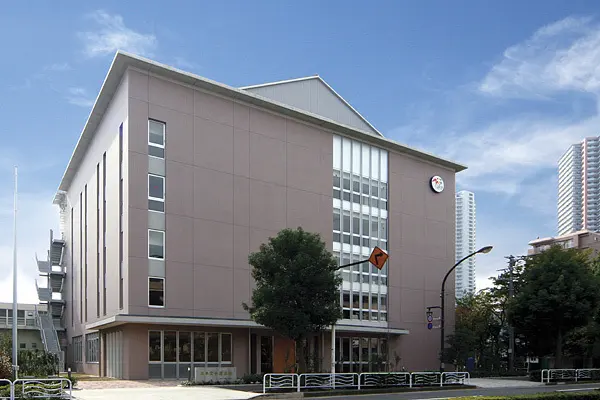
Image: Japan Karatedo Federation / Japan Karatedo Federation official website, via Wikimedia Commons · CC BY-SA 3.0
The Japan Karatedo Federation (公益財団法人全日本空手道連盟, JKF) is the national federation that coordinates a large part of organised Karate in Japan. Founded on 1 October 1964, it brings together prefectural and regional federations, school and workplace competition bodies, and affiliated style organisations. The JKF administers national championships, official dan grades, referee and instructor qualifications, athlete development and Japan's participation in the international federation system. It matters because many terms and rules encountered in Japanese competition come from the JKF, but its authority should not be confused with ownership of every Karate lineage. Independent and full-contact organisations maintain different curricula and rules, while affiliated styles retain technical identities beyond federation competition.
Overview
| Japanese | 公益財団法人全日本空手道連盟 |
|---|---|
| Reading | こうえきざいだんほうじん ぜんにほんからてどうれんめい |
| Romanisation | Kōeki Zaidan Hōjin Zen Nihon Karatedō Renmei |
| English name | Japan Karatedo Federation |
| Abbreviation | JKF; Japanese: 全空連 (Zenkūren) |
| Founded | 1 October 1964 |
| Type | Public interest incorporated foundation and national sports federation |
| Headquarters | Japan Karatedo Kaikan, Kōtō, Tokyo |
| International context | National member federation within the World Karate Federation system |
| Current information checked | 2 September 2026 |
Name and legal status
The legal Japanese name is 公益財団法人全日本空手道連盟. The federation uses Japan Karatedo Federation and JKF in English; 全空連 (Zenkūren) is the common Japanese abbreviation.
The organisation received foundation status in 1969. Following reform of Japan's public-interest corporation system, it was re-established as a public interest incorporated foundation on 1 April 2012. Its statutes identify Kōtō Ward, Tokyo, as the principal office.
Purpose and scope
The federation's statutes state a purpose of supporting the sound development and dissemination of Karate and contributing to physical and mental cultivation. Its public work includes competition, education, qualifications, athlete development and organisational governance.
This is broad national sports authority, not a claim that the JKF created Karate or controls every school. Okinawan lineages, private associations, university traditions and full-contact bodies may stand inside, beside or outside its structures.
Organisational structure
The JKF describes a structure built from prefectural federations and nine regional councils, national school and workplace competition federations, and affiliated style organisations. The competition bodies cover middle school, high school, university and corporate Karate.
This layered model connects local registration to national events. Membership in a prefectural federation, a school club, a style association and the JKF can overlap; these are different organisational relationships rather than interchangeable labels.
Style organisations and technical diversity
JKF material commonly presents Shotokan, Gōjū-ryū, Shitō-ryū and Wadō-ryū as four major mainland Japanese groupings represented through its affiliated organisations. The federation also works through other member bodies and does not make those four names a complete taxonomy of Karate.
Affiliation creates common structures for grading, competition and administration while styles retain their own kata versions, basics, partner methods and histories. JKF terminology is authoritative for the federation, not necessarily the only wording used in Okinawa or another association.
Championships and competition rules
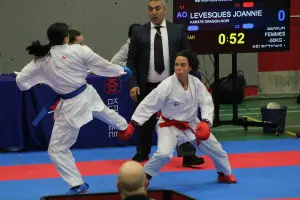
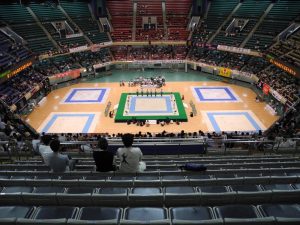
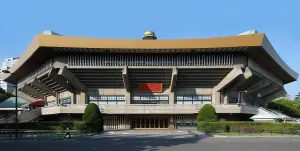
The first All Japan Karatedo Championships were held at Nippon Budokan on 10 October 1969. The JKF now organises or supports national events for senior, youth, school and para Karate and selects athletes for international competition.
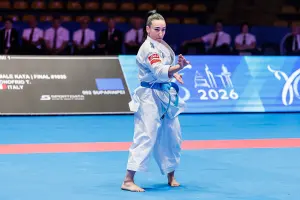
Its kata and kumite rules sit within the wider WKF framework but may include domestic provisions and age-specific modifications. Karate Competition Rules must always be identified by organisation and effective date.
Grades and qualifications
The JKF administers official dan grades and systems for referees and instructors. Examinations and eligibility connect the national federation with prefectural and affiliated bodies.
A JKF grade is an institutional credential within that system. It may coexist with a style or dōjō grade, and recognition is not automatically reciprocal across independent organisations. Belt colours below dan level also vary; there is no single global sequence.
International role and the Olympic period
The JKF helped establish the World Union of Karate-do Organizations in 1970, an ancestor of the World Karate Federation. Its history records WKF recognition by the International Olympic Committee in 1999.
Karate appeared as an additional sport at the Tokyo 2020 Olympic Games, held in 2021, and Japanese athletes competed through the national federation system. Olympic rules represented one modern competition format and did not define the entirety of Karate practice.
Japan Karatedo Kaikan
The Japan Karatedo Kaikan in Kōtō, Tokyo, was completed in November 2011. It serves as the federation's headquarters and a site for training, meetings, examinations and events.
It should not be confused with the Okinawa Karate Kaikan in Tomigusuku. The Tokyo building belongs to the national federation's institutional network; the Okinawa facility is a prefectural cultural, training and exhibition centre.
JKF and JKA are not the same organisation
The Japan Karatedo Federation and the Japan Karate Association have similar English initials but different roles. The JKF is a multi-style national federation; the JKA is a Shotokan organisation with its own technical and grading systems.
JKA teaching materials can be authoritative for JKA Shotokan without becoming the official execution for every JKF member or every Karate style.
Historical milestones
These dates come from the federation's own history. They document the JKF's institutional development and should not be mistaken for a timeline of Karate's much older Okinawan origins.
| Date | Event |
|---|---|
| 1 October 1964 | Japan Karatedo Federation established |
| 13 January 1969 | Foundation status approved |
| 10 October 1969 | First All Japan championships at Nippon Budokan |
| 1 October 1970 | First world championships at Nippon Budokan |
| 1981 | Karate became an official National Sports Festival event |
| November 2011 | Japan Karatedo Kaikan completed |
| 1 April 2012 | Re-established as a public interest incorporated foundation |
| 5–7 August 2021 | Tokyo 2020 Olympic Karate competition held at Nippon Budokan |
Sources
- All Japan Karatedo Federation, About the JKF.
- All Japan Karatedo Federation, History.
- All Japan Karatedo Federation, Articles of Incorporation.
- All Japan Karatedo Federation, Projects, Reports and Financial Information.
- All Japan Karatedo Federation, Karate Terminology Dictionary.
- All Japan Karatedo Federation, What is Karate-dō?.
- Japan Sport Association, Member Organisations.
- Japanese Olympic Committee, Karate.
Last updated: