Karate
Karate Competition Rules
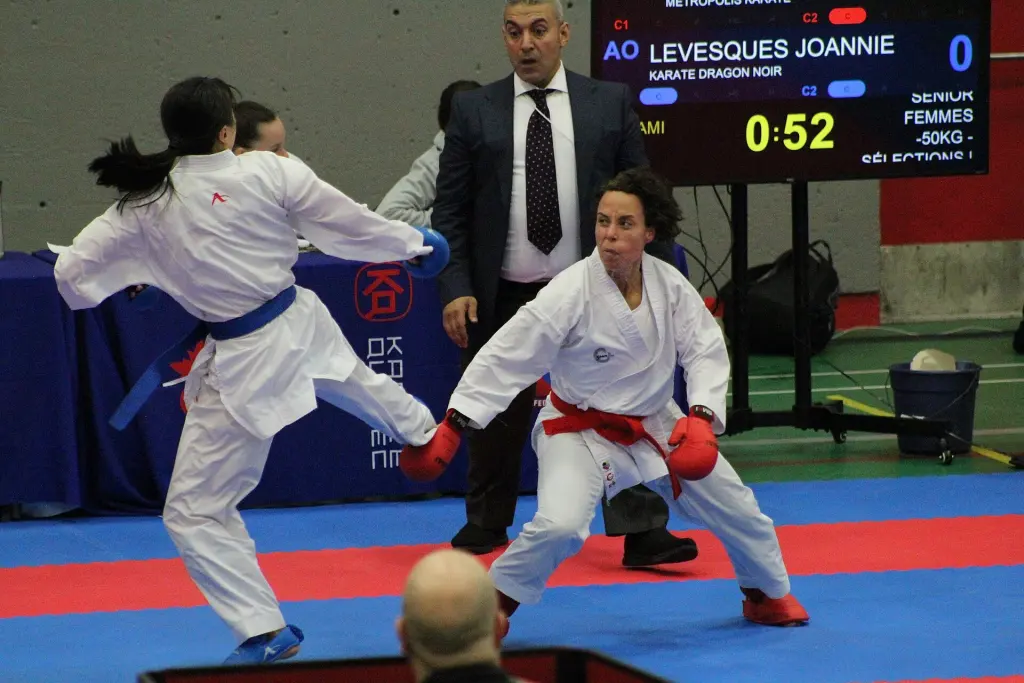
Image: Miguel Angel Omaña Rojas / Wikimedia Commons · CC0 1.0
Overview
A Karate rule is meaningful only when its organisation, event, and edition are identified.
Karate competition rules regulate how kata and kumite events are conducted, scored, and penalised. This page primarily explains the All Japan Karatedo Federation (JKF) framework used in Japanese federation competition, while marking international, Japan Karate Association, full-contact, youth, and event-specific differences. The current reference point is the JKF change package effective 1 April 2026 together with its 16 July 2026 correction. It is a dated guide to one rules family—not a definition of all Karate practice.
Technical handbooks and organiser instructions may narrow the general rules.
- Primary scope
- JKF kata and kumite competition
- International context
- World Karate Federation framework
- Current revision
- Effective 1 April 2026
- Correction
- JKF notice dated 16 July 2026
- Main variables
- Event · age · organiser · season
- Separate traditions
- JKA · full-contact · dōjō practice
01Scope & governing organisations
“Karate rules” is incomplete without the authority that issued them.
National federations, international bodies, style associations, schools, and organisers can operate different systems.
Karate at the Asian Games must also be checked by edition: events, weights, team kata, judging, and technical handbooks can change between Games.
02Kata & kumite competition
The two disciplines test different performances under a shared event structure.
Individual and team formats exist, but judging, timing, progression, and safety requirements differ.
Kata
Judges evaluate a performed form through the technical and athletic criteria in the applicable rules.
Kumite
Two competitors manage timing, distance, targets, and controlled technique within a scored contest.
JKF team kata uses three practitioners and, in the relevant rounds or events, a regulated bunkai demonstration. The organiser specifies divisions, progression, and equipment.
03Contest area & duration
The familiar eight-metre, three-minute model is a reference point—not a universal constant.
Age group, sex, event stage, and tournament instructions can change the procedure.
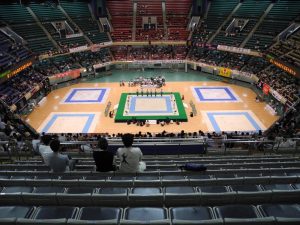
Square contest area described for federation competition.
Common bout duration in the public introduction; confirm the specific event.
Public guide reference for the complete team performance.
04Kumite scoring
Point value depends on the kind of valid technique; validity depends on more than contact.
The 2026 JKF framework uses form, attitude, application, awareness, timing, and distance criteria.
Except for the qualifying three-point case against a downed opponent.
A middle-level kick satisfying the current scoring criteria.
A qualifying upper-level kick, or hand technique when the opponent’s torso is on the floor.
The referee team and approved review procedure determine whether the criteria were met. Contact or proximity alone is not a score.
05Winning & tied scores
A result follows the current event procedure, not one timeless tie-break rule.
Historical summaries are unreliable where first-score advantage, judge decision, and additional procedures have changed.
Score within the stated time
Referee commands stop and restart action as scores and penalties are administered.
Apply the event’s winning condition
Score advantage, any required margin, opponent disqualification, or another stated procedure can decide the contest.
Use the current edition
Check whether senshu, judge decision, or another procedure applies to that division and event.
06Contact, control & penalties
Federation kumite rewards controlled technique, not unrestricted impact.
Age provisions and the reason for a warning matter; dangerous contact and time wasting are not the same category.
Target · distance · form · recovery
Excessive contact, attacks to prohibited areas, and dangerous behaviour can bring warnings, penalties, or disqualification.
Passivity · evasion · feigned injury
Officials distinguish the kind of infringement rather than treating every breach as identical.
Downed opponent and conference scope
Kicks against a downed opponent are prohibited even without contact. The July correction limits the cited vice-referee conference for cumulative disqualification to time-wasting situations, not contact cases.
Domestic youth provisions do not apply international facial-contact assumptions identically to Japanese elementary- and junior-high-school competition. A senior-athlete rule should never be projected onto children.
07Kata judging & team bunkai
Technical and athletic criteria organise the decision; presentation does not replace Karate content.
The cited 2026 JKF summary returns emphasis to the Karate performance and uses majority decision.
Technique and athletic execution
The current framework addresses correct kata identification, designated kiai, performance criteria, and prescribed equipment allowances.
Three-person performance
Synchronisation matters alongside stance, timing, and technically correct execution.
Regulated demonstration
Fast or forceful presentation still requires safety and should not be treated as the kata’s unique historical application.
08Other traditions, change & related entries
Rules select behaviour for an institution; they do not rank Karate systems from “traditional” to “sport”.
Twentieth-century university, school, association, and federation practice produced changing match formats.
JKA tournaments preserve their own Shotokan association procedures. Full-contact organisations use different scoring, contact, and equipment assumptions. Traditional dōjō kumite may not be a contest at all. Video review, contact standards, protective equipment, kata judging, and tie procedures have changed repeatedly; the current official edition should settle current practice.
Sources and further reading
- All Japan Karatedo Federation, Basic Rules of Karatedo.
- All Japan Karatedo Federation, 2026 Competition Rule Changes.
- All Japan Karatedo Federation, Summary of Rule Changes Effective 1 April 2026.
- All Japan Karatedo Federation, July 2026 Correction to Competition Rules.
- Japan Karate Association, Tournament Rules and Regulations, 1 April 2025.
- Research Journal of Budo, A Historical Study of Student Karate Matches and Rules.
- Research Journal of Budo, Technical and Tactical Characteristics of Olympic Karate Kumite, 2024.
Last updated: