Jujutsu
Yagyū Shingan-ryū

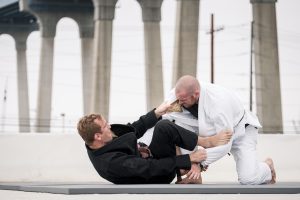
Image: Dushan Hanuska / Wikimedia Commons · CC BY-SA 2.0
Overview
One name covers related lineages with different genealogies and curricula.
Yagyū Shingan-ryū (柳生心眼流) names several related classical Japanese martial transmissions rather than one completely uniform school. The best-documented public examples include a Sendai-area tradition of heihō, armoured methods, and armoured jujutsu, and an Edo-line taijutsu tradition represented through a different genealogy. Both combine grappling with weapons, yet their founders, catalogues, body methods, and succession claims should not be merged. Miyagi Prefecture recognises armoured Yagyū Shingan-ryū practice as an intangible cultural property, while the Nihon Kobudo Association separately presents katchū heihō and taijutsu lines. The Yagyū name also does not make these traditions identical to Yagyū Shinkage-ryū. Historical accounts of Yagyū-family study or authorisation require lineage-specific attribution.
Related histories, not one interchangeable syllabus
- Japanese
- 柳生心眼流
- Classification
- Classical comprehensive martial traditions
- Major transmissions
- Sendai-area heihō/katchū · Edo-line taijutsu
- Technical range
- Jujutsu · armoured grappling · sword · staff · naginata · iai
- Training form
- Paired kata and lineage-specific fundamentals
- Name caution
- Distinct from Yagyū Shinkage-ryū
01Name & classification
Shingan means insight beyond ordinary sight; Yagyū requires historical context.
The name does not automatically identify one curriculum or make the school another name for Yagyū Shinkage-ryū.
Yagyū Shingan-ryū
A family label covering related classical transmissions.
Heihō, katchū, or taijutsu
Points toward a particular genealogy, curriculum, and organisation.
Yagyū Shinkage-ryū
A distinct school principally known through the sword lineage of Kamiizumi and the Yagyū family.
02Lineage family
The most useful first question is: which transmission?
Public sources document at least two substantially different routes. Their genealogies should be shown side by side, not combined into one false sequence.
Takenaga Hayato
The tradition identifies Takenaga as an early-Edo founder and relates his training to Yagyū Munenori.
Araki Mataemon · Koyama Samon
The taijutsu line presented by the Nihon Kobudo Association preserves a different ancestral sequence.
Attribution before synthesis
Founder, generation, and curriculum statements must remain attached to the line that publishes them.
03Sendai-area transmission
Domain transmission and cultural-property records anchor the armoured line.
The school spread in the Sendai domain and continued through northern Miyagi and southern Iwate.
- Early Edo
Takenaga Hayato
The lineage credits him with bringing together earlier study and receiving permission connected with the Yagyū name.
- Sendai domain
Koyama and Aizawa routes
Teachers carried the tradition within the domain’s martial environment.
- Domain school
Hoshi Sadakichi
Hoshi served as a martial instructor at Yōkendō.
- Present preservation
Miyagi cultural property
Official records recognise armoured methods and armoured jujutsu, including named kata catalogues.
04Edo-line taijutsu
Taijutsu functions as an umbrella connecting body method and weapons.
The genealogy represented by the Nihon Kobudo Association proceeds through Koyama Samon and later teachers including Hoshino Tenchi, Yamamoto Wasaburō, Mutō Masao, and Kajitsuka Yasushi.
Jujutsu movement
Standing posture, coordination, and whole-body action organise the beginner’s base.
Shared body principles
Distance, angle, timing, and structure carry across paired forms.
Sword · staff · naginata · iai
Weapons are not decorative additions but linked applications of the body method.
05Curriculum & body method
Armour changes distance, posture, targets, and available control.
Across the family, close grappling and armed practice inform each other. Exact names and contents remain lineage-specific.
Stance · rhythm · structure · timing · weapon awareness
Jujutsu & restraints
Throws, striking, controls, and transitions shaped by clothing or armour.
Katchū methods
Protection and restricted movement change leverage and target selection.
Sword, staff & glaive
Weapons extend the same questions of distance, line, and stable movement.
06Historical figures & later transmission
People connect the art to domain education, literature, women’s schooling, and later budō.
These contacts are historically meaningful without proving that every later technical feature descends from one encounter.
Hoshino Tenchi
A martial teacher, writer, and educator associated with the literary magazine Bungakukai.
Meiji Girls’ School
School records include women among students in a martial-arts programme.
Morihei Ueshiba
Received some Yagyū Shingan-ryū instruction as a young man; extent and lasting effect should not be exaggerated.
More than one organisation
Leadership titles and generation counts must be read inside the relevant genealogy.
07Distinctions & misconceptions
Four shortcuts collapse separate histories.
Major lines preserve different genealogies, kata, and emphases.
The traditions are separate despite lineage accounts involving Yagyū teachers.
Armoured combat is central to some lines; others emphasise unarmoured taijutsu.
This was one part of his early study, not a complete explanation of Aikido’s development.
Sources and further reading
Last updated: