
Manga
Manga Cafes
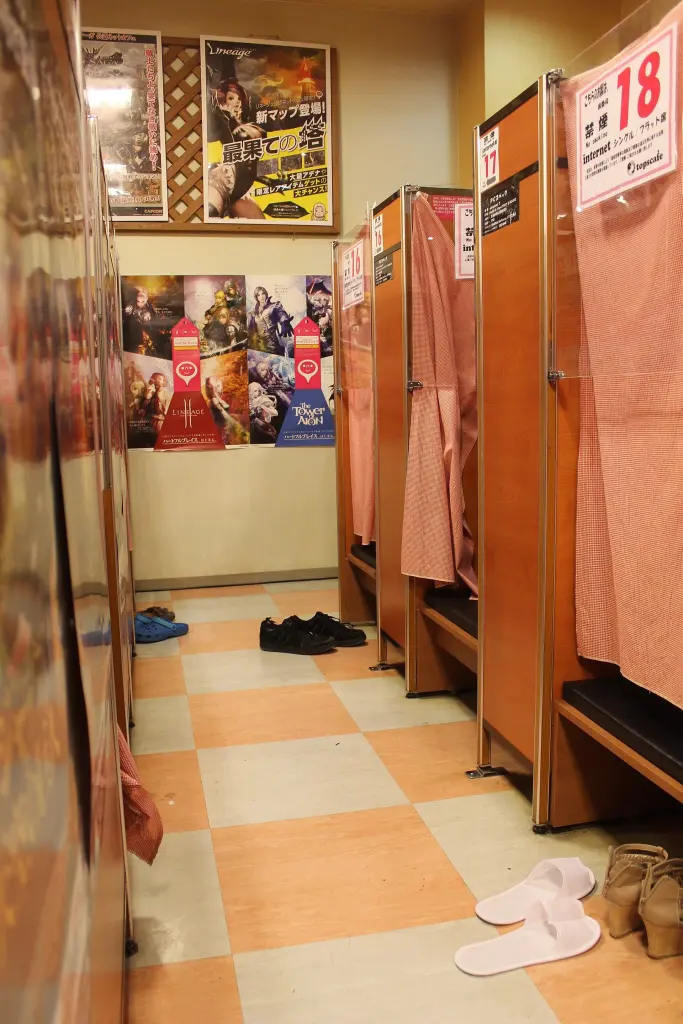
Image: Connie Ma / Wikimedia Commons · Creative Commons Attribution-ShareAlike 2.0 Generic
Manga cafes, or manga kissa, are commercial reading spaces where customers pay primarily for time and gain access to shelves of manga, seating, and refreshments. Emerging from late twentieth-century coffee shops with large comic collections, many businesses converged with internet cafes around the turn of the century and became what the industry calls a fukugō kafe, or “complex cafe.” Contemporary venues may offer computers, Wi-Fi, drink bars, reclining chairs, private or semi-private booths, showers, and overnight packages, although facilities vary widely. They occupy an ambiguous position between cafe, reading room, entertainment business, workspace, and temporary shelter. That flexibility made them a recognizable part of urban everyday life, but it also connected some twenty-four-hour venues to precarious housing and the phrase “net cafe refugees.” A manga cafe is therefore neither simply a themed restaurant nor a substitute for a public library or licensed hotel.
Overview
| Japanese name | 漫画喫茶 |
|---|---|
| Romanization | Manga kissa |
| Literal sense | Manga coffee shop |
| Business model | Time-based use of space and media |
| Related industry term | 複合カフェ (fukugō kafe), complex cafe |
| Typical resources | Manga shelves, seating, drinks, internet access |
| Common urban format | Private or semi-private booth venue |
| Article boundary | Not every venue is a hotel, library, or themed cafe |
Name and definition
Manga kissa shortens manga kissaten, literally a coffee shop associated with manga. Customers normally register or check in, choose a seat or booth, and pay according to elapsed time or a package. Reading material is used on site rather than borrowed in the manner of a lending library.
The boundaries overlap with internet cafes. The Japan Complex Cafe Association uses fukugō kafe for time-consumption businesses combining content and facilities such as manga, games, and internet access. Individual shops may foreground reading, computers, gaming, work, relaxation, or overnight use.
Origins in manga and coffee-shop culture
Accounts of the business trace manga cafes to the 1970s, when coffee shops offered large collections that could be read for the price of a drink. The Japan Forum identifies a Nagoya venue opened in 1979 as an important early example, while library reference sources describe a broader 1970s origin.
The early format emphasized shared seating, food or drink, and extended reading. It belonged to Japan’s varied kissa culture but developed a distinct economic logic as collections grew and shops began charging for time rather than relying only on beverage sales.
Convergence with internet cafes
Manga cafes and internet cafes began as different businesses. As personal computers, online games, and broadband access spread, operators combined them with comic collections, video media, drinks, and private seating. The Japan Complex Cafe Association was founded in 2001 and described this convergence as the basis of the complex-cafe category.
The transition did not erase older formats. Some shops remain focused on manga or open reading rooms, while large chains may resemble multipurpose leisure facilities. “Manga cafe,” “internet cafe,” and “net cafe” are therefore overlapping rather than perfectly interchangeable labels.
Space, booths, and services
A venue may offer open chairs, reclining seats, low padded spaces, computer booths, paired rooms, or lockable private rooms. Drink bars and manga shelving are common; showers, laundry, food ordering, printing, consoles, and audiovisual services depend on the business and branch.
The architecture balances privacy with a shared commercial environment. Small numbered booths can provide quiet and temporary personal control in a dense city, but they are not automatically soundproof, accessible, or legally equivalent to guest rooms.
Time-based pricing and patterns of use
Charges are usually calculated by time, with automatic conversion or preset packages for several hours, late-night use, or longer stays. Registration and identification practices vary with local rules and industry guidelines. Customers may use the space to read a series, wait between appointments, work, play games, or rest after missing the last train.
Prices and facilities change frequently and differ by location, so the category should not be represented by a single current rate. The stable feature is the sale of temporary access to space, media, and services rather than a conventional purchase of books or a table-service cafe visit.
Manga access and circulation
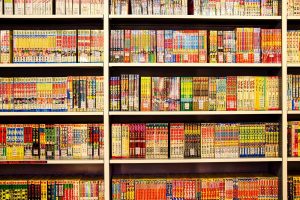
Manga cafes make long runs of collected volumes available in one place. This can support intensive reading without the storage costs of ownership and can introduce readers to older or unfamiliar series. Shops organize shelves by genre, publisher, popularity, or alphabetical systems, often supported by catalog search.
Their collections circulate differently from public libraries, rental shops, bookstores, and digital subscription platforms. On-site commercial reading also raised copyright questions, leading industry bodies, publishers, and creator representatives to negotiate operating practices.
Overnight use and housing insecurity
Twenty-four-hour opening, night packages, showers, and booths made some cafes usable as emergency or repeated overnight spaces. The phrase netto kafe nanmin, or “net cafe refugees,” came to describe people without stable housing who slept in such businesses while working or seeking work.
The label should not be applied to every overnight customer or every cafe. Research and a Tokyo Metropolitan Government survey nevertheless show that the flexible leisure infrastructure also became part of an insecure housing system. Public-health research has documented the risks created when prolonged residence occurs in crowded commercial spaces not designed as housing.
Rules, safety, and privacy
Industry guidelines address membership, identification, youth access, crime prevention, emergency procedures, and the licensed use of games and audiovisual media. Local ordinances and building conditions also affect booth design and operation.
Privacy is partial. Cameras may cover common areas, staff can enforce house rules, and emergency access must be maintained even when a booth is enclosed. Customers encounter a managed commercial facility rather than a private residence.
A flexible institution of urban everyday life
Manga cafes link print culture to the economics of small, temporary urban spaces. They can function as reading rooms, workspaces, leisure sites, refuges from weather, or places to bridge gaps in the transport timetable. Their cultural significance lies in this combination rather than in any one amenity.
The same flexibility produces tension. A booth can feel private without being a home, and inexpensive overnight access can relieve an immediate need without resolving housing insecurity. Manga cafes therefore reveal both the abundance of Japanese media culture and the uneven conditions under which urban space is accessed.
Sources
- Japan Complex Cafe Association, Association and business background.
- Japan Complex Cafe Association, Store Operation Guidelines.
- The Japan Forum, Manga Kissa.
- Tokyo Metropolitan Government, Survey of unstably employed people without housing.
- Hirata Tomohisa, Being Quiet in Internet Cafes.
- Endo et al., Tuberculosis outbreak at a manga cafe in Tokyo.
Last updated:
.jpg)