Cultural Geography
Heijō-kyō
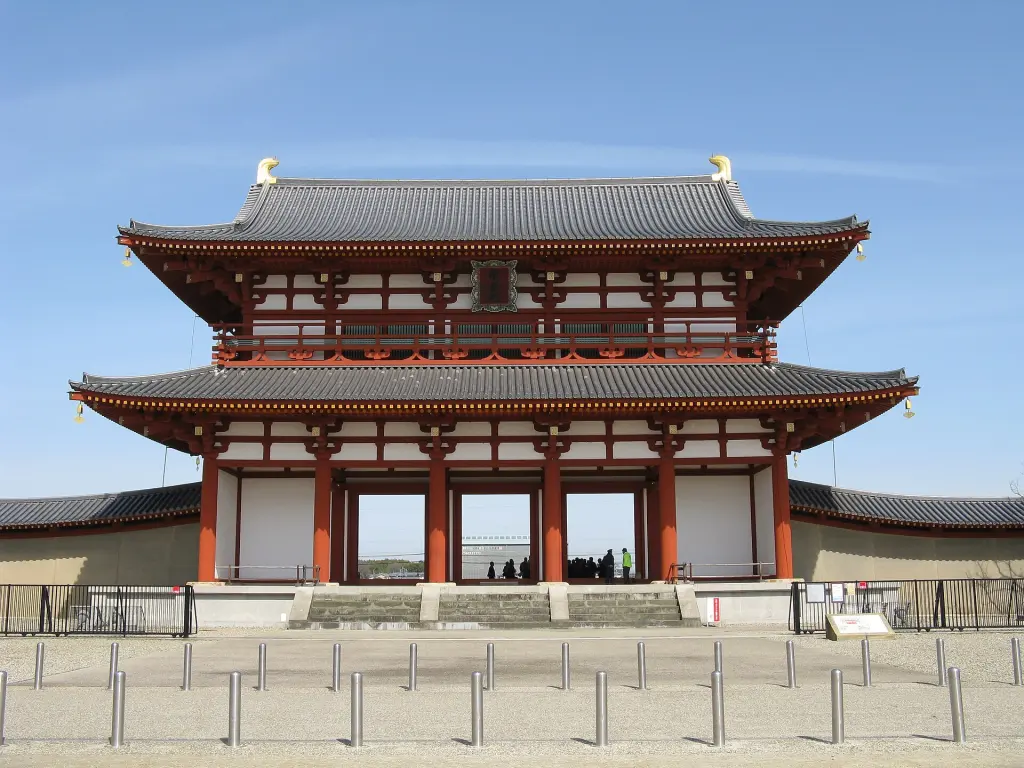
Image: KENPEI / Wikimedia Commons · CC BY-SA 2.5
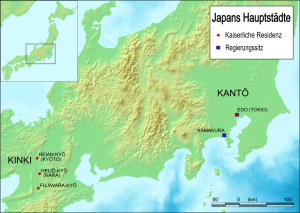
Heijō-kyō was the planned imperial capital established in 710 in the area of present-day Nara. Its broad grid contained the Heijō Palace and government offices, elite and commoner residences, markets, workshops, temples, and roads linking the court to provincial administration and international exchange. The capital's history was interrupted by temporary moves from 740 to 745, and the court left for Nagaoka-kyō in 784. Heijō-kyō refers to the wider ancient city, while the Heijō Palace Site is its best-known governmental core; neither is identical to modern Nara. Excavation has transformed knowledge of the capital, and reconstructed gates and buildings at the historical park interpret evidence rather than surviving intact from the eighth century.
Overview
| Japanese name | 平城京 |
|---|---|
| Romanization | Heijō-kyō |
| Founded | 710 |
| Principal capital period | 710–784, interrupted by temporary relocations in 740–745 |
| Location | Present-day Nara and surrounding area |
| Governmental core | Heijō Palace |
Name, site, and scope
Heijō-kyō is commonly translated as the Nara capital. The name identifies the ancient planned city, whereas Heijō Palace, or Heijō-kyū, refers to the imperial and administrative enclosure in its northern sector. Modern Nara City and Nara Prefecture cover different and larger jurisdictions.
The ancient city's remains lie beneath farmland, neighborhoods, roads, and protected archaeological zones. Its outline is known through excavation, texts, surviving terrain, and comparison with other capitals, but boundaries and particular building phases require continuing research.
Foundation in 710
The court moved from Fujiwara-kyō to Heijō-kyō in 710. The transfer accompanied the development of a centralized state organized through legal codes, ministries, provincial administration, taxation, diplomatic exchange, and court ritual. Large-scale construction gathered officials, craftspeople, laborers, religious communities, and suppliers.
The Nara period is conventionally dated from this move to the transfer to Nagaoka-kyō in 784, even though the court occupied other sites between 740 and 745. Period labels simplify a more mobile political history.
Grid, avenues, and wards
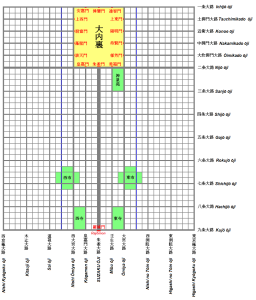
Heijō-kyō used a rectilinear street plan divided into wards. Suzaku Ōji formed the monumental central approach to the palace's Suzaku Gate, while the eastern and western capital sectors extended on either side. An additional northeastern area is often described as the outer capital.
The plan drew on Chinese capital models transmitted through the Korean peninsula and earlier Japanese experiments, but topography and political needs produced a distinct city. A map of the planned grid does not show which plots were occupied equally at every moment.
Palace and government
Heijō Palace contained spaces for the sovereign, major state ceremonies, and government offices. The Daigokuden, audience halls, administrative compounds, gates, storehouses, and residential areas changed across construction phases. Roof tiles, postholes, wooden tablets, wells, and ditches reveal both monumental and routine activity.
The palace was not the whole capital. Officials and their households lived in the surrounding grid, while goods and information moved between ministries, markets, temples, estates, provinces, and foreign missions.
Markets, temples, and daily life
Eastern and western markets served regulated exchange, and workshops supplied court and urban demand. Wooden tablets record deliveries, names, offices, and short messages, providing unusually direct evidence for administration and material life beyond elite chronicles.
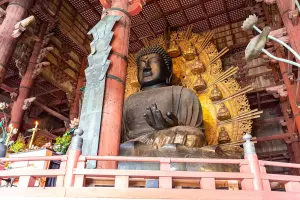
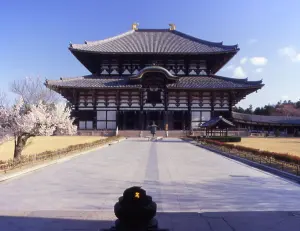
Buddhist institutions were central to the capital and state. Temples including Tōdai-ji occupied major sites and connected ritual, learning, landholding, craft production, and political authority. Their later histories should not be projected unchanged back onto the eighth-century city.
Temporary moves and departure
Emperor Shōmu moved the court away from Heijō-kyō in 740, and it occupied Kuni-kyō, Naniwa, and Shigaraki in succession before returning in 745. The reasons involved court politics, ritual projects, epidemic and instability, and they resist reduction to one cause.
In 784 Emperor Kanmu transferred the capital to Nagaoka-kyō. Heijō-kyō lost its governmental role, but temples and settlements persisted. Later Nara developed around different religious and commercial centers rather than simply occupying the ancient grid in the same way.
Archaeology, reconstruction, and heritage
Systematic excavation at the Heijō Palace Site has recovered foundations, artifacts, environmental evidence, and large numbers of inscribed wooden tablets. The Nara National Research Institute for Cultural Properties investigates and conserves the site while publishing research and museum displays.
The historical park includes reconstructed structures such as Suzaku Gate and the First Daigokuden, along with preserved foundations and exhibition facilities. Reconstructions make scale and spatial relationships visible, but visitors should distinguish modern buildings based on research from excavated remains and original eighth-century material.
Sources
- Nara Palace Site Historical Park, About Heijō-kyō.
- Nara National Research Institute for Cultural Properties, Nara Palace Site Museum.
- Imperial Household Agency, Address on the 1,300th Anniversary of Heijō-kyō.
- Japan Tourism Agency, The Imperial Family and the Evolution of Japan's Capitals.
- Geospatial Information Authority of Japan, Map of Nara's History.
Last updated: