Karate
Gekisai Dai Ni
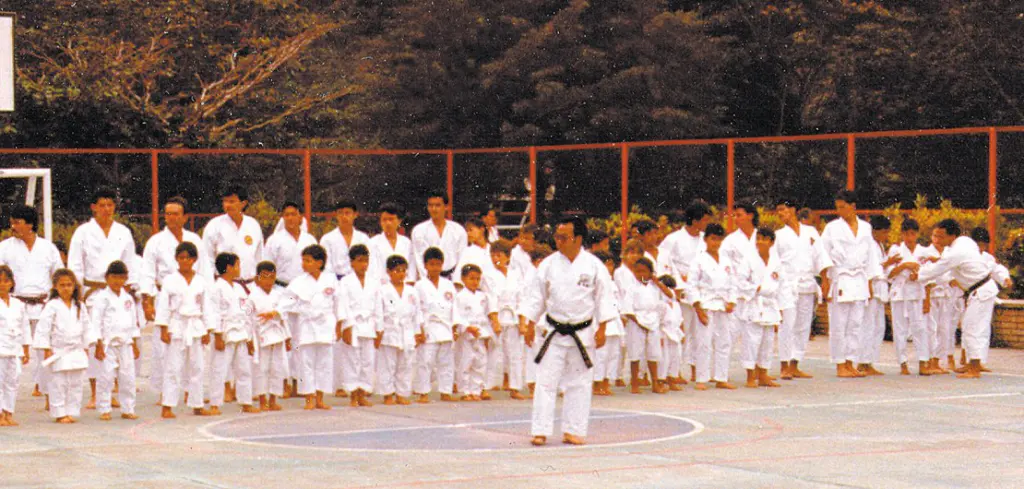
Image: International Federation of KENSHOKAI Goju-ryu Karate-Do / International Federation of KENSHOKAI Goju-ryu Karate-Do Photo Archive, via Wikimedia Commons · CC0 1.0
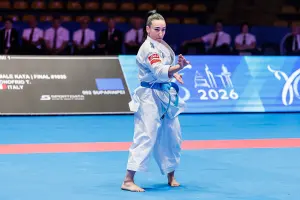
Gekisai Dai Ni (撃砕第二) is the second form in the Gekisai pair associated with Chojun Miyagi and modern Goju-ryu Karate. The All Japan Karatedo Federation lists both Gekisai Dai Ichi and Dai Ni as Goju-ryu Basic Kata. Its official film describes Dai Ni as retaining foundational material while adding nekoashi-dachi, kake-uke, mawashi-uke and ryoshotei-ate. Those labels identify the JKF teaching model, not every branch version. The form should therefore be read beside Gekisai Dai Ichi as a related but distinct sequence, with stance, breathing, timing and application checked against the named school rather than inferred from the title alone.
JKF official kata videos
Official reference
Use these federation reference films to compare named versions. Each video documents one JKF-published model for the named tradition; it does not define every dōjō or lineage.
Gōjū-ryū剛柔流
Gekisai Dai Ni
Karate Kihon Kata #1
JKF framework
Where this kata sits
Official competition placement and broader guide context are shown separately.Official JKF position
Basic kata
- Gōjū
The JKF Basic Kata reference places Gekisai Dai Ichi and Dai Ni in the Gōjū-ryū column.
Guide context
Gekisai
- Gōjū
This guide treats Dai Ni as a distinct form and does not collapse it into the related Dai Ichi.
Overview
| Japanese | 撃砕第二 |
|---|---|
| Reading | げきさい だいに |
| Romanisation | Gekisai Dai Ni |
| Name family | Gekisai |
| Common association | Goju-ryu Karate |
| JKF position | Goju-ryu Basic Kata |
| Related form | Gekisai Dai Ichi |
| Version boundary | Sequence and emphasis can vary by organisation |
Name and place in the pair
Dai Ni identifies the second form in the Gekisai pair. The numeral distinguishes it from Gekisai Dai Ichi; it does not mean that every organisation teaches the pair at the same rank or counts its actions in the same way.
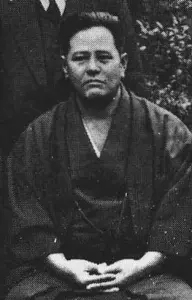
The JKF terminology reference credits Chojun Miyagi with creating the Gekisai kata for broad beginner instruction. Modern branch curricula preserve named versions, so the safest comparison begins with the organisation being demonstrated.
Modern Goju-ryu context
Gekisai belongs to the modern teaching history of Goju-ryu rather than being presented as an unchanged ancient Chinese form. Historical research on Goju-ryu places Miyagi's institutional work within the twentieth-century development of the school.
The Okinawa Karate Information Center lists Gekisai Ni among Naha-lineage kata. That classification is useful context, but it does not erase differences among Goju-ryu organisations or later teaching systems.
The JKF Basic Kata model
The JKF Basic Kata textbook announcement places Gekisai Dai Ichi and Gekisai Dai Ni together in the Goju-ryu group. A 2025 JKF seminar report likewise records both forms in style-specific instruction.
On this page, “Basic Kata” is a federation category. It should not be read as a claim that the form is simple, universal or located at one fixed grade in every dojo.
Technical emphasis in the official reference
The JKF film description highlights nekoashi-dachi, kake-uke, mawashi-uke and ryoshotei-ate as additions within its Dai Ni model. These named elements give a clear checklist for observing stance, receiving action and paired-hand coordination.
A video still shows only the visible result. Weight transfer, breathing, muscular use and the intended relationship between actions require correction from a qualified instructor.
Gekisai Dai Ichi and Dai Ni
The two forms share a name family and a foundation purpose, but Dai Ni is not simply an interchangeable performance of Dai Ichi. Compare complete sequences, stance choices and finishing actions rather than matching isolated poses.
The separate Gekisai Dai Ichi guide keeps the first form's evidence and official reference distinct. Using both pages prevents details from one version being silently transferred to the other.
Bunkai and partner study
Bunkai can test how the form's turns, receiving actions, strikes and paired-hand positions relate to distance and a partner. More than one practice interpretation may fit a visible solo movement.
A useful application explanation names the teacher or lineage, states the assumed attack and controls contact. It should not be presented as the single historical meaning without direct evidence.
Variation among branches
Goju-ryu organisations may differ in stance dimensions, hand paths, tempo, breathing and the way linked actions are counted. A difference from the JKF film is evidence to identify the version, not automatic proof that one performance is wrong.
For grading or competition, use the current standard of the named organisation or event. For historical comparison, record the teacher, date and source of each version.
How to study it safely
Learn the route and stance transitions slowly before adding force or breath pressure. Keep the knees aligned, use enough floor space for turns and stop if a posture produces pain or dizziness.
Use the official video as a reference for one documented model, not as remote instruction. Supervised practice is especially important when partner applications, forceful breathing or joint-control interpretations are added.
Sources
- All Japan Karatedo Federation, Gekisai.
- All Japan Karatedo Federation, Basic Kata textbook announcement.
- All Japan Karatedo Federation, FY2024 style-specific Basic and Kata seminar report.
- Okinawa Karate Information Center, Kata of Okinawa karate and kobudo.
- Koyama Masahide, Historical study of Goju-ryu karate.
Last updated: