Karate
Gekisai Dai Ichi
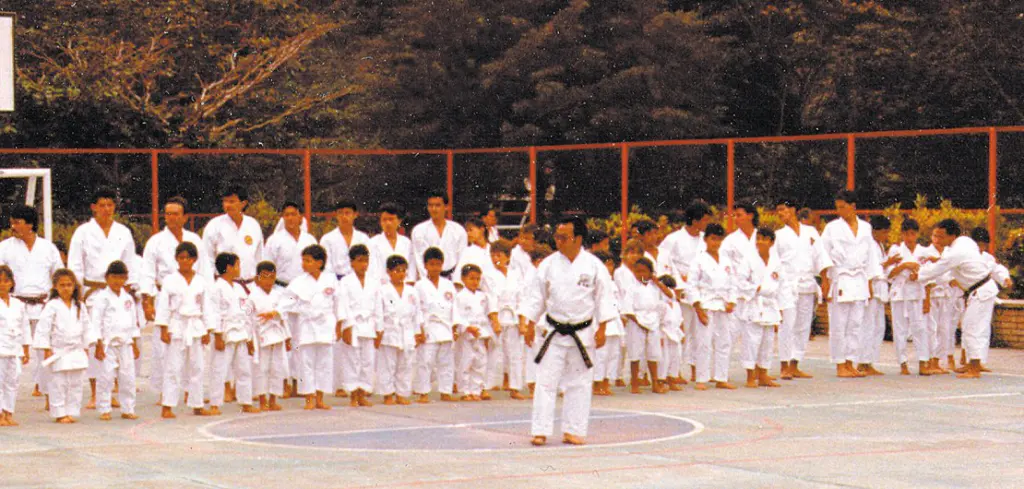
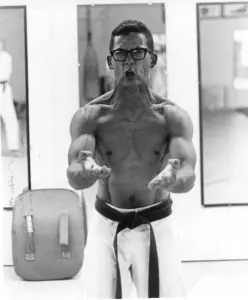
Image: International Federation of KENSHOKAI Goju-ryu Karate-Do / International Federation of KENSHOKAI Goju-ryu Karate-Do Photo Archive, via Wikimedia Commons · CC0 1.0
Gekisai Dai Ichi (撃砕第一) is a modern introductory kata in many Gōjū-ryū Karate organisations. The All Japan Karatedo Federation credits Chōjun Miyagi with creating Gekisai for beginners and describes the family as gathering fundamental and characteristic Gōjū-ryū stances and attack-and-defence actions. JKF instruction currently groups Gekisai Dai Ichi and Dai Ni as Gōjū-ryū basic kata, while Okinawan tournament rules list Gekisai I and II in the Naha category. These facts describe named institutional settings. Branches can differ in count, stance, breathing, hand path and applications, and “basic” means pedagogically foundational rather than technically trivial or universally first.
JKF official kata videos
Official reference
Use these federation reference films to compare named versions. Each video documents one JKF-published model for the named tradition; it does not define every dōjō or lineage.
Gōjū-ryū剛柔流
Gekisai Dai Ichi
Karate Kihon Kata #1
JKF framework
Where this kata sits
Official competition placement and broader guide context are shown separately.Official JKF position
Basic kata
- Gōjū
The JKF Basic Kata reference places Gekisai Dai Ichi and Dai Ni in the Gōjū-ryū column.
Guide context
Gekisai
- Gōjū
This guide treats Dai Ichi as a distinct form and does not collapse it into the related Dai Ni.
Overview
| Japanese | 撃砕第一 |
|---|---|
| Reading | げきさい だいいち |
| Romanisation | Gekisai Dai Ichi |
| Classification | Modern introductory Karate kata |
| Principal association | Gōjū-ryū |
| Creator | Chōjun Miyagi, according to JKF |
| Paired form | Gekisai Dai Ni |
| Current JKF context | Gōjū-ryū basic kata |
Name and scope
Gekisai is commonly translated in terms such as attack and smash or destroy, while dai ichi identifies the first form. A literal English rendering should be treated as a title aid rather than a complete explanation of purpose.
Some organisations shorten the name to Gekisai Ichi or Gekisai I. The paired Gekisai Dai Ni is related but not interchangeable; the two must be learned as separate sequences.
Creation by Chōjun Miyagi
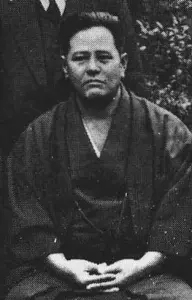
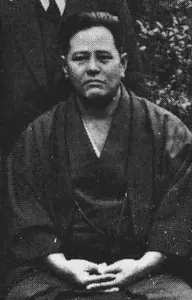
The JKF credits Gōjū-ryū founder Chōjun Miyagi with creating Gekisai for beginners. The kata belongs to the modern educational organisation of Karate rather than the pre-modern body of inherited Naha forms alone.
Later accounts often supply a precise year and detailed motives. Where contemporary documentation is not equally secure, it is safer to retain the institutional facts: Miyagi's authorship, beginner orientation and place in modern Gōjū-ryū teaching.
Why it is taught as a basic kata
JKF describes Gekisai as containing fundamental and characteristic Gōjū-ryū stances together with receiving and attacking actions. This makes a connected sequence for studying direction, posture, stepping and technique after isolated Kihon.
Basic does not mean effortless. A learner still has to coordinate transitions, gaze, breathing and rhythm, and should use the count and terminology of the named organisation.
Gekisai Dai Ichi and Dai Ni
Continue the pair with Gekisai Dai Ni; the separate guide identifies the additional elements named in the JKF model and keeps branch variation explicit.
The two Gekisai forms provide a paired introductory group in many Gōjū-ryū curricula. They overlap in pedagogical purpose but differ in sequence and technical material.
JKF's 2025 style seminar taught both as Gōjū-ryū basic kata. That current classification is useful for federation study, not proof that every branch teaches both at the same rank or in the same order.
Variation among Gōjū-ryū branches
Post-war Gōjū-ryū developed through several organisations linked to different students of Miyagi. Their Gekisai performance can differ in stance dimensions, chamber positions, footwork, breathing, timing and the way applications are explained.
A video or competition demonstration should therefore be identified by branch or federation. Surface similarity does not remove the need to learn local technical standards.
Technical study
Gekisai Dai Ichi links turns, receiving actions, strikes, kicks and stance changes within a compact floor pattern. Its value lies in the transitions as much as the final positions.
Bunkai can connect the solo sequence to distance, angle, control and counteraction. Applications remain teaching interpretations unless historical evidence supports a narrower claim.
Current institutional context
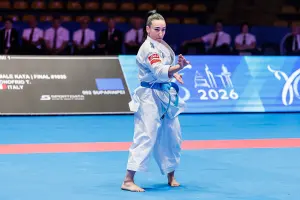
The 3rd Okinawa Karate World Tournament rules list Gekisai I and II in the Naha category and allow both across all of that event's listed junior age groups. The event thereby recognises them as selectable Okinawan kata.
Competition eligibility is dated and event-specific. It does not define grading order, adult curriculum or the performance expected by every Gōjū-ryū association.
How to study it safely
Learn the local count and floor pattern slowly, allowing the feet and hips to settle without forcing the knees. Add speed, force and deeper stance only when the transitions remain controlled.
Kicks and partner applications require space, agreed targets and appropriate contact. A contextual group-training photograph cannot establish that Gekisai was being performed or replace qualified instruction.
Sources
- All Japan Karatedo Federation, Gekisai.
- All Japan Karatedo Federation, 2025 style-specific basic and kata seminar.
- 3rd Okinawa Karate World Tournament 2026, Competition Rules and Regulations.
- Okinawa Karate Information Center, Kata of Okinawa karate and kobudo.
- Masatatsu Koyama, History of Goju-ryu Karate-do: Chojun Miyagi in the Taisho and early Showa eras.
Last updated: