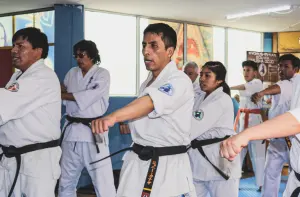
Karate
Bassai Dai

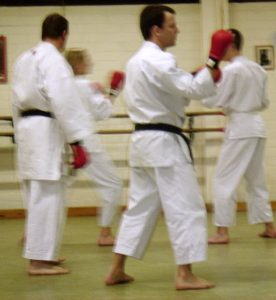
Image: Steffen Prößdorf / Wikimedia Commons · CC BY-SA 4.0
Bassai Dai (抜塞大) is a major Karate kata transmitted in Shotokan, Shitō-ryū and other lineages. The name belongs to the broader Bassai or Passai family; dai distinguishes a “large” version where a paired shō version is recognised. The Japan Karate Association counts 42 movements in its Bassai Dai and emphasises rapid changes of direction and force, while the All Japan Karatedo Federation describes Bassai Dai as a Shuri-te-line first designated kata in its Shitō-ryū competition context. Those descriptions concern different institutional versions. Shared ancestry does not make their stance, rhythm, sequence or Bunkai identical, and the familiar translation “to penetrate a fortress” should be treated as conventional rather than certain historical etymology.
JKF official kata videos
Official reference
Use these federation reference films to compare named versions. Each video documents one JKF-published model for the named tradition; it does not define every dōjō or lineage.
Shitō-ryū糸東流
Bassai Dai
Dai-ichi Shitei Kata #3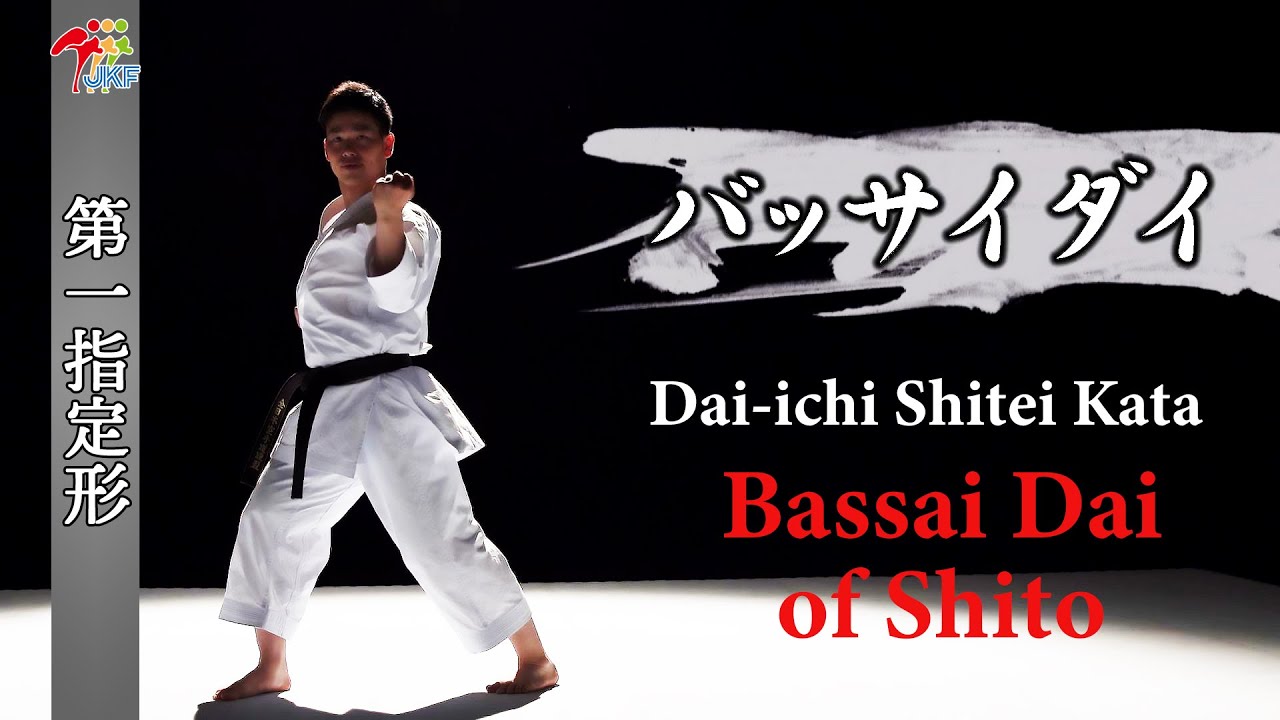
JKF framework
Where this kata sits
Official competition placement and broader guide context are shown separately.Official JKF position
First designated kata
- Shitō
The dated JKF amendment places Bassai Dai in the Shitō-ryū first designated pair.
Guide context
Bassai / Passai
- Shōtōkan
- Shitō
The guide compares Shōtōkan-ryū and Shitō-ryū records without treating their Bassai or Passai versions as identical.
Overview
| Japanese | 抜塞大 |
|---|---|
| Reading | バッサイダイ |
| Romanisation | Bassai Dai |
| Name family | Bassai or Passai |
| Classification | Karate kata |
| Major associations | Shotokan, Shitō-ryū and related lines |
| JKF context | Shitō-ryū first designated kata |
| JKA movement count | 42 movements |
Name and etymology
Bassai is also encountered as Passai, reflecting transmission and pronunciation across Okinawan and mainland contexts. The character dai means large and distinguishes the form from Bassai Shō in systems that preserve both.
“To penetrate a fortress” is a widespread interpretive translation of Bassai. The word's earlier linguistic history is uncertain, so the translation should not be presented as a securely documented original title.
Historical transmission
Passai or Bassai material circulated through more than one Okinawan teaching line before modern schools standardised named versions. Later publications and organisations made particular sequences easier to compare.
Funakoshi's published record is important for mainland Shotokan history, while Shitō-ryū preservation reflects the broader kata inheritance assembled by Mabuni Kenwa. Documentary comparison does not establish one surviving version as the unchanged source of all others.
Shotokan and the JKA version
Shotokan Karate commonly places Bassai Dai after introductory Heian study. The JKA publishes it in the first volume of its kata series and records 42 movements in its instructor manual.
The manual highlights changes between forceful and lighter movement, direction shifts and coordinated use of the hips. These are JKA teaching points, not a universal judging sheet for every Shotokan association.
Shitō-ryū and the JKF version
In the dated JKF framework, Bassai Dai shares the Shitō-ryū first designated pair with Seienchin; the companion guide keeps its Naha-lineage and Gōjū-ryū context distinct from the official Shitō-ryū model.
The JKF identifies Bassai Dai as a Shitō-ryū Karate first designated kata and places it in a Shuri-te line. Its description stresses combinations of fundamental techniques, rapid reversals and changes of strength and speed.
“Designated kata” is a federation competition category. It does not mean that Bassai Dai belongs only to Shitō-ryū or that the JKF description defines versions taught outside that competition framework.
Technical character
Across well-known versions, Bassai Dai is recognised for decisive directional changes, shifts between receiving and striking actions and contrasts of tempo. Exact stance, hand path, target and count vary.
Study is clearer when the version is named before details are compared. A movement that looks similar in two schools may use different body organisation or connect to a different preceding and following action.
Embusen and rhythm
The embusen organises travel through several directions and levels. Turns and stance transitions are part of the kata's structure rather than empty movement between isolated techniques.
Rhythm is not simply fast performance. Pauses, accelerations and changes of force should follow the named school's teaching and, in competition, the current rules of the event.
Bunkai and comparative study
Bunkai can examine receiving, striking, controlling and off-balancing possibilities within the sequence. More than one application may be plausible for a formal movement.
Historical comparison should keep application and ancestry separate. A useful partner drill does not by itself prove why the movement entered the kata or that other lineages interpret it incorrectly.
How to study it safely
Learn the local sequence and turns at controlled speed before adding strong acceleration. Use enough room for the full embusen and keep knee alignment comfortable during changes of direction.
Partner applications require agreed contact, distance and resistance. Qualified instruction is especially important when interpretations include joint control, close-range impact or takedowns.
Sources
Last updated: