Food Culture
Soba
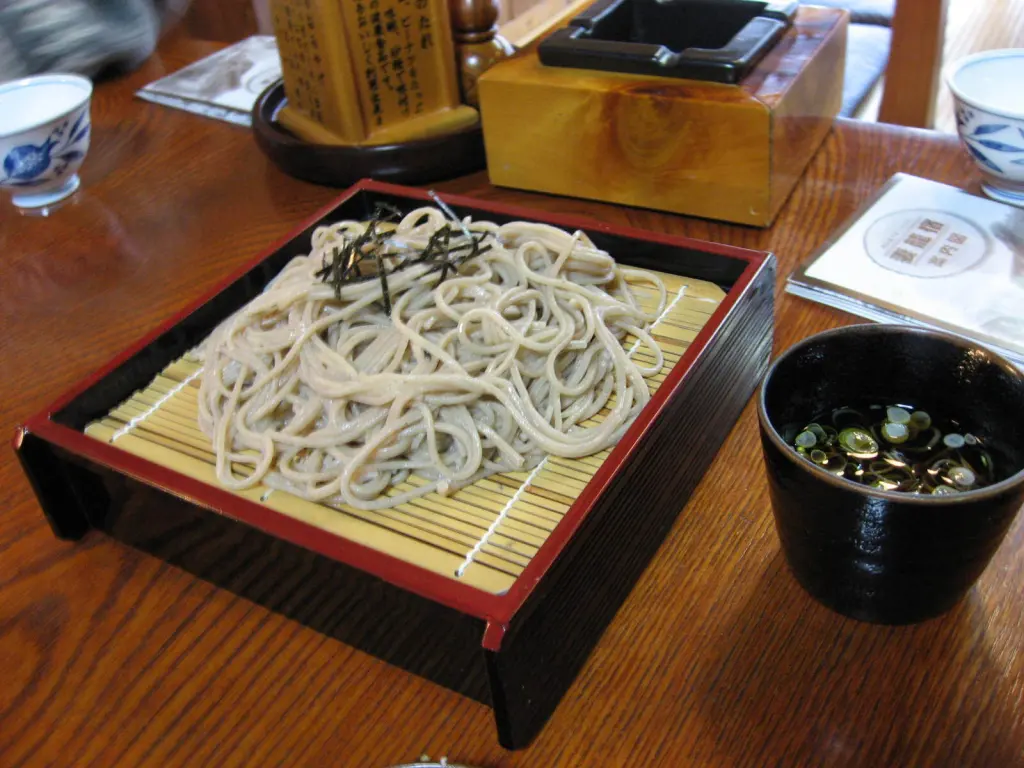
Image: spinachdip / Wikimedia Commons / Flickr · CC BY-SA 2.0
Soba most commonly refers to Japanese noodles made with buckwheat flour, often blended with wheat flour because buckwheat lacks the gluten needed for an elastic dough. The proportion and portion of the grain used affect colour, aroma, texture, and handling. Soba was eaten in earlier forms before cut noodles became widespread; the noodle developed into a prominent urban food in Edo while retaining strong regional associations. It may be served chilled with dipping sauce or hot in seasoned broth and has ritual uses such as toshikoshi soba at New Year. The word soba does not always guarantee buckwheat: yakisoba, chūka soba, and Okinawa soba ordinarily use wheat noodles.
Overview
| Japanese | Soba (蕎麦・そば) |
|---|---|
| Primary grain | Buckwheat, often blended with wheat flour |
| Common cold service | Mori or zaru soba with dipping sauce |
| Common hot service | Kake soba in seasoned broth |
| Historic urban centre | Edo, present-day Tokyo |
| Allergen | Buckwheat can cause severe allergic reactions |
Grain and name
Soba names the buckwheat plant and foods made from it, but compound dish names complicate the term. Soba noodles normally include buckwheat flour; yakisoba and chūka soba use Chinese-style wheat noodles, while Okinawa soba is also wheat-based. Ingredient labels are therefore more reliable than the final word in a dish name.
Before cut noodles
Buckwheat grows in conditions less suited to rice and has long served as a food and emergency crop. Grain was eaten in porridges, and flour was mixed with hot water as sobagaki or formed into other preparations. Cut noodles, known as soba-kiri, emerged later; a single precise inventor or introduction date is not established by the surviving record.
Soba in Edo
By the seventeenth century, soba became deeply embedded in the expanding city of Edo. Shops, fixed stalls, and mobile vendors supplied quick meals to a large urban population. Milling and commercial dashi and soy-sauce seasonings supported the cuisine. Refined shops and inexpensive standing service coexisted, preventing soba from belonging to only one social level.
Flour and noodle making
Buckwheat flour contains no gluten, so many noodles blend it with wheat flour. Nihachi commonly indicates an eight-to-two buckwheat-to-wheat proportion, while jūwari indicates buckwheat without wheat flour. These names do not alone guarantee uniform milling or quality. Sarashina, regular, and darker country-style flours use different portions or processing of the grain.
Cold and hot service
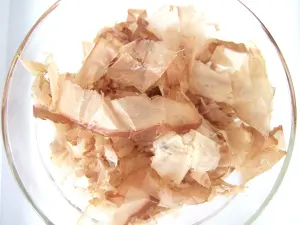
Soba dipping sauce and hot broth commonly build on dashi, with katsuobushi, kombu, soy sauce, and mirin used in proportions that vary by region, shop, and household.
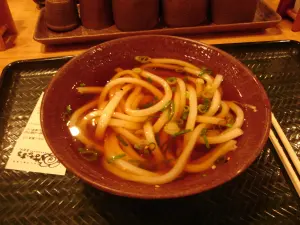
Mori or zaru soba is boiled, rinsed, chilled, and served on a tray with concentrated dipping sauce and condiments. Kake soba is placed in hot broth. Tempura, grated daikon, duck, herring, mountain vegetables, and other additions create established dishes. The dipping sauce and hot broth differ in dilution and regional seasoning and should not be treated as the same liquid.
Regional and seasonal forms
Nagano, Izumo, Iwate, Fukui, and other areas maintain distinctive cultivars, flour, serving vessels, condiments, or eating systems. Freshly harvested shin-soba is valued for seasonal aroma. Regional identity may join agriculture, water, milling, tourism, and restaurant history; no one region represents all soba practice.
Ritual and social uses
Toshikoshi soba is eaten around New Year and is commonly interpreted through the noodle’s length, ease of cutting, or the resilience of buckwheat, though explanations vary. Hikkoshi soba is associated historically with moving and neighbours. Such customs coexist with ordinary station counters, lunch shops, home meals, and formal specialist restaurants.
Allergy and misclassification
Buckwheat is a significant allergen and can provoke severe reactions. A wheat allergy or gluten-related restriction presents a separate concern because much soba contains wheat and may share equipment with other noodles. Conversely, foods called yakisoba or Okinawa soba may contain no buckwheat. Diners should verify ingredients and cross-contact rather than infer safety from the name.
Sources
- Ministry of Agriculture, Forestry and Fisheries, Soba in Tokyo.
- Kikkoman Food Forum, Japanese Noodles No. 3: Soba.
- Japan National Tourism Organization, Udon and Soba.
- Oxford Research Encyclopedia of Food Studies, Noodle Nation Japan.
- Ministry of Agriculture, Forestry and Fisheries, Grain Products in Traditional Foods.
- Ministry of Agriculture, Forestry and Fisheries, Japanese Food Culture.
- Japan National Tourism Organization, The Art of Noodles.
Last updated: