Social Customs
Onsen
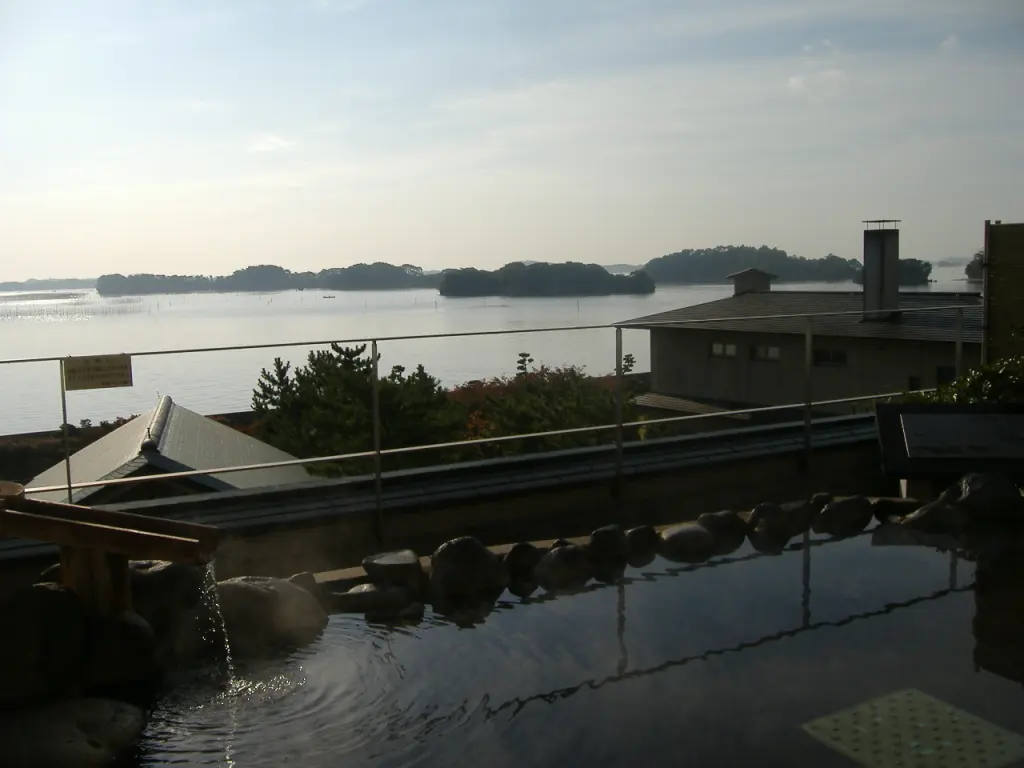
Image: 妖精書士 / Wikimedia Commons · Public domain
An onsen (温泉) is a Japanese hot spring and, in ordinary usage, a bath or destination supplied by hot-spring water. Under Japan's Hot Springs Act, underground water, mineral water, water vapour, or certain other gases qualify when they meet a temperature threshold or contain designated substances. The legal definition concerns the source; it does not prescribe one architectural style or visitor experience. Onsen baths range from small local facilities to ryokan baths, outdoor rotenburo, and large resorts. Many communities developed around springs used for bathing, rest, healing traditions, and travel. Modern onsen operate within systems of source protection, drilling and use permissions, water-quality disclosure, sanitation, and local business. Bathing customs resemble sento etiquette, but facility policies and water characteristics vary.
Overview
| Japanese name | 温泉 |
|---|---|
| Romanization | Onsen |
| Classification | Legally defined hot spring and related bathing facility |
| Legal basis | Hot Springs Act |
| Qualification | Temperature or specified dissolved substances |
| Common forms | Indoor bath, rotenburo, ryokan bath, day-use bath, and resort |
Legal definition
The Hot Springs Act defines onsen by the properties of material emerging from underground. A source qualifies if its temperature at emergence is at least 25 degrees Celsius or if it contains one or more listed substances above specified levels. The Act also covers water vapour and gases other than hydrocarbon-dominant natural gas. This means that an onsen need not feel extremely hot, and hot tap water is not automatically onsen water.
Geology and water
Japan's active geology creates many thermal and mineral-water sources, but formation varies. Groundwater may be heated by volcanic systems or by geothermal gradients as it circulates underground. Minerals depend on the rocks, depth, temperature, and route of the water. Commercial descriptions group springs by chemical characteristics, yet colour, smell, and bathing sensation cannot by themselves establish legal classification or medical effect.
Historical use and onsen towns
Hot springs appear in early chronicles, local legends, temple histories, and travel records. Some were associated with recovery from illness or injury; others became stopping places, pilgrimage sites, or domains managed by local communities. During the Edo period, longer stays for therapeutic bathing developed at several springs. Railway and road networks later turned many onsen towns into mass-tourism destinations while smaller local baths persisted.
Ryokan and bath settings
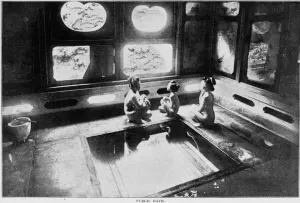
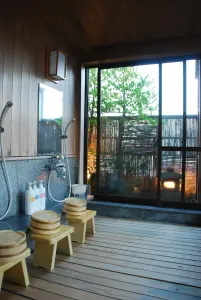
Onsen bathing can take place in a communal public facility, a ryokan, a hotel, a foot bath, or a privately reserved room. Indoor baths protect privacy and temperature; outdoor rotenburo connect bathing with landscape and weather. Some establishments draw directly from a source, while others transport, circulate, filter, heat, cool, or add water. Posted disclosures and staff explanations are more reliable than assumptions based on appearance.
Bathing practice and etiquette
See Bathing Etiquette in Japan for changing-room conduct, washing, privacy, variable tattoo access, and health precautions.
In most communal onsen, bathers undress, wash and rinse before entering, keep towels and hair out of the water, and avoid photography. Swimsuits are generally not used unless the facility specifically requires them. Baths may be divided by gender, rotated by time, mixed under local rules, or privately reservable. Tattoo access differs substantially, so visitors should check the current policy before travel.
Regulation and conservation
Prefectural permission is required for actions such as drilling for hot springs and using spring water for public bathing. The law aims to protect sources, prevent hazards, and support appropriate use. Excessive extraction can affect pressure, temperature, neighbouring sources, and local ecosystems. Operators also work under public-bath sanitation rules. Legal onsen status therefore concerns both cultural use and managed natural resources.
Health claims and safety
Warm bathing may promote relaxation, but an onsen is not a substitute for diagnosis or treatment. Very hot or prolonged immersion can cause dizziness, dehydration, burns, and cardiovascular strain. Bathers should enter gradually, hydrate, avoid bathing after alcohol, and obey warnings for particular water chemistry. People with medical concerns should seek professional guidance rather than relying on a spring's traditional reputation.
Onsen and other baths
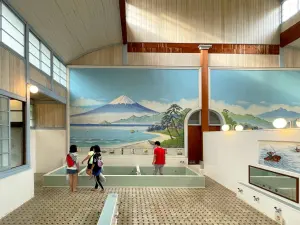
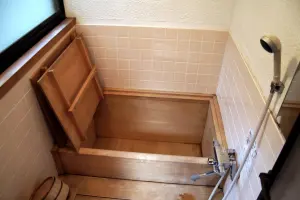
Onsen identifies a qualifying source; sento identifies a public-bath institution; ofuro commonly identifies a bath or domestic bathing practice. A facility can occupy more than one category, such as a neighbourhood public bath supplied by onsen water. Clear description should state both the water source and the kind of facility.
Sources
- Ministry of the Environment, Overview of the Hot Springs Act.
- Japanese Law Translation, Hot Springs Act.
- Japan National Tourism Organization, How to Best Enjoy Onsen.
- Japan National Tourism Organization, Onsen, Tattoos and Etiquette.
- Tokyo Sento Association, History of Sento.
- Kokugakuin University, How Did the Japanese Come to Love Their Baths?.
- Japan National Tourism Organization, Enjoy Bath Culture in Japan.
- Watanabe et al., Physical and Mental Effects of Bathing: A Randomized Intervention Study.
- GO TOKYO, Japanese Bathing Culture: A Guide to Sento.
- Tokyo Sento Association, About Sento.
Last updated: