Manga
Obi o Gyutto Ne!
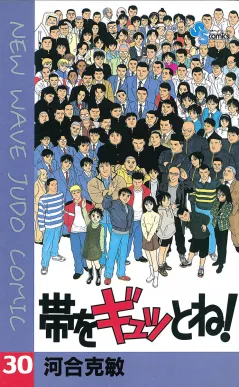
Image: Katsutoshi Kawai; © Shogakukan / Shogakukan e-Comic Store · Copyrighted; limited low-resolution identification and critical commentary
Obi o Gyutto Ne! (帯をギュッとね!) is a school judo manga by Katsutoshi Kawai. Published by Shogakukan in Weekly Shōnen Sunday, it follows five young judoka who reconnect in high school and establish a club at Hamana High. The completed series comprises 30 collected volumes. Tournament arcs, rival schools, grading, training, injury, weight categories, and team order provide its competitive structure, while humour and everyday relationships keep the narrative broader than match results. The title refers to tightening the belt of a judogi, an ordinary action turned into a declaration of readiness. Although the work uses recognizable judo rules and techniques, it is a dramatic sports manga: match timing, character progress, and tactical clarity are shaped for serialization and should not replace formal instruction or historical sources on Judo.
Overview
| Japanese title | 帯をギュッとね! |
|---|---|
| Romanization | Obi o Gyutto Ne! |
| Creator | Katsutoshi Kawai |
| Medium | Manga |
| Original magazine | Weekly Shōnen Sunday |
| Publisher | Shogakukan |
| Collected edition | 30 volumes |
Publication
Shogakukan serialized the series in Weekly Shōnen Sunday and issued a complete 30-volume Shōnen Sunday Comics edition. The long run allowed early club formation, local competition, national-level opponents, and changing relationships to develop across several school seasons rather than a single tournament.
Premise
Five participants who met at a judo grading examination later enter the same high school. Because the school lacks an established judo team, they build one with limited institutional advantage. The premise makes club creation, recruitment, teaching, and collective identity as important as individual athletic ability.
Depiction of judo
Throws, groundwork, gripping, penalties, weight differences, and team tactics are presented with enough specificity to reward readers familiar with judo. The work also uses diagrams, dialogue, and exaggerated reactions to make rapid exchanges readable. Rules and terminology reflect the periods depicted and may differ from current competition standards.
Team competition
School team contests let the result of one bout alter the strategic meaning of the next. Athlete order, draws, accumulated pressure, and contrasting styles generate suspense. This emphasis connects the manga to Japanese school-club culture, while its fictional institutions should not be read as a survey of all real programs.
Humour and character
Kawai balances serious contests with facial comedy, romance, rivalry, and classroom life. Opponents often gain motives and technical identities beyond a simple villain role. That continuity helps later rematches function as evidence of change in both the main team and its rivals.
Comparison with other judo manga
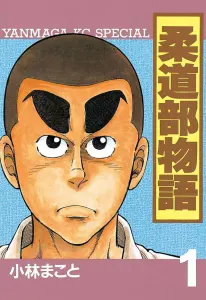
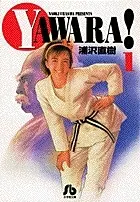
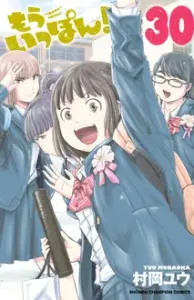
Unlike Jūdōbu Monogatari, which emphasizes a demanding existing club, Obi o Gyutto Ne! begins with students building a team. It also differs from YAWARA! in placing a balanced ensemble and male school competition at its centre.
Legacy
The series remains a substantial example of late twentieth-century sports manga that explains a specialist activity through recurring rivals and club life. Its 30-volume scale records changing approaches to match narration and character design, while keeping the central image of friends tightening their belts and entering competition together.
Sources
- National Diet Library, Research Guide to Manga.
- Japan Magazine Publishers Association, Association Outline.
- Kodokan Judo Institute, History and Founding Principles.
- International Judo Federation, Judo Techniques.
- Shogakukan, Obi o Gyutto Ne! volume 30 and complete series.
- Shogakukan, Obi o Gyutto Ne! volume 2 and series contents.
- Japan Search, Obi o Gyutto Ne! volume 1 archival record.
Last updated: