
Aesthetic Concepts
Ma
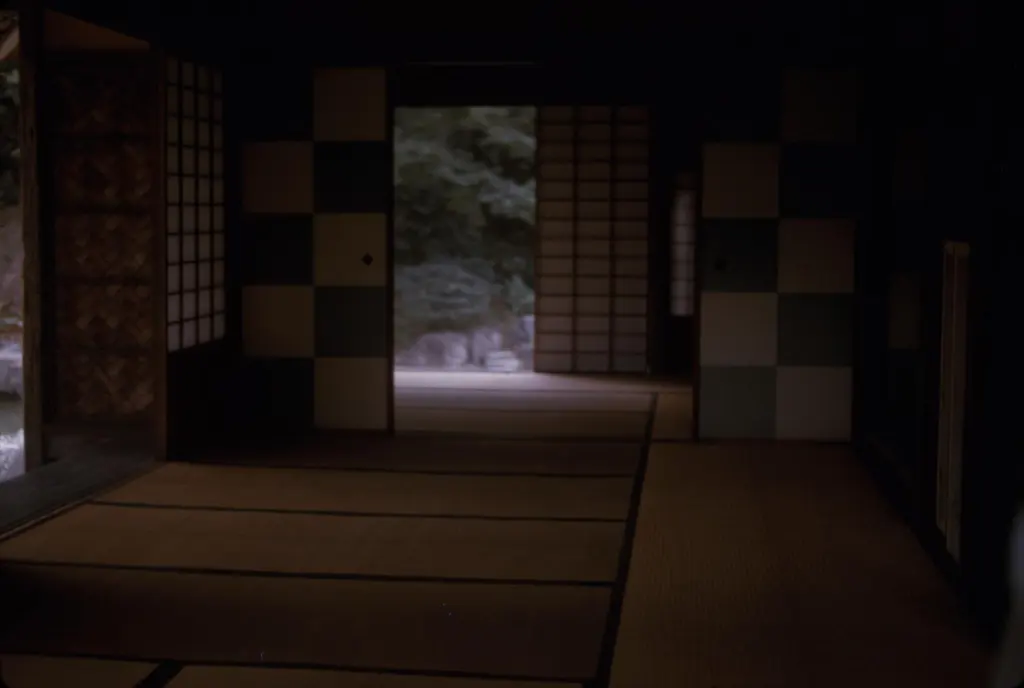
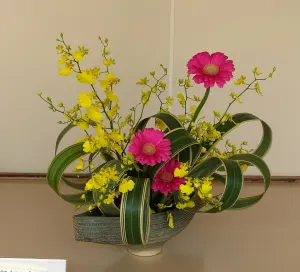
Image: Sherwin John Carlquist / Wikimedia Commons; Digital Public Library of America; Botanical Research Institute of Texas · Creative Commons Attribution 4.0 International
Ma (間) is a Japanese word for an interval, space, room, pause, or relationship between elements. It can concern both space and time: the span between columns, a room available for use, timing between actions, or a pause that shapes musical and dramatic rhythm. Modern discussions of Japanese aesthetics often present ma as purposeful emptiness or “negative space,” especially in architecture and design. That description is only partial. Ma is not necessarily empty, minimal, or serene; it can be occupied, tense, changing, or defined by movement and expectation. Its effect depends on what it separates and connects, how long it lasts, and how people perceive or use the interval.
Overview
| Japanese | 間 |
|---|---|
| Basic senses | Interval, space, room, gap, pause, and timing |
| Dimensions | Both spatial and temporal |
| Major contexts | Architecture, gardens, theatre, music, conversation, and visual design |
| Key principle | The interval gains meaning through relations between surrounding elements |
| Common misconception | Ma is broader than empty space or minimalism |
Word and everyday uses
Ma is an ordinary productive word as well as an aesthetic term. It appears in compounds for rooms, time spans, human relationships, and timing. This linguistic breadth cautions against treating it as a secret philosophical principle with one definition. Aesthetic writing selects and intensifies certain relational senses already present in everyday usage.
Space and interval
In a building, ma may be experienced between posts, screens, rooms, garden views, and paths of movement. Sliding partitions can change an interval's enclosure and use. The important feature is not a void isolated from objects, but a structured relation among surfaces, bodies, light, thresholds, and possible actions.
Time, pause, and rhythm
In speech, music, and performance, a pause may build anticipation, clarify phrasing, or allow an image to settle. Duration matters: an interval that is too short or too long changes the whole event. Ma therefore joins measurable timing with embodied judgment, learned convention, and responsiveness between performers and audience.
Architecture and gardens
Japanese architectural discussions use ma for bays, rooms, or intervals, while modern critics have extended it to sequences of approach and shifting views. At sites such as Katsura Imperial Villa, buildings, verandas, stepping stones, water, and framed scenery can be understood relationally. The term should explain a specific spatial experience rather than substitute for detailed architectural analysis.
Noh and performing arts
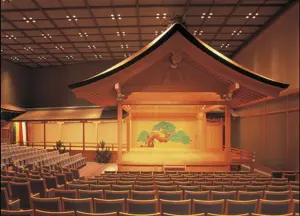
The spare Noh stage makes timing, distance, and controlled movement unusually perceptible. An entrance across the bridgeway, stillness before a gesture, or space between chant and instruments can organize attention. Other performing arts use intervals differently, so ma is not a fixed tempo or a single technique shared unchanged by all traditions.
Visual and contemporary design
Graphic designers, photographers, architects, and filmmakers use ma to discuss spacing, cropping, transitions, and what remains unsaid or unseen. International exhibitions and design writing made the term globally prominent in the late twentieth century. These modern uses are part of its history, even when they differ from older architectural vocabulary.
Negative space and misconceptions
“Negative space” can help explain visual composition, but it narrows ma to a contrast between figure and ground. Ma may instead be a passage, delay, opportunity, or socially negotiated distance. It is also misleading to claim that Western art fills space while Japanese art leaves it empty; both traditions contain dense and sparse forms.
Sources
Last updated:

_-_DPLA_-_77d770a446b47243a33147c61b107151.jpg)