Manga
Tankōbon
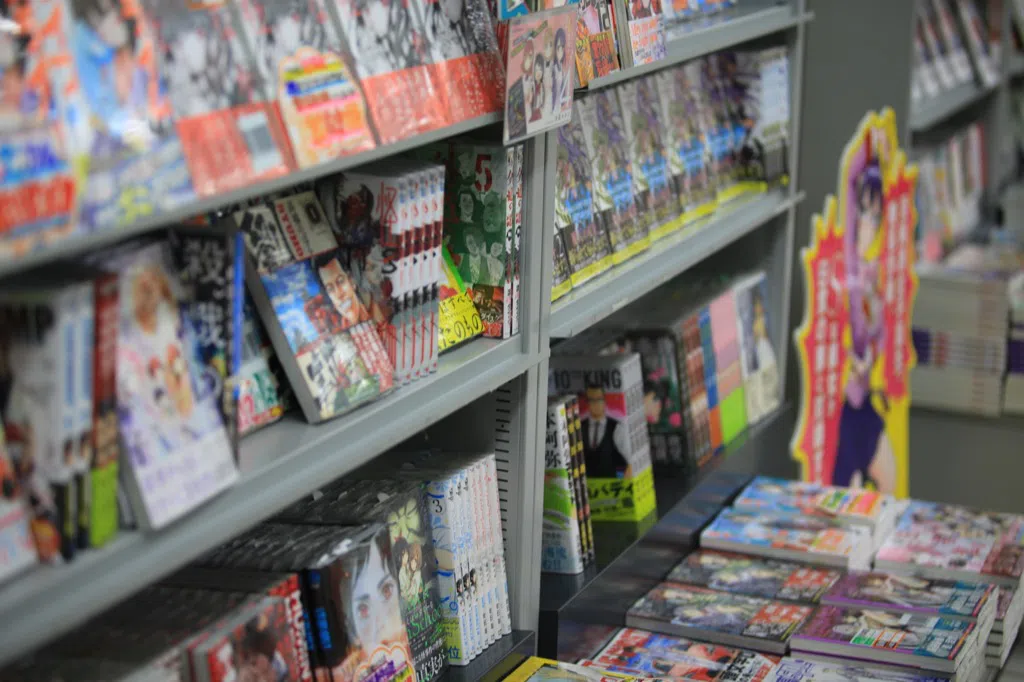
Image: Manga Dragon / Wikimedia Commons · Creative Commons Attribution-ShareAlike 4.0 International
Tankōbon (単行本) is a Japanese publishing term for a stand-alone book issued as an individual volume rather than as part of a periodical. In manga publishing, the word commonly refers to a book that collects chapters first released in a manga magazine or another serial platform. Publishers may revise artwork, correct text, add bonus material, and organize chapters under a numbered series label before the book edition appears. The term is not exclusive to manga: novels, criticism, and other non-periodical books can also be tankōbon. Nor does it identify one fixed trim size, binding, price, or editorial process. English-language manga discussion often uses tankōbon more narrowly for Japanese collected manga volumes, so its meaning depends on whether the speaker is describing Japanese publishing generally or the manga book format specifically.
Overview
| Japanese | 単行本 |
|---|---|
| Romanization | Tankōbon |
| Literal scope | A stand-alone book publication |
| Common manga use | Collected or book-form manga volume |
| Typical source | Magazine, web, or other serial publication |
| Bibliographic identity | Individual volume within a book series |
Name and definition
Tankōbon combines tankō, meaning an independently issued work, with hon, meaning book. In Japanese library and publishing usage it distinguishes a monographic book from a newspaper or magazine issue. The category therefore includes much more than comics.
In international manga use, the word usually means one volume in a Japanese manga book series. The Agency for Cultural Affairs' Media Arts Database similarly distinguishes a manga book, a manga book series, a manga magazine issue, and a manga magazine as different bibliographic objects.
From serialization to book
Many commercial manga begin as installments released weekly, monthly, or at another interval. When enough chapters have accumulated, a publisher can select an endpoint, prepare a book manuscript, design a cover, assign volume information and an ISBN, and release the material through the book-distribution system.
A volume may follow the serial sequence closely, but book publication is not a purely mechanical reprint. Page order, chapter titles, dialogue, art, tonal reproduction, advertisements, and editorial notices can change. Some manga are created directly for books or digital volumes and never pass through a print magazine.
Format and series labels
Manga tankōbon are often compact paperbacks, but dimensions and construction vary among publishers, readerships, price points, and special editions. A publisher's imprint or comics label may communicate a marketing lineage, yet it does not make every volume physically identical.
A long work is normally divided into numbered books. The title of the work, the title of the publisher's series or imprint, and the volume number are separate pieces of bibliographic information. Reissues may use larger pages, new covers, different volume divisions, or terms such as bunkoban, wide-ban, or complete edition.
Editing and added material
Book preparation gives creators and editors an opportunity to correct lettering, redraw panels, adjust reproduction, or restore material affected by a serial deadline. Changes range from minor corrections to substantial visual revision, so the magazine and tankōbon versions of a chapter are not always interchangeable evidence.
Volumes may also include contents pages, author comments, afterwords, short bonus comics, character notes, or advertisements for related books. Such additions belong to a particular edition and should not automatically be treated as part of the original serialization.
Distribution and reading
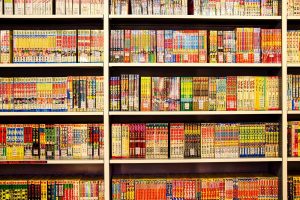
At the Kyoto International Manga Museum, about 50,000 volumes are available for onsite reading through the Wall of Manga, while rarer materials remain in research and preservation collections.
Collected volumes let readers follow one work without purchasing an anthology containing many series. Bookshops and libraries can shelve the volumes as a sequence, while reprinting allows a successful title to remain available beyond the short sales life of a magazine issue.
The historical balance between magazines and books has changed. Publishing-industry data separate comics magazines from comics books and digital comics; the categories should not be combined when comparing sales. Digital volume releases preserve the volume concept even when no paper copy is involved.
Translation and overseas editions
Foreign publishers often license a Japanese book edition as the working unit for translation. They may preserve the Japanese volume division, reading direction, cover, and bonus pages, or reorganize the work as larger omnibus books. The resulting edition is a licensed local publication, not the original Japanese tankōbon itself.
Romanization varies between tankōbon, tankobon, and the informal plural tankōbons. Accurate cataloguing uses the title, publisher, edition, volume number, and date rather than relying on the format word alone.
Common misconceptions
Tankōbon does not mean manga, graphic novel, first edition, paperback, or complete series. It is a publication category whose manga-related sense became especially visible outside Japan. A single manga work can have magazine chapters, tankōbon volumes, revised editions, digital editions, and translated collections.
Cover art and volume spines are useful for identifying an edition, but a photograph of books does not establish publication facts by itself. The Media Arts Database, publisher records, ISBN data, and the National Diet Library catalogue provide stronger bibliographic evidence.
Sources
- Agency for Cultural Affairs, Media Arts Database Ontology.
- National Diet Library, Research Guide to Manga.
- Research Institute for Publications, Introduction to the 2024 Comics Market.
- Japan Magazine Publishers Association, JMPA Outline.
- Japanese Journal of Human Geography, Manga Publishing and Collected Volumes.
Last updated: