Shrines & Temples
Tōdai-ji
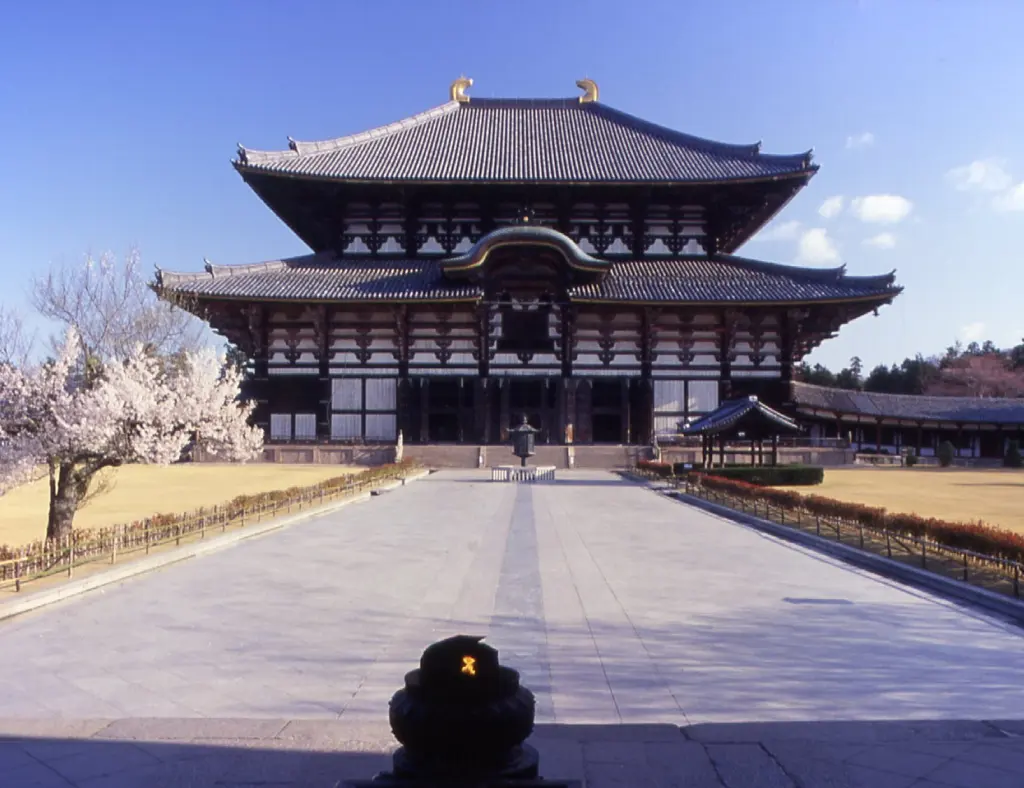
Image: Bigjap / Wikimedia Commons · CC0 1.0
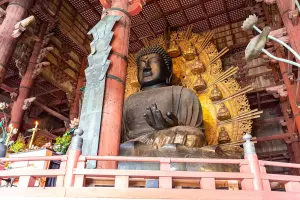
Tōdai-ji (東大寺) is a Buddhist temple in Nara whose eighth-century Great Buddha project joined imperial authority, doctrinal learning, ritual, labour, and resources from across Japan. Its central image is the bronze Vairocana Buddha, commonly called the Nara Daibutsu, housed in the Daibutsuden or Great Buddha Hall. The image was completed in 749 and consecrated in 752 under Emperor Shōmu. Tōdai-ji became the leading temple of the provincial monastery system and remains associated with the Kegon school, but its history includes several doctrinal traditions and repeated institutional change. Fire and warfare destroyed major buildings in 1180 and 1567; the current Daibutsuden was dedicated in 1709 at a smaller width than its medieval predecessors. Tōdai-ji is an active temple as well as a component of UNESCO's Historic Monuments of Ancient Nara.
Overview
| Japanese name | 東大寺 |
|---|---|
| Location | Nara, Nara Prefecture |
| Classification | Buddhist temple |
| Traditional school association | Kegon |
| Principal image | Vairocana Buddha (Nara Daibutsu) |
| Great Buddha consecration | 752 |
| World Heritage status | Historic Monuments of Ancient Nara, 1998 |
Name and institutional role
Tōdai-ji means ‘Great Eastern Temple.’ Its precursor, Kinshō-ji, was founded in 728 for the repose of Crown Prince Motoi. After Emperor Shōmu's 741 order establishing provincial monasteries, the site became the central Kinkōmyō-ji for Yamato Province and the leading temple within that network. Tōdai-ji supported state rites and the study of Buddhist doctrine; it was never only a building constructed around a large statue.
Emperor Shōmu and the Great Buddha
In 743 Emperor Shōmu proclaimed the creation of a colossal image of Vairocana, the cosmic Buddha central to the Avataṃsaka or Flower Garland Sutra. Casting began after the capital returned to Nara and was completed in stages by 749. The consecration ceremony of 752 gathered clerics and participants from Japan and abroad. The project mobilized metal, timber, skilled labour, donations, and ritual authority on an exceptional scale.
Daibutsuden and bronze image
The Daibutsuden is the hall surrounding the Great Buddha. The present hall dates to the reconstruction dedicated in 1709 and is about sixty percent of the width of earlier versions. The bronze image has likewise been repaired and recast in stages after earthquakes, fire, and war, so different portions date from different periods. Calling it an eighth-century image identifies its origin and ritual continuity, not the physical date of every surviving component.
Destruction and Chōgen's reconstruction
Forces led by Taira no Shigehira burned much of the temple in 1180. The monk Chōgen organized reconstruction through nationwide fundraising, estate support, craftsmen, and connections with Song China. The Great Buddha was rededicated in 1185 and the hall completed in 1195. The Nandaimon gate and its monumental guardian sculptures belong to this rebuilding era, whose architectural approach is associated with the Daibutsuyō or Great Buddha style.
Later fire and Edo rebuilding
Another major fire in 1567 left the Great Buddha exposed for decades. The monk Kōkei began a sustained fundraising and reconstruction campaign in the late seventeenth century. The image was rededicated in 1692 and the current hall in 1709. Economic limits reduced the hall's width, but the reconstruction restored a functioning monumental centre. Modern conservation campaigns have since repaired the structure while preserving its accumulated historical fabric.
Precinct, buildings, and treasures
Tōdai-ji anchors the eastern religious landscape of Nara, while the Nara Palace Site lies several kilometers to the west. Together they show why the ancient capital should not be reduced to a single temple precinct.
Tōdai-ji extends across a broad eastern Nara landscape. The Nandaimon, Hokke-dō, Nigatsu-dō, bell tower, ordination hall, museum, and Shōsō-in storehouse represent different functions and periods. The Shōsō-in preserves objects connected with the eighth-century court and temple but is administered separately by the Imperial Household Agency. Deer moving through the approaches belong to the wider Nara park landscape and are not the temple's principal religious symbol.
Shuni-e and living ritual
The annual Shuni-e at Nigatsu-dō, popularly associated with the name Omizutori, has been performed since the eighth century. Monks conduct repentance rites, prayers, and nightly ceremonies in which large torches are carried along the balcony. Other observances mark the Buddha's birth, Setsubun, memorials, and the health of the Great Buddha. These rites make continuity at Tōdai-ji more than an architectural question: the compound remains a community of worship and practice.
Sources
Last updated: