
Crafts & Skills
Maki-e
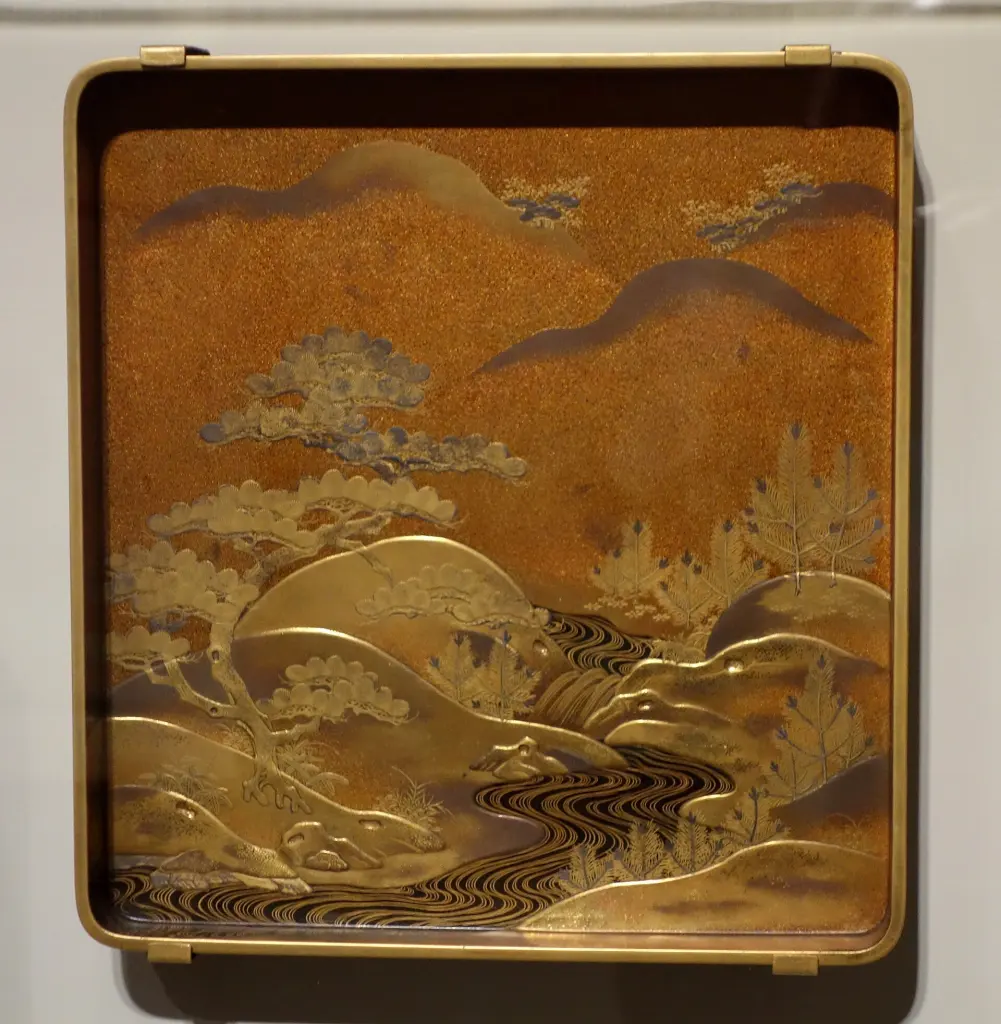
Image: Daderot / Wikimedia Commons; Cincinnati Art Museum · Creative Commons CC0 1.0 Universal Public Domain Dedication
Maki-e (蒔絵, literally “sprinkled picture”) is a family of Japanese lacquer techniques that uses gold, silver, or other powders to build images and patterns on an urushi surface. An artisan draws with lacquer and distributes powder before the lacquer cures, then may cover, polish, and repeat the process to control height, line, colour, and depth. Major technical categories include hiramaki-e, takamaki-e, and togidashi maki-e, although historical works often combine them with shell inlay, metal foil, coloured lacquer, and other methods. Maki-e developed into a particularly important form of Japanese decorative art and appears on writing boxes, furnishings, religious objects, tea utensils, weapon fittings, and export lacquer. It is not simply gold paint: the metallic material and lacquer become part of a layered, labour-intensive surface.
Overview
| Japanese name | 蒔絵 |
|---|---|
| Romanization | Maki-e |
| Literal meaning | Sprinkled picture |
| Base material | Urushi lacquer |
| Principal powders | Gold and silver |
| Major categories | Hiramaki-e, takamaki-e, and togidashi maki-e |
Name and principle
Maku means to scatter or sprinkle, and e means picture. A design is drawn with Urushi, and powder is applied while the surface remains receptive. Special tubes, brushes, and filters help control particle size and distribution. The work is then cured, cleaned, coated, or polished according to the intended method. Because lacquer colour and metal particles interact, the final image is built in stages rather than placed on top in one pass.
Materials and tools
Maki-e uses refined lacquers, metal powders of graded particle size, fine brushes, powder tubes, charcoal, and polishing materials. Gold is stable and highly reflective, while silver can change through tarnish and chemical interaction. Powder shape and size influence line, coverage, and light. Historical recipes and workshop terminology vary, so a museum technical description is more precise than identifying every gold-on-black design as the same technique.
Hiramaki-e
In hiramaki-e, or flat maki-e, powder adheres to a comparatively low lacquer design and receives limited additional build-up. The result can retain crisp lines close to the ground surface. Flat does not mean simple: artisans vary the lacquer, powder, outline, and polishing, and may combine the method with raised areas, inlay, or scattered grounds.
Takamaki-e
Takamaki-e raises elements above the surrounding surface. Relief is constructed with lacquer mixtures and ground materials before metallic powder and finishing layers are applied. Differences in height allow rocks, bark, clouds, clothing, or architectural details to catch light and shadow. The method is technically demanding because the raised foundation, curing, metal application, and polishing must remain structurally integrated.
Togidashi maki-e
In togidashi maki-e, the powdered design is covered with further lacquer and the surface is polished until the image re-emerges level with the ground. The technique can create a deep, unified surface in which forms appear through successive stages of abrasion. Artists combine it with flat and raised work, making the three familiar labels analytical categories rather than mutually exclusive styles.
Historical development
Early surviving examples and documentary evidence show maki-e developing by the eighth century, with major refinement in Heian court culture. Medieval and early modern patrons supported writing boxes, sutra containers, furnishings, and architectural decoration. Edo-period workshops served warrior, court, merchant, and religious clients, while objects made for overseas markets adapted forms and motifs to European commissions.
Writing boxes and cultural use
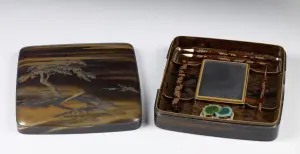
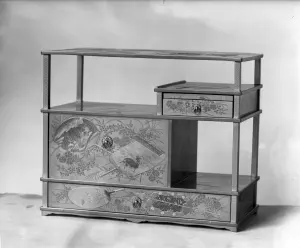
The suzuribako, or writing box, brought maki-e into direct relationship with poetry and Japanese Calligraphy Tools. Designs could refer to classical literature through a few plants, landscapes, objects, or characters. Maki-e also decorates tea caddies, incense utensils, combs, inrō, furniture, and contemporary objects, demonstrating that it is a transferable surface practice rather than one class of artefact.
Sources
Last updated:


,_Japan,_Edo_period,_19th_century,_gold_lacquerware_-_Cincinnati_Art_Museum_-_DSC03169.JPG)