Literature
Tōten no Shishi
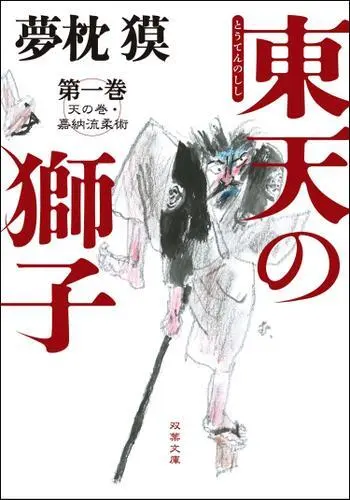
Image: Cover artist uncredited; © Baku Yumemakura / Futabasha / Sony Reader Store official retail listing for Futabasha · Copyrighted; limited low-resolution identification and critical commentary
Tōten no Shishi (東天の獅子, literally “Lion of the Eastern Sky”) is a historical martial-arts novel by Baku Yumemakura. Published by Futabasha in four volumes under the subtitle Ten no Maki: Kanō-ryū Jūjutsu, it dramatizes the formative years of the Kodokan and the struggle to establish judo in early Meiji Japan. Its central figures include Kanō Jigorō and Shida Shirō, later known as Saigō Shirō, alongside practitioners of older jujutsu traditions. The novel uses documented people, institutions, and contests as the framework for an imaginative combat narrative. It is therefore useful as cultural fiction about how modern judo remembers its origins, but it should not be read as a substitute for archival history.
Overview
| Japanese title | 東天の獅子 |
|---|---|
| Romanization | Tōten no Shishi |
| Author | Baku Yumemakura |
| Form | Historical martial-arts novel |
| Publisher | Futabasha |
| Book edition | Four volumes |
| Principal setting | Early Meiji jujutsu and the emerging Kodokan |
Title and publication
The title is normally romanized Tōten no Shishi. The four-volume book edition carries the subtitle Ten no Maki: Kanō-ryū Jūjutsu. Futabasha later issued a four-volume Bunko edition. The subtitle’s “Kanō-ryū” reflects the unstable vocabulary of the period depicted, when Kanō’s method had not yet acquired all the institutional authority later attached to the name Kodokan Judo.
Premise and historical setting
The narrative is set during the transition from Tokugawa-domain martial institutions to the police, school, military, and private-dojo worlds of the Meiji state. It follows the small Kodokan as it tests its methods and identity against established jujutsu schools. Police contests and challenge matches give the novel dramatic structure, while debates over training, injury, reputation, and social purpose supply its larger stakes.
Kanō and Shida Shirō
Kanō appears as an educator and system builder rather than simply a champion fighter. Shida Shirō—historically adopted into the Saigō family and remembered as Saigō Shirō—provides a more volatile centre of action. Their relationship lets the novel contrast institutional vision with individual prowess. Many celebrated anecdotes about early Kodokan contests were shaped by later retelling, and the novel deliberately works inside that legendary field.
Jujutsu schools and rivalries
Older jujutsu traditions are not presented as a single defeated opponent. The story draws on a crowded martial environment that included Tenjin Shin’yō-ryū, Kitō-ryū, police instructors, independent teachers, and other bodies of practice. Its confrontations turn technical difference into narrative drama, but real schools changed over time and interacted through teaching, employment, and personal exchange as well as competition.
Fiction and the historical record
The novel combines identifiable dates and people with invented dialogue, interior motives, compressed chronology, and heightened combat. “Who defeated whom” stories from the early Kodokan often depend on memoirs and popular accounts written later. Readers should compare the novel with institutional records and modern scholarship, especially when it assigns precise techniques or private intentions to historical actors.
Martial-arts narrative
Yumemakura writes combat as physical experiment: balance, fear, pain, timing, and the limits of the body matter as much as heroic victory. The approach connects Tōten no Shishi with his broader martial-arts fiction while giving early judo a distinctive historical frame. Training and contest are also used to ask what kind of violence can be made educational, lawful, or socially legitimate.
Manga adaptation
A manga adaptation by Terubō Aono, based on Yumemakura’s novel, began serialization in Weekly Taishū in 2025. Futabasha published the first collected volume in June 2025. The manga is a separate work and should not be used to date the original novel; its appearance demonstrates the continued circulation of early Kodokan legend across literary and visual media.
Place in judo cultural memory
The work sits between historical novel, martial-arts epic, and origin story. It makes the creation of judo legible as conflict among people, institutions, and ideas rather than as an instantaneous invention by one person. Its value lies in that imaginative reconstruction. Its limitations are the same: compelling scenes can become mistaken for evidence when separated from their fictional form.
Sources
- Kodokan Judo Institute, History and Founding Principles.
- University of Tokyo Repository, study summary discussing Jūdōbu Monogatari.
- National Diet Library Search.
- CiNii Research.
- Baku Yumemakura official website, publication data and manga adaptation.
- Sony Reader Store, Tōten no Shishi volume 4 bibliographic record.
- National Diet Library Search, Tōten no Shishi records.
Last updated: