Folklore & Mythology
Yōkai
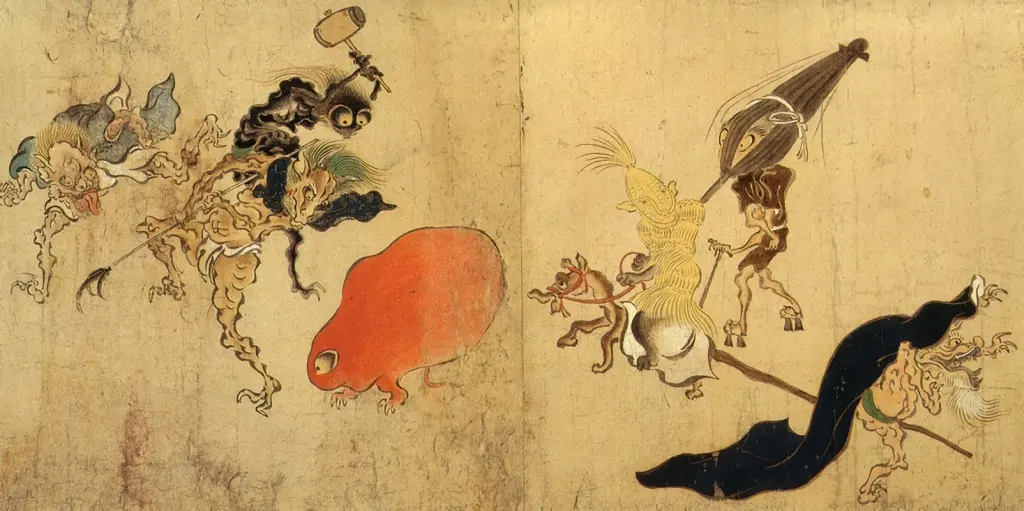
Image: Traditionally attributed to Tosa Mitsunobu; historical reproduction / Wikimedia Commons · Public domain
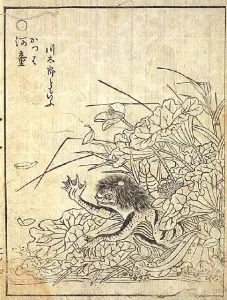
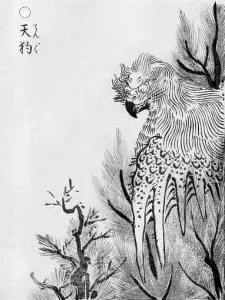
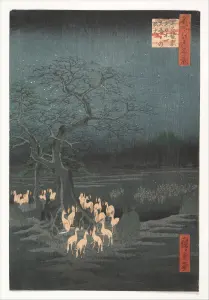
Yōkai (妖怪) is a broad Japanese term for strange phenomena, uncanny presences, and fantastic beings. It is often translated as “monster,” “spirit,” or “supernatural creature,” but no single English word covers its historical range. A yōkai may be imagined as an event without a fixed body, a named being associated with a place, or a recognizable figure in pictures and stories. The category includes such figures as kappa, tengu, and shape-changing kitsune, yet its boundaries with kami, oni, and yūrei vary by period and context. Its history is a history of naming, picturing, collecting, and reinterpreting the strange.
Overview
| Japanese | 妖怪 |
|---|---|
| Romanization | Yōkai |
| Broad scope | Uncanny phenomena, presences, and depicted beings |
| Common settings | Waterways, mountains, roads, villages, and homes |
| Important visual tradition | Hyakki yagyō and illustrated yōkai catalogues |
| Modern fields | Folklore studies, art, literature, manga, film, and games |
Meaning and scope
The characters 妖 and 怪 both suggest the strange, uncanny, or anomalous. Earlier texts used several overlapping terms, including bakemono, obake, mononoke, and kaii. Modern yōkai can refer to a named creature, but it can also name an unexplained occurrence or the idea that an unseen agency is acting in the world. Its flexibility is essential to the term rather than a defect in classification.
From event to figure
Folklorist Komatsu Kazuhiko proposed a useful three-part model: an uncanny phenomenon may be interpreted as the action of an unseen presence, and that presence may later receive a visible form. The stages are not a universal sequence, but they explain why a sound, illness, light, or accident can become associated with a named and illustrated being. Once pictured and narrated, the figure can travel far beyond the locality in which a report was recorded.
Historical development
Pre-modern chronicles, Buddhist narratives, court literature, war tales, temple legends, and local oral traditions contain many strange beings without placing them inside one stable system. From the medieval period, picture scrolls of the hyakki yagyō, or night procession of one hundred demons, gathered heterogeneous beings into a visual parade. During the Edo period, commercial publishing and encyclopedic habits made supernatural figures increasingly nameable, comparable, and collectible.
Sekien and visual catalogues
Toriyama Sekien’s late-eighteenth-century illustrated books were especially influential. He combined older narratives, local names, puns, learned allusions, and inventions in compact entries that resembled natural-history catalogues. Such works did not merely record a fixed body of belief: they helped stabilize appearances and supplied later artists and writers with a shared visual vocabulary.
Locality and variation
Yōkai traditions are highly local. The same name may describe different appearances or behaviour in different regions, while similar water, mountain, or household beings may carry unrelated names. Folklore records therefore preserve variants rather than a single canonical version. The large Yōkai Database maintained by the International Research Center for Japanese Studies is organized around reports and bibliographic records, making regional and historical differences visible.
Boundaries with other terms
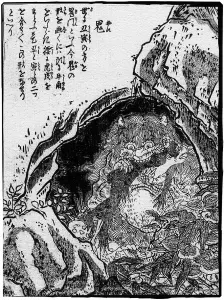
A kami is normally approached through worship or reverence, whereas yōkai often explain danger, disorder, or ambiguity; nevertheless, a feared presence may be pacified and enshrined. Oni can be treated as a powerful subset of demonic beings, while yūrei are more specifically spirits of the dead. These distinctions are working tendencies, not timeless rules. See Kami, Yōkai, Oni and Yūrei for a direct comparison.
Modern media and study
In the modern period, scholars, museums, tourism projects, manga artists, filmmakers, and game designers have repeatedly reorganized the yōkai world. Popular media can turn a dangerous local presence into a character with a stable biography and personality. That transformation is part of yōkai history, but a modern design should not be treated as proof that all earlier communities imagined the being in the same way.
Sources
Last updated: