Folklore & Mythology
Yūrei
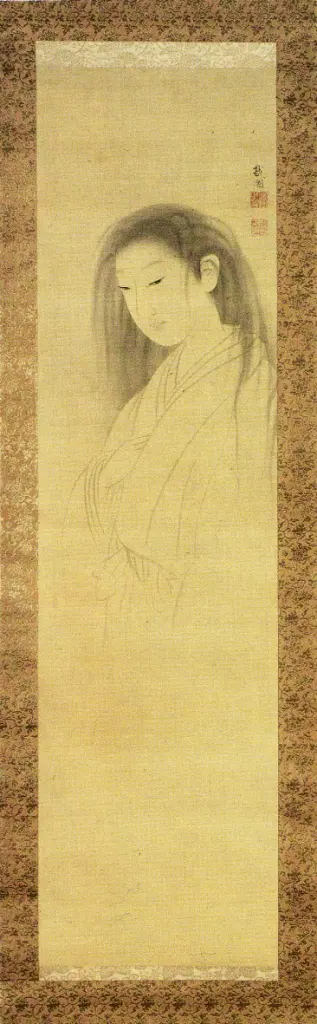
Image: Maruyama Ōkyo / Wikimedia Commons · Public domain
Yūrei (幽霊) are spirits of the dead who appear among the living. “Ghost” is the closest general English translation, but Japanese narratives distinguish many kinds of dead, ancestral, vengeful, and wandering presence. A yūrei may return because of love, duty, betrayal, violent death, or inadequate funerary treatment, and may be calmed through recognition, memorial rites, or the resolution of an attachment. The best-known visual type—a pale figure in a white death robe, with loose black hair and little or no visible lower body—was consolidated in early modern painting and theatre. It is influential, not a rule for every period or story, and yūrei should not be treated as interchangeable with all yōkai.
Overview
| Japanese | 幽霊 |
|---|---|
| Romanization | Yūrei |
| Basic meaning | A spirit of the dead appearing among the living |
| Common narrative causes | Attachment, betrayal, violent death, or improper rites |
| Influential visual type | White robe, loose hair, hands forward, and no visible feet |
| Major media | Noh, kaidan, painting, Kabuki, Rakugo, film, and fiction |
Meaning and related terms
The characters suggest a faint or hidden spirit. In broad usage, yūrei is a ghost of a dead human, while bōrei can mean a departed spirit and onryō emphasizes a vengeful one. Older words such as mononoke and modern labels such as yōkai overlap in particular works. A person’s status after death depends on the narrative, ritual, and historical framework being used.
Death, attachment, and pacification
Many ghost narratives assume that death does not immediately erase social relations. Grief, resentment, promises, family obligations, or a missing memorial can bind the dead to a place or person. Buddhist prayers, funerary and memorial rites, confession, restitution, or the recovery of remains may restore order. The ghost’s appearance often reveals a failure among the living as much as danger from the dead.
Noh and medieval memory
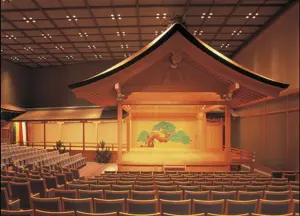
Numerous Noh plays centre on a traveller who meets a local person and later learns that the stranger was the ghost of a warrior, court woman, lover, or other figure attached to the site. Through chant and dance, the dead replay memory and seek prayer or release. This dramatic structure made landscape, literary history, and memorial practice inseparable from the ghost’s identity.
Edo-period kaidan
During the Edo period, kaidan—accounts of strange or frightening events—circulated through oral performance, printed books, theatre, and social games of storytelling. Famous narratives include those associated with Oiwa, Okiku, and Otsuyu, but each has multiple versions. Kabuki staging, illustrated books, and later Rakugo gave ghosts recognizable entrances, gestures, and moral situations.
The familiar visual type
Maruyama Ōkyo and later painters helped popularize the image of a pale female ghost with dishevelled hair, a white burial robe, limp hands, and a body that fades before the feet. The British Museum notes the importance of this convention in nineteenth-century ghost painting. It creates an immediately legible yūrei, but male ghosts, warriors, children, and fully embodied spirits also occur.
Season, performance, and modern horror
Ghost stories and images became associated with summer, when an imagined chill offered relief from heat and Obon foregrounded relations with the dead. Modern literature, theatre, film, manga, and games repeatedly rework older figures. The long-haired cinematic ghost is connected to early modern visual language, but its global form also reflects modern photography, technology, and horror genres.
Relation to yōkai, oni, and kami
A yūrei is defined principally by being dead, whereas many yōkai are not human dead at all. A vengeful spirit may be described with oni imagery or pacified through worship until it has a kami-like role, but those transformations are contextual. See Kami, Yōkai, Oni and Yūrei for the main distinctions.
Sources
Last updated: