Cultural Geography
Sengoku Period
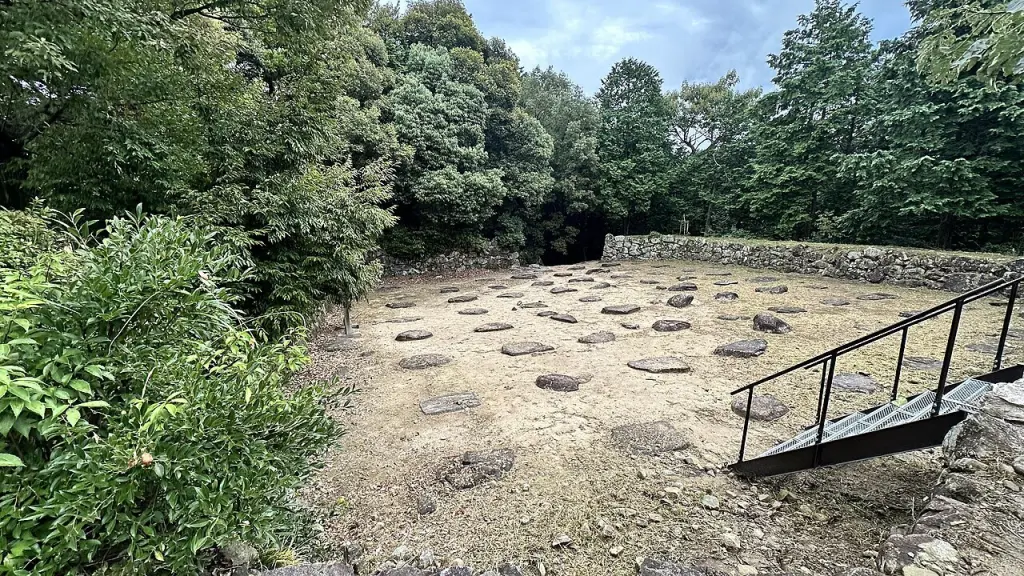
Image: Akonnchiroll / Wikimedia Commons · CC BY-SA 4.0
Overview
Regional conflict and the gradual rebuilding of authority.
The Sengoku period (戦国時代, sengoku jidai), often translated as the Warring States period, was an era of fragmented political authority and recurring warfare in Japan. It is conventionally associated with the upheaval following the Ōnin War of 1467–1477 and the rise of competing regional lords. Its boundaries are interpretative: accounts may emphasise the end of Ashikaga rule, Hideyoshi’s unification or the establishment and consolidation of Tokugawa power. The label overlaps the later Muromachi and Azuchi–Momoyama periods rather than replacing them with one universally dated era. Military conflict was central, but castle towns, trade, religious institutions and artistic patronage also shaped the transformation of society.
Central authority weakened amid prolonged conflict.
Lords organised territory around military and political bases.
Successive settlements changed the scale of rule.
At a glance
- Japanese name
- 戦国時代 · sengoku jidai
- English rendering
- Warring States period
- Conventional starting point
- Ōnin War, 1467–1477
- Central political feature
- Competition among regional powers
- Overlapping eras
- Late Muromachi and Azuchi–Momoyama
- End boundary
- Varies with the definition of unification
01
The dates depend on the historical question
Sengoku names a condition of conflict and divided authority. Muromachi refers to the Ashikaga political and cultural framework, while Azuchi–Momoyama is especially prominent in accounts of late-sixteenth-century power and art. The Metropolitan Museum and Princeton’s art museum use overlapping periodisations. A date range is therefore most useful when its endpoint is explained, rather than treated as a fixed natural boundary.
02
The Ōnin War exposed the weakness of central authority
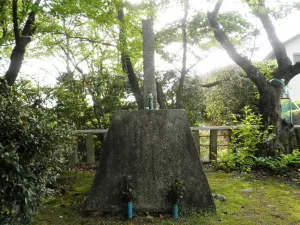
Tosa Province offers a regional example, from rival local centres to Chōsokabe consolidation and a later Toyotomi settlement.
The Ōnin War devastated Kyoto between 1467 and 1477 and is a conventional starting point for the era. Provincial rivalry and the weakening of shogunal authority allowed regional powers to develop greater independence. The process was uneven: an event in Kyoto did not instantly create the same political conditions in every province. Local histories are necessary to understand how particular lords gained and exercised power.
03
Fortifications also organised territory and settlement
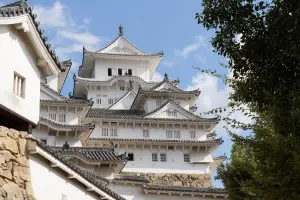
Japanese Castles were military sites, administrative centres and displays of authority. Azuchi illustrates the later transformation: Shiga’s archaeological account connects its monumental structures with Nobunaga’s political programme and its town with existing settlements and markets. Niwa Nagahide supervised construction. The surviving site offers evidence that complements written narratives of campaigns.
04
Unification proceeded through several changes of power
The Shikoku Campaign of 1585 connects military pressure with negotiated submission and the redistribution of territory.
In Shikoku, Chōsokabe Motochika moved from regional expansion to submission within Hideyoshi’s order in 1585.
Nobunaga, Hideyoshi and Ieyasu are conventionally grouped as the three unifiers, but their careers involved different coalitions and political arrangements. Nobunaga’s destruction of the last Ashikaga shogunate did not immediately end warfare. Hideyoshi’s expansion and the later Tokugawa settlement produced further turning points. The Battle of Komaki and Nagakute shows that the succession after Nobunaga remained contested.
1467–1477
- What it marks
- Ōnin War and the conventional opening of the age of regional conflict.
1573
- What it marks
- Nobunaga removes the last Ashikaga shogun.
1590
- What it marks
- Hideyoshi’s unification provides one political endpoint.
1615
- What it marks
- The fall of the Toyotomi at Osaka marks a later stage of consolidation.
05
War coexisted with patronage and overseas contact
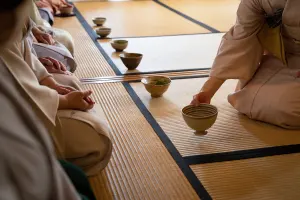
Late-sixteenth-century elites supported both lavish castle decoration and the restrained aesthetics associated with Japanese Tea Ceremony. These were different expressions of patronage rather than mutually exclusive cultures. Contact with European merchants and missionaries added to older East Asian exchanges. Hideyoshi’s invasions of Korea also belong to this wider history and should not disappear behind a purely domestic story of unification.
06
The period is broader than a sequence of famous battles
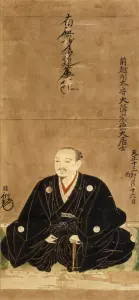
The career of Hachisuka Masakatsu also shows the importance of negotiation: correspondence records his intercession after the 1585 Shikoku campaign.
A military narrative can explain changes of territory while leaving the workings of towns, religious institutions and cultural production unclear. Museum objects, castle archaeology and regional records bring those dimensions into view. Historical films and games often draw on Sengoku settings, but their characters and dramatic sequences should be distinguished from evidence about the sixteenth century. No single clan’s story represents the entire archipelago.
Sources
Last updated: