Karate
Seienchin
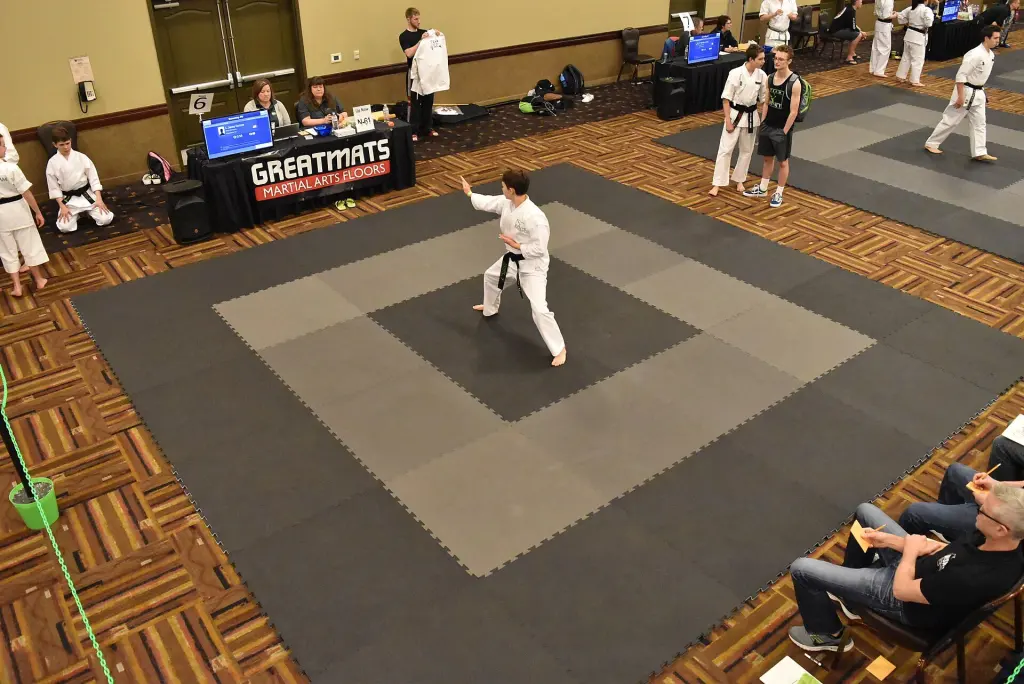
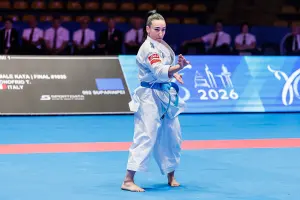
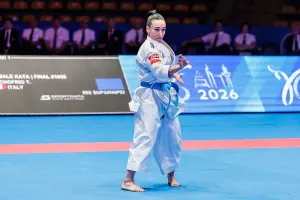
Image: Nows the Time / Wikimedia Commons · CC BY-SA 4.0
Seienchin (セイエンチン) is a Naha-lineage Karate kata preserved in Shito-ryu and Goju-ryu contexts under related spellings such as Seyunchin or Seiunchin. The All Japan Karatedo Federation describes a close-range form without kicking techniques, marked by heavy movement, a symmetrical embusen and deliberate coordination of breath and tempo. Its dated competition framework places Seienchin with Bassai Dai in the Shito-ryu first designated pair. That position identifies one federation model; it does not make Shito-ryu and Goju-ryu versions identical. This guide separates the official JKF Shito-ryu reference from the wider Okinawan name family and avoids presenting uncertain name translations as settled fact.
JKF official kata videos
Official reference
Use these federation reference films to compare named versions. Each video documents one JKF-published model for the named tradition; it does not define every dōjō or lineage.
Shitō-ryū糸東流
Seienchin
Dai-ichi Shitei Kata #7
JKF framework
Where this kata sits
Official competition placement and broader guide context are shown separately.Official JKF position
First designated kata
- Shitō
The dated JKF amendment places Seienchin in the Shitō-ryū first designated pair.
Guide context
Seienchin / Seyunchin
- Gōjū
- Shitō
The guide separates the official Shitō-ryū reference from broader Gōjū-ryū and Naha-lineage versions.
Overview
| Japanese label | セイエンチン |
|---|---|
| Reading | セイエンチン |
| Romanisation | Seienchin |
| Related spellings | Seyunchin; Seiunchin; Seenchin |
| Lineage context | Naha-lineage transmission |
| JKF position | Shito-ryu first designated kata in the dated framework |
| Paired reference | Bassai Dai |
| Version boundary | Shito-ryu and Goju-ryu versions are not interchangeable |
Name and spelling
Seienchin appears in related romanisations including Seyunchin, Seiunchin and Seenchin. The spelling often signals an organisation or transmission context, but spelling alone cannot prove that two complete sequences are identical.
Explanations of the name vary. Without a direct primary source for one original wording, it is safer to preserve the documented title and label proposed translations as interpretations.
Naha-lineage transmission
The JKF connects Seienchin with Naha-te transmission, and the Okinawa Karate Information Center lists Seyunchin or Seenchin among Naha-lineage kata. The form is documented in more than one modern school.
A shared lineage label describes a historical field, not one universal syllabus. Sequence, posture, breathing and application need to be checked against the named branch and teacher.
The JKF first designated position
The JKF amendment effective in 2013 places Bassai Dai and Seienchin in the Shito-ryu first designated pair. The federation's 2023 teaching project again included Seienchin among eight first designated kata.
This page treats that placement as a dated official reference. Current competition rules may change, and the category does not define every Shito-ryu or Goju-ryu curriculum.
Close-range structure and no kicks
The JKF description emphasises close-range actions and notes the absence of kicking techniques in its Seienchin model. The visual character comes from controlled changes of stance and upper-body action rather than a broad kicking vocabulary.
Absence of kicks does not make the kata simple. Posture, rooting, hand paths and recovery must remain organised while the performer changes direction and pressure.
Weight, breath and tempo
The JKF highlights heavy movement, a symmetrical embusen and agreement between breathing and tempo. These cues give the viewer a better study framework than copying isolated final poses.
Breathing and muscular effort should not be forced from a video. The degree and timing of tension are technical matters for the named version and require direct instruction.
Shito-ryu and Goju-ryu versions
The official film on this page is a Shito-ryu reference because that is the JKF designated position documented here. Related Seiyunchin or Seyunchin material in Goju-ryu belongs to the broader Naha-lineage comparison.
Shared names and historical connections do not justify transferring stance, rhythm, breathing or application from one version to another. Label the organisation before making technical comparisons.
Bunkai and partner study
Bunkai can explore the close-range relationships suggested by paired hand actions, turns and changes of level. Each drill should state the assumed attack, grip, range and resistance.
A practical interpretation is not automatically a proven historical meaning. Keep teacher-specific applications, competitive presentation and source-based history in separate evidence boxes.
How to study it safely
Build stance and directional control gradually, without forcing the knees, hips or breath. Stop if low posture or sustained tension causes pain, dizziness or loss of balance.
Partner practice should use agreed contact and qualified supervision. The official video is best used to observe one named model and formulate questions for direct instruction.
Sources
- All Japan Karatedo Federation, Seienchin.
- All Japan Karatedo Federation, 2013 competition-regulation amendment.
- All Japan Karatedo Federation, first designated kata tutorial list.
- Okinawa Karate Information Center, Kata of Okinawa karate and kobudo.
- Tooru Kadekaru, The origins of the modern kata in karate-do.
Last updated: