Games
Japanese Indie Games
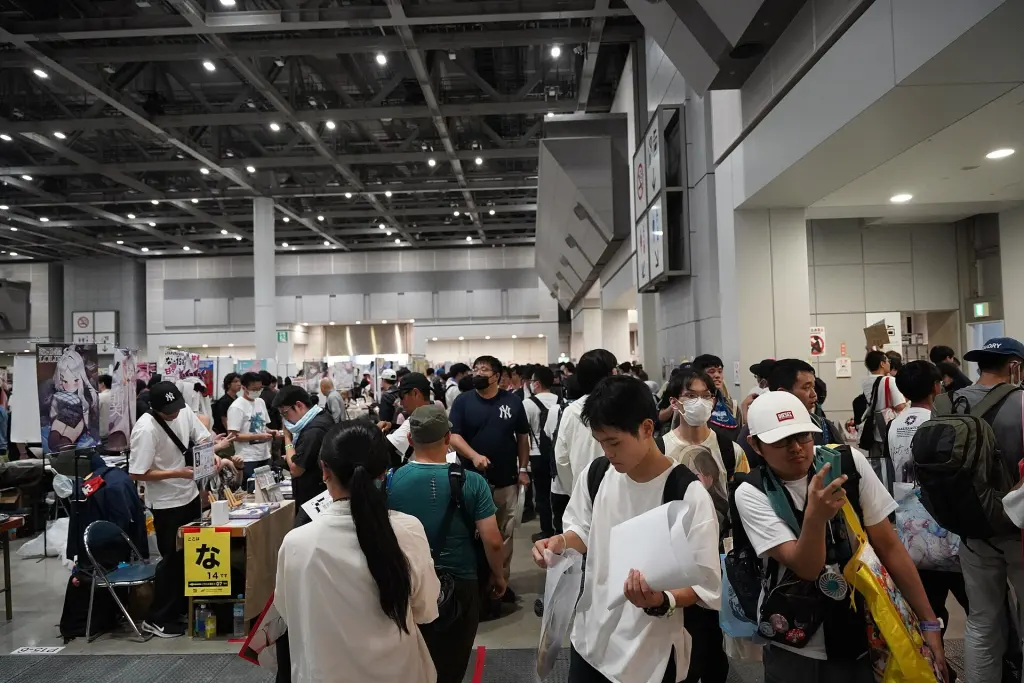
Image: Benlisquare / Wikimedia Commons · CC BY-SA 4.0
Overview
Indie and dōjin.
Overlapping—not identical.
Japanese independent games connect home-computer hobbyism, dōjin self-publishing, small studios, events, and global storefronts. Production scale matters, but routes to community and distribution matter too.
A flexible production and business label shaped by team size, publishing, ownership, and autonomy.
A self-publishing culture organised through creators, circles, events, shops, and communities.
A project can be both, either, or change category as partners and distribution expand.
- Japanese terms
- インディーゲーム (indī gēmu); 同人ゲーム (dōjin gēmu)
- Core distinction
- Indie and dōjin overlap but are not interchangeable
- Historical roots
- Home-computer hobbyism and self-publishing from the late twentieth century
- Distribution
- Events, specialist shops, direct download, digital stores, consoles, and streaming communities
- Major public event
- BitSummit, founded in Kyoto in 2013
- Production scale
- Solo creators, circles, and small studios using varied funding and publishing arrangements
01 Name and boundaries
Indie and dōjin overlap without becoming synonyms.
Indie
Small team, limited budget, creator ownership, self-publishing, or distance from a major publisher.
Dōjin
Self-published work made by individuals or circles within Japanese event and fan networks.
Indī gēmu is the common Japanese rendering of 'indie game', but independence has no single legal or aesthetic test. It can refer to small teams, limited budgets, ownership of intellectual property, self-publishing, or creative distance from major publishers. Some games described as indie later gain commercial publishers, console versions, or large international audiences.
Dōjin gēmu identifies games made within the broader culture of self-published works, often by individuals or circles. Dōjin practice may be non-commercial or commercial, original or derivative, amateur or highly skilled. Treating it simply as a Japanese translation of indie erases its particular event, community, and distribution history.
02 Home-computer roots
The history starts before today's digital storefronts.
- Late 1970s–1980s
Home-computer hobbyism
Microcomputers, code listings, specialist magazines, shops, and clubs connected makers and players.
- 1990s–2000s
Dōjin distribution
Conventions, mail order, specialist retailers, and online shops widened circulation.
- 2010s–present
Platform visibility
Global PC stores, consoles, streaming communities, and festivals expanded routes outward.
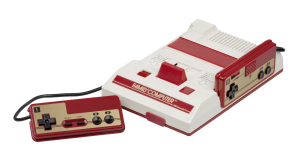
The history extends beyond the recent global label 'indie'. From the late 1970s and especially the 1980s, Japanese microcomputers supported programming by hobbyists and small developers. Specialist magazines printed code and reported on new software, while computer shops, clubs, and informal exchanges connected makers and players.
The platform landscape differed from the later console market. Multiple computer standards, keyboard-oriented interfaces, and disk or cassette distribution encouraged experiments that were not always visible in accounts centred on arcade and console firms. Researchers therefore use surviving software, magazines, advertisements, and personal archives to reconstruct this early culture.
03 Dōjin circulation
Circulation was also a social practice.
Creator or circle
Original or derivative work
Community route
Convention · mail order · specialist shop
Player encounter
Packaging · conversation · limited release
During the 1990s and 2000s, dōjin games circulated through conventions, mail order, specialist retailers, and later online shops. Comic Market is important as a broad self-publishing event rather than a games-only festival. Creators present works directly, meet players and peers, and participate in communities that also encompass manga, music, software, and other media.
Circulation at events can make physical packaging, limited print runs, and face-to-face exchange part of a game's social meaning. At the same time, not every independent Japanese developer belongs to dōjin networks, and digital distribution has created routes that do not depend on convention participation.
04 Tools and small-team production
Accessible tools redistribute work—they do not remove it.
Design & code
Engines lower some technical barriers but still demand design, programming, and testing decisions.
Art & sound
One creator or a small circle may carry several specialist roles.
Promotion & localisation
Discovery, translation, community support, and platform work remain substantial labour.
Funding & support
Income may combine sales, crowdfunding, grants, publishers, and commissioned work.
Game engines, authoring systems, accessible art and audio software, and online collaboration have lowered some technical barriers to production. Japanese-developed tools such as RPG construction software have enabled creators without conventional programming backgrounds to assemble games, while widely used engines such as Unity connect Japanese teams to international development practices.
Small scale does not mean simple labour. One person may handle design, programming, art, sound, testing, promotion, localisation, and customer support, or a circle may divide these roles informally. Funding can come from personal income, event sales, crowdfunding, publishers, platform programmes, grants, or commissioned work.
05 Forms and creator practice
Small scale supports many forms, not one aesthetic.
Japanese independent and dōjin production includes role-playing games, visual novels, shooting games, action games, horror, puzzle works, experimental software, and hybrids that resist stable genres. Some projects extend fan-created worlds; others build original settings. Visual or technical modesty may reflect resources, deliberate style, or both.
Small teams can revise quickly and pursue specialised audiences, but they also face constraints in discoverability, accessibility, testing, and long-term support. The diversity of outcomes is more informative than a single claim that indie games are inherently experimental or that commercial games are inherently conservative.
06 BitSummit and public visibility
BitSummit made a category more publicly legible.
BitSummit began in Kyoto in 2013 as an event focused on independent game creators. It provides exhibition space, awards, talks, business meetings, and public play, helping local developers meet publishers, media, and audiences. Its emergence also marked a period when 'indie' became more visible as a public category within Japan.
The event does not replace dōjin conventions or digital storefronts. Instead, it represents one node in a mixed ecology that also includes Tokyo Game Show, local meet-ups, online showcases, university programmes, and publisher-run initiatives. Each setting frames independence differently.
07 Localisation and global circulation
Global reach adds new layers of labour.
Domestic release
Event or online launch
Translation layer
Localisation · certification · ratings
Global circulation
Stores · streams · festivals · ports
Download portals and global PC stores allow a small Japanese release to reach players abroad, but visibility is not automatic. Translation, platform certification, tax and rating rules, community management, and marketing require time and specialised knowledge. Publishers and localisation partners can make these tasks possible while changing how a project's independence is described.
Streaming video, fan communities, and festivals can bring older or niche titles to new audiences. Overseas success may in turn lead to console ports, sequels, or official translations. These routes show that 'Japanese indie' is formed through transnational circulation as well as domestic production.
08 Preservation and research
Preserving a game means preserving more than a file.
Software
Files, versions, engines, and compatible hardware or emulation.
Documents
Magazines, catalogues, packaging, design files, and websites.
Community
Creator testimony, event context, rights, and the intended conditions of circulation.
Independent game history is vulnerable to loss. Personal websites disappear, event discs degrade, operating systems become incompatible, stores close, and rights may be shared informally among former collaborators. A downloadable file alone may not preserve the hardware, documentation, community context, or online services needed to understand it.
Museums and researchers increasingly combine software with magazines, event catalogues, oral history, design files, and creator testimony. Preservation must also respect copyright and the wishes of creators, especially where works were shared within limited communities rather than intended for unrestricted redistribution.
Sources
- The Strong National Museum of Play, Japanese Indie Games.
- Tomás Grau de Pablos, Between Indie and Doujin: The creation of the Japanese indie.
- Martin Picard, The Foundation of Geemu: A Brief History of Early Japanese video games.
- BitSummit, official event website.
- Nobuya Hichibe, Contents Industry and Innovation: The Case of the Japanese Video Games Software.
Last updated: