Shrines & Temples
Tsurugaoka Hachimangū
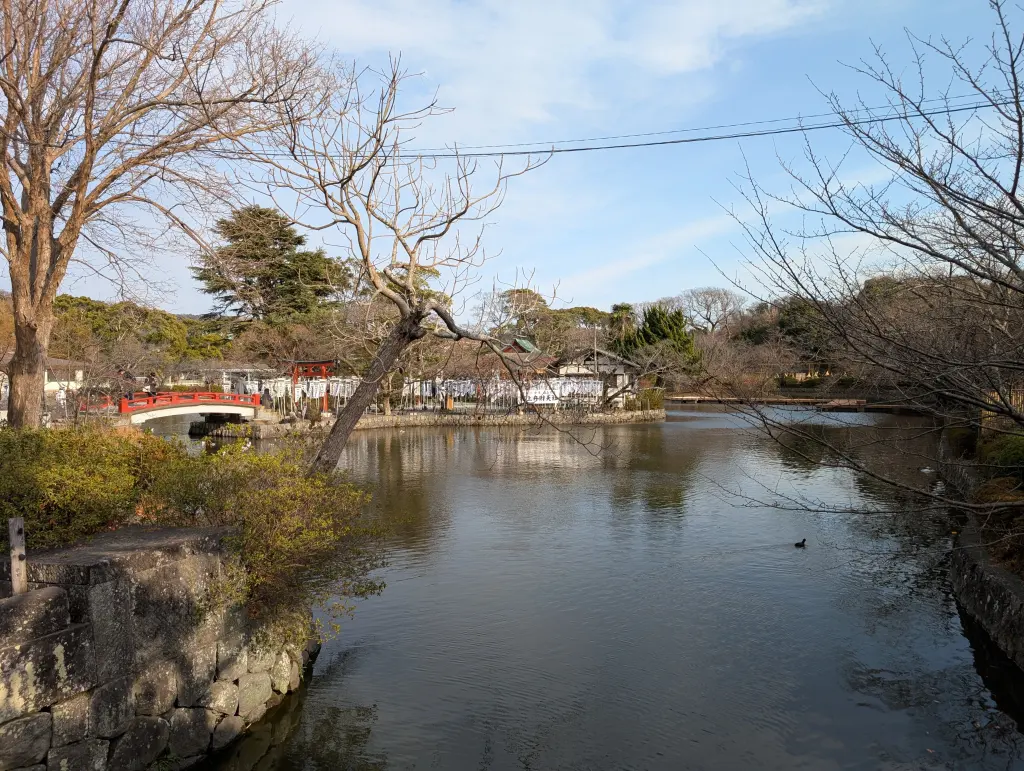
Image: Syced / Wikimedia Commons · CC0 1.0 Universal
Tsurugaoka Hachimangū (鶴岡八幡宮) is a major Shinto shrine in Kamakura, Kanagawa Prefecture, dedicated to Hachiman through Emperor Ōjin, Himegami, and Empress Jingū. Shrine tradition traces its Kamakura origins to a Hachiman sanctuary established by Minamoto no Yoriyoshi in 1063; Minamoto no Yoritomo transferred it to the present site in 1180 as he made Kamakura the center of warrior government. The shrine became a focus of shogunal patronage, ceremony, performance, and city planning, with Wakamiya Ōji forming a monumental approach from the coast. Its present identity should not be reduced to a simple “warrior shrine”: the precinct has supported worship, festivals, arts, archives, and community life, while its medieval history also reflects close interaction between kami worship and Buddhism.
Overview
| Japanese name | 鶴岡八幡宮 |
|---|---|
| Romanization | Tsurugaoka Hachimangū |
| Location | Yukinoshita, Kamakura, Kanagawa Prefecture |
| Classification | Shinto shrine dedicated to Hachiman |
| Principal kami | Emperor Ōjin, Himegami, and Empress Jingū |
| Present-site foundation | 1180 under Minamoto no Yoritomo |
| Upper Shrine | Rebuilt in 1828; nationally designated Important Cultural Property |
| Historic precinct | National Historic Site designated in 1967, later extended |
Name and religious identity
Tsurugaoka Hachimangū is written 鶴岡八幡宮. Hachimangū identifies a shrine of Hachiman, while Tsurugaoka preserves the place-name attached to the institution’s Kamakura history. The principal sanctuary enshrines Emperor Ōjin, Himegami, and Empress Jingū, a triad through which Hachiman is worshipped at the shrine.
Hachiman became closely associated with the Minamoto lineage and later warrior patronage, but describing the kami only as a god of war is too narrow. Protection, political legitimacy, ritual order, cultural performance, family and community prayer, and the histories of Hachiman worship all meet at the shrine. The general Shinto Shrine (Jinja) entry explains the wider institutional setting.
From Yoriyoshi to Yoritomo
Shrine tradition begins with Minamoto no Yoriyoshi, who established a Hachiman sanctuary near Yuigahama in 1063 after receiving a divided sacred presence, or bunrei, from Iwashimizu Hachimangū. This origin belongs to the shrine’s institutional memory and to the wider spread of Hachiman worship through branch foundations.
In 1180 Minamoto no Yoritomo moved the sanctuary to the foot of the northern hills as he established his political base in Kamakura. The relocation joined lineage devotion to a new center of warrior authority. It also gave the shrine a public and spatial role beyond private clan worship.
Shrine and city
The shrine stands at the northern end of Wakamiya Ōji, the long approach extending toward Yuigahama. Official shrine history connects the avenue’s construction with Yoritomo’s town planning and prayers for the safe delivery of his wife, Hōjō Masako. Its axial form made the shrine a visual and ceremonial focus within the developing city.
Tsurugaoka was not simply a religious building placed inside an already finished capital. Shrine precinct, roads, ponds, government spaces, residences, and surrounding boundaries helped produce medieval Kamakura as a political and ritual landscape. Scholarship using the Azuma kagami emphasizes the shrine-temple complex as a center from which ceremonies, performance, and urban borders can be studied.
Warrior government and patronage
Yoritomo and later warrior governments treated Tsurugaoka Hachimangū as a guardian institution of Kamakura and eastern Japan. Patronage supported buildings, lands, documents, treasures, festivals, and specialist communities. The shrine’s importance continued after the first Kamakura shogunate ended, although the political circumstances and patrons changed.
The association between Hachiman and warriors made Tsurugaoka a powerful model for later memory of samurai rule. That memory should not be projected backward as an unchanged tradition: fires, warfare, reconstruction, institutional reform, and new interpretations repeatedly altered the precinct and its public meaning.
Kami and buddhas
For much of its premodern history, Tsurugaoka supported Buddhist specialists, buildings, images, and ceremonies alongside Hachiman worship. This was not an accidental mixture of two neatly separated religions. Shrine-temple institutions were part of the normal religious organization of medieval Japan, and Tsurugaoka’s ritual calendar drew together offerings to kami, Buddhist meanings, music, dance, and public performance.
Meiji-period policies separating Shinto and Buddhism changed this institutional landscape. Buddhist buildings and personnel were removed or reorganized, while some objects associated with the former complex passed to other institutions. The present Shinto shrine therefore preserves a long history but is not structurally identical to the medieval shrine-temple complex.
Buildings and reconstruction
For a contrasting Edo-period site in Tokyo, Akasaka Hikawa Shrine preserves a sanctuary associated with Tokugawa Yoshimune’s patronage.
A fire in 1191 destroyed earlier buildings. Yoritomo then reshaped the hillside and established an upper sanctuary together with the Wakamiya below. Later patrons repaired and rebuilt the complex after further damage. The present Upper Shrine dates from an 1828 reconstruction sponsored under Tokugawa Ienari after a fire in 1821.
The Agency for Cultural Affairs designates the Upper Shrine buildings as an Important Cultural Property and describes them as representative late-Edo shrine architecture built within the inherited medieval precinct. Other protected structures and objects survive, while the broader precinct is a National Historic Site. Preservation here concerns layered reconstruction and use, not the survival of every building from 1180.
Rituals and performance
Tsurugaoka’s historical ceremonies included hōjōe, mounted archery, sumo, bugaku, and other offerings. The annual festival remains a major expression of the shrine’s ritual life, and yabusame presents mounted archery within a ceremonial setting. These events join worship with disciplined performance, patronage, procession, and public spectatorship.
Historical forms did not remain frozen. Participants, rules, meanings, and institutional settings changed across the medieval, early modern, and modern periods. A contemporary festival can transmit an older name or practice while also reflecting later reconstruction and present-day shrine organization.
Treasures, museum, and study
The shrine preserves documents, ritual objects, arms, textiles, and other works connected with its religious and political history. The Treasure Hall, Tsurugaoka Bunko, and Kamakura Bunkakan Tsurugaoka Museum provide different routes into these collections and the wider culture of Kamakura.
Kamakura Bunkakan occupies the former Museum of Modern Art, Kamakura building, an important work of postwar modernism designed by Junzō Sakakura. Its presence inside the precinct adds a modern architectural and museological layer to a site more often approached only through medieval history.
Visiting and reading the precinct
The approach from Wakamiya Ōji, the Genpei ponds, Maiden, great stone steps, Upper Shrine, Wakamiya, subordinate shrines, and cultural facilities reveal different parts of the site’s history. The ponds and axial approach show how landscape and movement organize the experience before a visitor reaches the principal sanctuary.
Tsurugaoka Hachimangū remains an active place of worship. Visitors should follow posted guidance on photography, restricted spaces, ceremonies, and crowd movement; opening hours and event access can change. Japanese Shrine Etiquette provides a general framework, but the shrine’s own notices take priority.
Sources
- Tsurugaoka Hachimangu, Learn: The Cultural Heart of Kamakura.
- Tsurugaoka Hachimangu, A Tour of the Shrine Grounds.
- Agency for Cultural Affairs, Tsurugaoka Hachimangu Upper Shrine.
- Agency for Cultural Affairs, Historic Site: Tsurugaoka Hachimangu Precincts.
- Kanagawa Prefecture, Cultural Properties of Kamakura, Home of the Samurai.
- Abe Yasurō, The Emergence of Medieval Borders in Kamakura: Sacred Space of Tsurugaoka Hachimangū.
Last updated: