Historic Cities
Kamakura
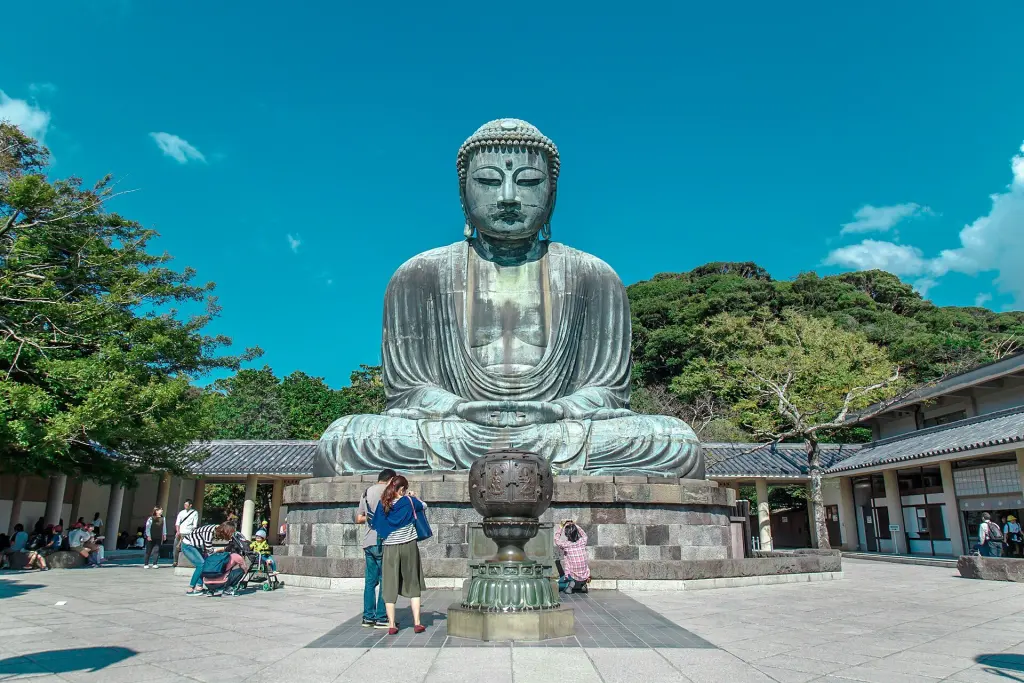
Image: John Gillespie / Wikimedia Commons · CC BY-SA 2.0
Kamakura is a coastal city in Kanagawa Prefecture, south of Tokyo and Yokohama. Minamoto no Yoritomo established his political base there in 1180, and the Kamakura shogunate made the city the center of a durable warrior government until 1333. Hills, narrow passes, temple valleys, and Sagami Bay shaped both its defensive geography and later image as a sacred and scenic retreat. Tsurugaoka Hachimangū, Zen monasteries, Pure Land and Nichiren sites, the Great Buddha, and many smaller institutions preserve distinct religious histories. Kamakura is often called an ancient capital, but it did not replace the imperial court in Kyoto; it became a parallel center of warrior authority. Today it is also a residential, literary, beach, and tourism city connected closely to metropolitan Tokyo.
Overview
| Japanese name | 鎌倉市 |
|---|---|
| Romanization | Kamakura-shi |
| Prefecture | Kanagawa Prefecture |
| Region | Kantō |
| Warrior center | Political base of Minamoto no Yoritomo from 1180; shogunate ended in 1333 |
| Landscape | Temple valleys and urban districts between wooded hills and Sagami Bay |
Name and coastal setting
Kamakura lies on Sagami Bay, enclosed by hills on three sides and open to the sea on the fourth. Historic routes passed through narrow cuts in the surrounding ridges, while valleys provided sites for temples, residences, cemeteries, and later neighborhoods.
The modern municipality includes the central shrine-and-temple district, Hase, Kita-Kamakura, coastal communities, and residential areas. Enoshima is closely associated with Kamakura travel but lies in neighboring Fujisawa City.
Yoritomo and warrior government
Kamakura became a center of warrior government without simply replacing Kyoto as the imperial court’s home. This division of political functions is part of the wider geography of Japan’s historic capitals.
Minamoto no Yoritomo entered Kamakura in 1180 and built a government based on warrior retainers, land administration, and military authority. He received the title shogun in 1192, but the formation of the Kamakura government was a process rather than a single founding moment.
After Yoritomo’s death, the Hōjō family exercised power through the regency. The government survived internal conflict and the Mongol invasions before collapsing in 1333. Period labels vary: “Kamakura period” may begin in 1185, 1192, or another date depending on the political question being discussed.
Shrine, temple, and Zen landscapes
Tsurugaoka Hachimangū deserves separate attention as the Hachiman shrine through which Minamoto patronage, the city axis of Wakamiya Ōji, medieval kami–Buddha ritual, and later architectural reconstruction can be read together.
Tsurugaoka Hachimangū’s warrior and ritual history remains visible in its annual Yabusame, a mounted-archery dedication held on September 16 during the shrine’s Grand Festival.
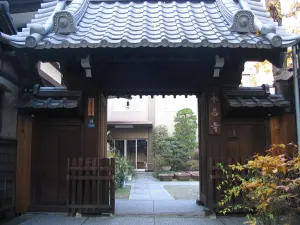
Tsurugaoka Hachimangū became a central institution linking warrior patronage, ritual, and urban planning. Kenchō-ji and Engaku-ji were major Zen monasteries, while Hase-dera, Kōtoku-in, Zeniarai Benzaiten, and Nichiren-associated sites express other devotional histories.
Zen became influential in elite religious and cultural networks, but Kamakura was never exclusively Zen. Buddhism, kami worship, pilgrimage, funerary practice, and local devotion overlapped in ways that modern denominational maps can simplify.
Great Buddha and built heritage
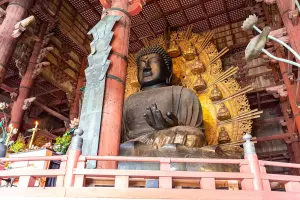
The bronze Amida Buddha at Kōtoku-in dates to the thirteenth century and now stands outdoors after the loss of earlier halls. It is Kamakura’s most widely recognized image, but it represents one institution within a much larger religious landscape.
Historic buildings have been damaged, moved, repaired, and rebuilt after warfare, fire, earthquakes, storms, and changing patronage. Sites such as Eishoji Temple also connect Kamakura’s later history with women’s institutions and, unexpectedly, the early story of modern judo.
Literature, craft, and memory
Medieval chronicles, Buddhist narratives, documents, and war tales shaped Kamakura’s historical memory. The Tale of the Heike concerns conflicts before the mature shogunate, so it should not be read as a complete history of Kamakura government.
Kamakura-bori carved lacquer developed through woodworking and lacquer traditions associated with the region’s religious institutions. From the modern period, writers and artists were drawn to the city’s proximity to Tokyo, historical associations, wooded valleys, and coast.
From pilgrimage to modern city
Kamakura’s decline as a political center did not end its religious importance. By the Edo period, guidebooks and pilgrimage routes presented temples, shrines, legendary sites, and the nearby coast to visitors from Edo. Rail access later intensified tourism and residential development.
The city today combines historic precincts with schools, homes, shops, beaches, and commuter life. Crowding around Kamakura Station, Komachi-dori, Hase, and seasonal flower sites can affect residents and access, especially on weekends and festival days.
Visiting and reading the landscape
Kamakura Station, Kita-Kamakura Station, and the Enoden railway provide different starting points. Walking routes can connect major institutions, but hills, steps, traffic, heat, and trail closures affect accessibility. Official notices should be checked before using hiking courses.
Temples and shrines are active religious places with individual rules for photography, worship, gardens, and entry. Reading the geography between sites—the valleys, ridge cuts, old approaches, and coast—helps explain why Kamakura developed as it did.
Sources
Last updated: