
Shrines & Temples
Ise Jingū
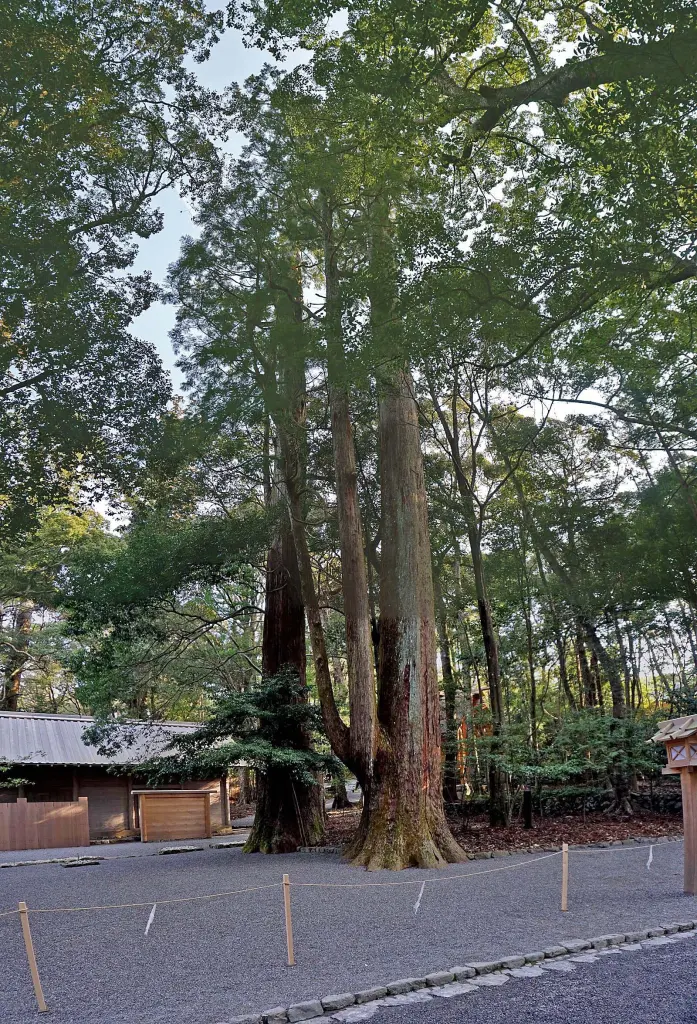
Image: z tanuki / Wikimedia Commons; Panoramio archive · CC BY 3.0
Ise Jingū (伊勢神宮), officially called simply Jingū (神宮), is a major Shinto shrine complex in Ise, Mie Prefecture. Its 125 constituent shrines are centred on Kōtaijingū, the Inner Shrine or Naikū, dedicated to Amaterasu Ōmikami, and Toyo'ukedaijingū, the Outer Shrine or Gekū, dedicated to Toyo'uke Ōmikami. Jingū is closely connected with imperial ritual, rice offerings, pilgrimage, and the worship of Amaterasu. Its best-known institution is Shikinen Sengū: at intervals of twenty years, principal sanctuaries, sacred furnishings, and divine treasures are renewed and the sacred symbols transferred to adjacent sites. The practice presents continuity through repeated making rather than through preservation of one unchanged building. Shrine tradition places the origins of Naikū about two millennia ago, while historical study distinguishes such sacred chronology from independently documented dates.
Overview
| Japanese name | 伊勢神宮; official short name 神宮 |
|---|---|
| Location | Ise, Mie Prefecture |
| Classification | Shinto shrine complex |
| Principal sanctuaries | Kōtaijingū (Naikū) and Toyo'ukedaijingū (Gekū) |
| Principal kami | Amaterasu Ōmikami and Toyo'uke Ōmikami |
| Constituent shrines | 125 |
| Major institution | Shikinen Sengū every twenty years |
Name and composition
The institution's official name is Jingū, although Ise Jingū and Ise Grand Shrine are widely used to distinguish it from other shrines. Jingū is not one building or a pair of buildings. The name encompasses 125 shrines in and around Ise, along with forests, workshops, fields, storehouses, and ritual facilities. Naikū and Gekū are the two principal centres, and established pilgrimage custom generally places worship at Gekū before Naikū.
Naikū and Gekū
Naikū stands beside the Isuzu River and enshrines Amaterasu Ōmikami, understood in shrine tradition as ancestress of the imperial line. Gekū enshrines Toyo'uke Ōmikami, associated with the sacred food offered to Amaterasu and with the necessities of food, clothing, and shelter. Public access stops before nested fences around the innermost sanctuaries. The ritual centre is therefore partly visible through approach, threshold, and roofline rather than through unrestricted interior viewing.
Origins and historical memory
Jingū tradition recounts that the princess Yamatohime-no-mikoto searched for a permanent place to worship Amaterasu during the reign of Emperor Suinin and received a revelation at Ise. A later sacred narrative connects the establishment of Gekū with the reign of Emperor Yūryaku. These accounts structure shrine identity and ritual memory. They should not be treated as modern archaeological dates: surviving chronicles, later institutional records, and material evidence answer different historical questions.
Shikinen Sengū
Shikinen Sengū is the coordinated renewal of sanctuaries and sacred objects at twenty-year intervals. Two adjoining plots alternate, allowing a new sanctuary to be made beside the existing one before the sacred symbol is transferred. The cycle includes many preparatory rites, timber work, weaving, metalwork, and the remaking of divine treasures. Interruptions occurred during periods of warfare, but the institution was revived. Renewal transmits specialist knowledge while making religious continuity visible as disciplined repetition.
Architecture and materials
The principal sanctuaries use forms conventionally associated with shinmei-zukuri: raised floors, rectilinear plans, thatched roofs, forked chigi finials, and horizontal katsuogi on the ridge. Naikū and Gekū are similar but not identical in detail. The buildings are intentionally renewed in fresh material rather than aged into permanent monuments. Photographs of the innermost compounds are restricted, and familiar images often show gates, rooflines, Uji Bridge, approaches, or secondary structures rather than the sacred interior itself.
Rituals, offerings, and agriculture
Jingū conducts more than 1,500 rites in a year, including daily offerings and seasonal ceremonies connected with rice cultivation and imperial observance. Kannamesai, in which the first rice of the harvest is offered to Amaterasu, is especially important. Sacred foods and materials are supported by dedicated fields, salt-making, textile production, and other forms of provision. These practices make agriculture and craft part of the shrine's ritual system, not merely symbols added to architecture.
Pilgrimage and cultural reach
Pilgrimage to Ise expanded across social groups in the early modern period. Large popular movements known as okage-mairi brought travellers from many regions, while guidebooks, prints, inns, routes, and pilgrimage confraternities shaped the experience. Modern visitors continue to cross Uji Bridge, purify themselves, and worship at the principal sanctuaries. Jingū is often called Japan's foremost shrine, but Shinto remains institutionally diverse: other shrines possess their own deities, histories, ritual authorities, and communities.
Sources
Last updated:


.jpg)