Shrines & Temples
Meiji Jingū
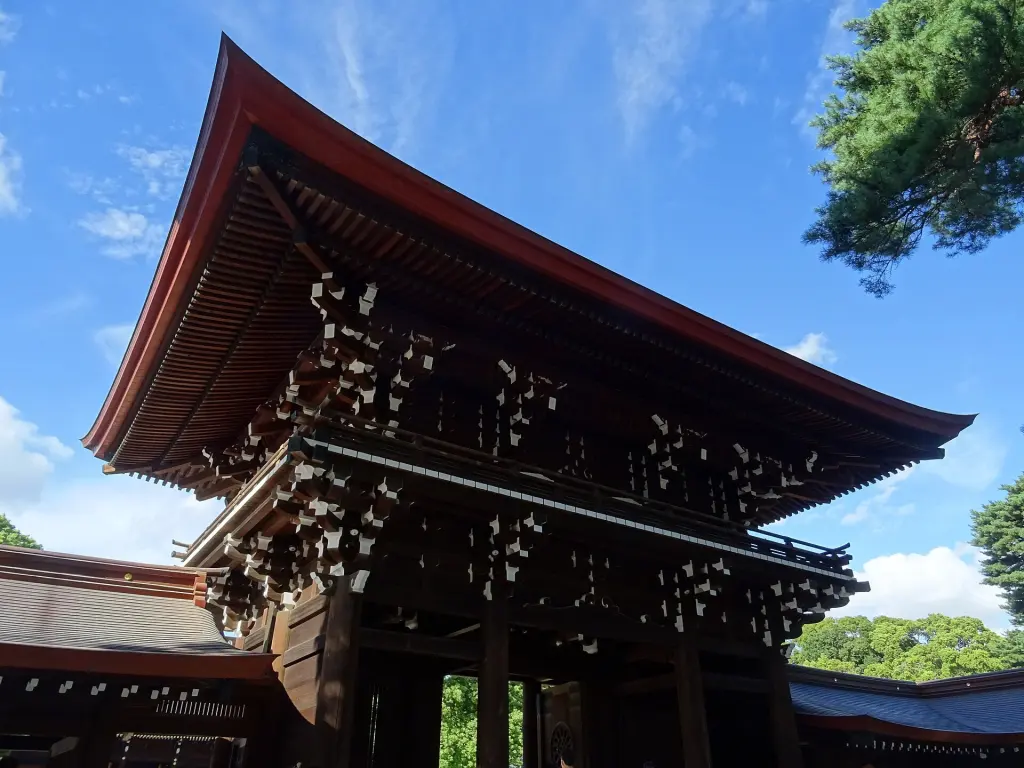
Image: Christophe95 / Wikimedia Commons · CC BY-SA 4.0
Meiji Jingū (明治神宮) is a Shinto shrine in Yoyogi, Tokyo, dedicated to Emperor Meiji and Empress Shōken. It was established in 1920 after public and institutional campaigns to commemorate the imperial couple. The shrine's approximately 70-hectare inner precinct is enclosed by a forest created from about 100,000 donated trees and planned to develop into a self-sustaining woodland over generations. Most principal buildings were destroyed in the air raids of 1945 and reconstructed in 1958, while the forest survived. Meiji Jingū is therefore a modern shrine whose architecture, ritual life, memorial purpose, and ecological planning were deliberately assembled in the twentieth century. It is distinct from the nearby Meiji Jingū Gaien, or Outer Garden, which contains sporting and commemorative facilities outside the main sacred precinct.
Overview
| Japanese name | 明治神宮 |
|---|---|
| Location | Yoyogi, Shibuya, Tokyo |
| Classification | Modern Shinto shrine |
| Enshrined kami | Emperor Meiji and Empress Shōken |
| Established | 1 November 1920 |
| Reconstructed | 1958 after wartime destruction |
| Forest | Approximately 70 hectares of planned woodland |
Foundation and memorial purpose
Emperor Meiji died in 1912 and Empress Shōken in 1914. Their tombs are in Kyoto, but movements to establish a commemorative shrine focused on Yoyogi, a site associated with the imperial estate. Meiji Jingū was dedicated in 1920. Enshrinement transformed memories of the imperial couple into a continuing ritual institution; it should not be confused with a mausoleum or a surviving shrine from the Meiji period itself.
The enshrined kami
The shrine venerates the divine spirits of Emperor Meiji and Empress Shōken. Official interpretation emphasizes their roles in Japan's modern transformation, education, welfare, poetry, and international relations. A historical account must also place the shrine within debates about modern imperial commemoration and State Shinto. Worship at the site is religious practice, while interpretations of the reign and its political legacy belong to wider historical inquiry.
Planning the forest
Foresters including Honda Seiroku planned an ‘eternal forest’ that would regenerate with limited human intervention. Roughly 100,000 trees were donated from across Japan and planted with large-scale volunteer labour. Species were selected and arranged in anticipation of ecological succession over a century or more. Fallen material remains within the protected woodland. The resulting canopy can appear ancient, but its importance lies precisely in being a designed modern ecosystem that matured beyond its initial plantation form.
Architecture, war, and reconstruction
The original main buildings were completed for the 1920 dedication. Air raids destroyed most of the shrine complex in 1945. Public support again contributed to reconstruction, completed in 1958 with changes that included copper roofing for greater fire resistance. Several gates and other structures survived or were separately rebuilt. The present precinct is thus a layered postwar reconstruction within the original forest plan, not an untouched set of 1920 buildings.
Approaches, gates, and sacred space
Long approaches from Harajuku, Yoyogi, and Sangūbashi pass beneath large torii and through dense woodland before reaching the main gate and worship hall. This gradual transition separates the city from the sacred precinct. The principal worship area, inner garden, museum, treasure facilities, and Shiseikan dōjō serve different purposes and access conditions. Meiji Jingū Gaien lies elsewhere and should not be treated as part of the inner sanctuary simply because it shares the name.
Rites, life events, and New Year
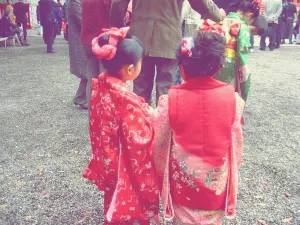
Annual festivals, daily offerings, weddings, first shrine visits for infants, Shichi-Go-San, purification, and private prayers make Meiji Jingū an active religious institution. New Year worship draws especially large crowds. Sake barrels displayed near the approach and barrels of wine offered from overseas are well-known symbols connected with Emperor Meiji's reign and international exchange; they are offerings and commemorative displays, not a general instruction to consume alcohol inside the sacred precinct.
Public memory and urban context
The shrine stands beside Harajuku and Yoyogi, making a deliberately secluded sacred landscape part of one of Tokyo's busiest districts. Its creation linked imperial memory, urban planning, forestry, volunteer participation, and national ritual. Contemporary visitors encounter all of these layers alongside ordinary worship. The forest's ecological success does not erase the political history of the institution, and political history does not exhaust the lived religious meanings attached to the site.
Sources
Last updated: