Karate
Shutō-uchi
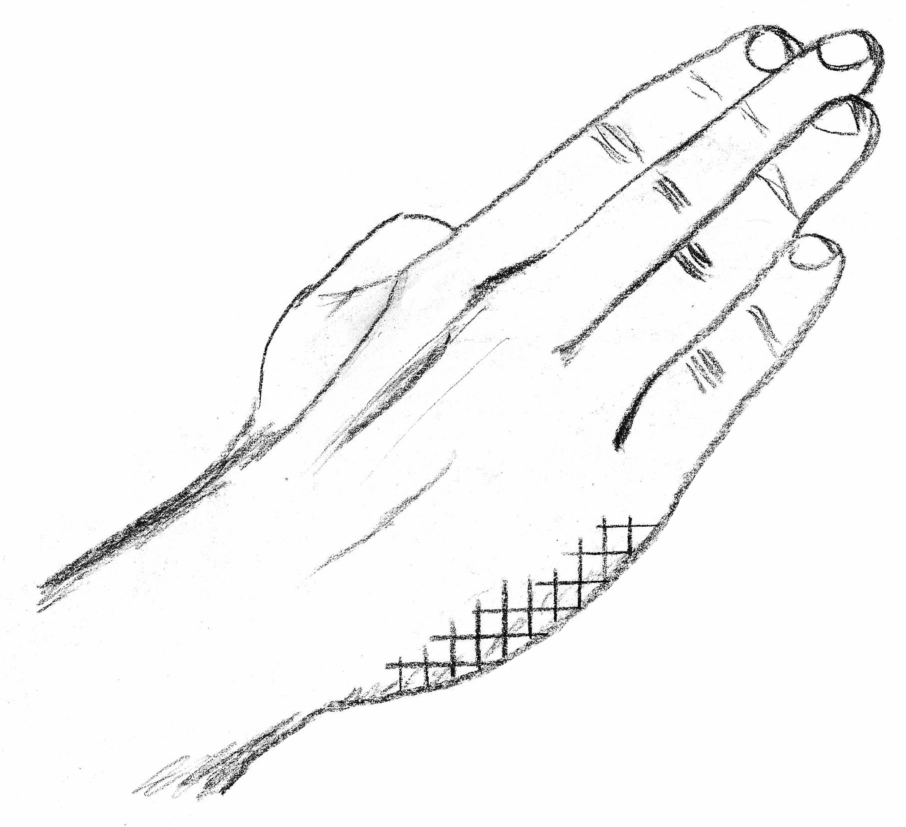
Image: Kurmis / Wikimedia Commons · CC BY 3.0
Overview
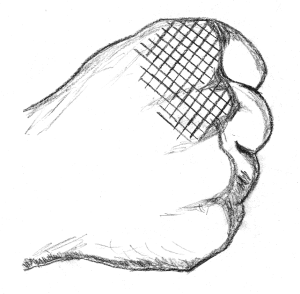
Shutō-uchi turns an open knife hand into a striking surface.
Shutō-uchi (手刀打ち) is a Karate strike using the outer little-finger side of an open hand. The same broad shutō formation also appears in receiving and sweeping actions, so the hand shape alone does not decide whether a movement is uchi or uke. The All Japan Karatedo Federation defines the surface and gives face or head targets as examples, while Japan Karate Association material documents one organisation’s practice models. Path, stance, target, chamber, elbow route, and recovery vary by tradition and drill. Study the hand surface as one part of a whole action, and never turn formal target language into uncontrolled contact.
Bring the fingers together and fold the thumb without forcing tension.
A comfortable wrist carries the little-finger-side surface.
Downward, horizontal, diagonal, and other routes require context.
The hand, elbow, shoulder, stance, and next action remain connected.
- Japanese
- 手刀打ち
- Reading
- しゅとううち
- Common English
- Knife-hand strike · karate chop
- Contact surface
- Outer little-finger side of the open hand
- Classification
- Uchi-waza · striking technique
- Related action
- Shutō-uke · knife-hand reception
01Name & classification
The compound joins the knife-hand form to a striking role.
“Karate chop” is familiar English but can hide the precise surface and training context.
English material may write shuto uchi, shutou uchi, or simply shutō. Display spelling does not establish one mechanic; the source, named variation, and drill do.
02Knife-hand surface
The outer hand edge depends on natural finger and wrist alignment.
The JKF defines the hand form more clearly than it defines one complete technique.
Extend them together
Build an organised open hand without hyperextending or forcing stiffness into the small joints.
Fold it toward the palm
Keep it safely clear of the intended edge rather than splaying it into the contact line.
Connect hand and forearm
A collapsed angle weakens the surface and can increase strain during target or partner work.
03Path & target relationship
The surface remains recognisable while direction and target change.
Formal target language identifies a line to study, not permission for uncontrolled impact.
Set stance, guard, distance, and target
The chamber and body angle belong to the named school or exercise.
Use the prescribed route
Downward, horizontal, diagonal, and other paths create different elbow and forearm relationships.
Maintain posture and awareness
Recovery should preserve joint comfort, balance, and the ability to continue.
04Strike and receiving action
The same knife-hand formation can strike, receive, sweep, clear, or control.
The primary relationship and sequence decide the label.
Shutō-uchi
The knife-hand surface is organised to strike along a named path. Contact surface alone still does not define stance, target, or recovery.
Shutō-uke
The surface receives or sweeps an incoming line. Kata and bunkai may connect that reception to a strike or control without making them identical.
05Selected Uchi-waza family
Shutō-uchi is the open-hand member of this four-surface comparison.
The map distinguishes contact regions before comparing paths or applications.
The little-finger side of an open hand supplies the named striking surface.
Closed fistUraken-uchi裏拳打ちBack-fist knucklesThe index- and middle-finger knuckle area is used from the back-fist side.
Closed fistTettsui-uchi鉄槌打ちHammer-fist edgeThe outer fist beside the little-finger ball creates the hammer-like surface.
Arm segmentEnpi-uchi猿臂打ちElbow regionThe elbow becomes the contact region, principally at close range.
06Kihon, kata & bunkai
Practice progresses from alignment to sequence to a declared partner problem.
Each layer adds context without proving one exclusive application.
Isolate the hand and body relationship
Study hand shape, wrist, path, stance, posture, distance, and recovery. JKA details describe one organisation’s method.
Preserve the surrounding sequence
A knife-hand movement inherits meaning from its turns, stance transitions, rhythm, and adjacent techniques.
Test the identified role
Strike, receive, clear, control, or transition readings must name the kata, lineage, attack, distance, and safety conditions.
07Evidence, rules, variation & safety
A board-breaking study and a competition rulebook do not define everyday partner practice.
Keep every claim inside the boundaries of its source.
Five participants and a board-breaking task
High-speed film, accelerometry, and electromyography documented one historical laboratory task; it is not a universal path, grading standard, or safe-force threshold.
Methods and strike types varied
A review across several combat contexts explains why force and speed figures cannot be transferred automatically to Shutō-uchi.
Open-hand face attacks are prohibited
JKF competition terminology includes uchi, but the broader presence of knife-hand strikes in training does not make every variation legal or scoreable.
Protect the small joints and vulnerable targets
Use qualified supervision, suitable targets, gradual load, and agreed contact; stop when wrist, elbow, shoulder, balance, or partner control deteriorates.
Sources and further reading
- All Japan Karatedo Federation, Shutō.
- All Japan Karatedo Federation, Shutō-uke.
- All Japan Karatedo Federation, Basic Rules of Karatedo.
- Japan Karate Association, Technical Manual for the Instructor.
- Cavanagh and Landa, A Biomechanical Analysis of the Karate Chop.
- Beránek, Votápek and Stastny, Force and velocity of impact during upper limb strikes in combat sports.
Last updated: