Cultural Geography
Japanese Trains
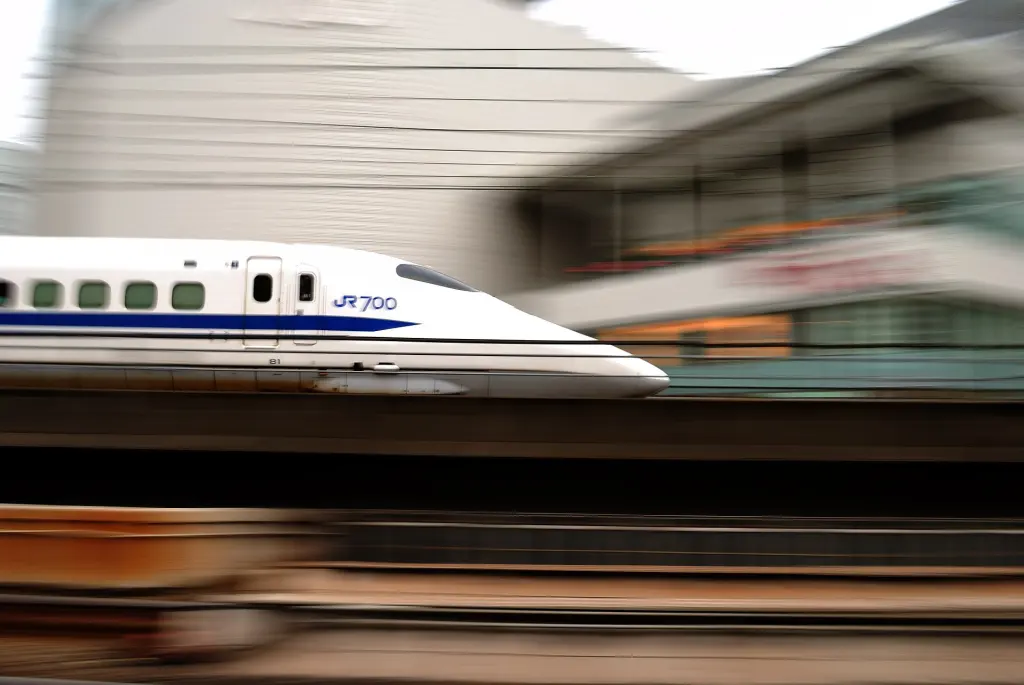
Image: Parag.naik / Wikimedia Commons · Creative Commons Attribution-ShareAlike 3.0 Unported
Japanese trains are not a single system but a dense field of intercity, regional, suburban, subway, tram, and high-speed services operated by many public and private organizations. The first railway in Japan opened between Shimbashi and Yokohama in 1872, and rail soon became an instrument of industrialization, state-building, and everyday mobility. The Tōkaidō Shinkansen, inaugurated in 1964, added a globally influential high-speed model, while metropolitan railways helped shape the growth of Tokyo, Osaka, Nagoya, and other cities. The Japan Railways companies created after the 1987 division of Japanese National Railways coexist with major private railways, municipal subways, third-sector operators, and small local lines. This article treats the railway as infrastructure, business, technology, and cultural space rather than reducing Japanese trains to the bullet train alone.
Overview
| Japanese term | 日本の鉄道 |
|---|---|
| Romanization | Nihon no tetsudō |
| First railway | Shimbashi–Yokohama, 1872 |
| High-speed service | Shinkansen, inaugurated 1964 |
| Major operator groups | JR companies, private railways, public operators |
| JNR restructuring | Division and privatization in 1987 |
| Principal roles | Urban commuting, intercity travel, regional access, freight |
| Article boundary | Rail systems and culture, not a route-by-route timetable guide |
Name and scope
The broad Japanese expression Nihon no tetsudō means the railways of Japan. It includes conventional main lines, commuter railways, subways, streetcars, cable railways, freight services, and the Shinkansen. The everyday word densha often refers to an electric train, but it is not a precise label for every railway vehicle or service.
No single company operates the national network. JR passenger and freight companies, large private railways, municipal or metropolitan operators, joint public-private companies, and community-scale railways overlap. Through-running services can carry one train across infrastructure owned by several operators, making the passenger experience more continuous than the institutional map suggests.
From the first railway to a national network
Japan’s first railway opened on 14 October 1872 between Shimbashi in Tokyo and Yokohama. Rail construction belonged to the Meiji government’s wider program of importing technology, reorganizing administration, and linking ports, cities, and productive regions. Government lines and private ventures expanded together before the Railway Nationalization Act of 1906 brought many major private routes under state control.
The resulting trunk network supported passenger movement, military logistics, postal circulation, and industrial freight. Later development reached Hokkaido, Shikoku, and Kyushu as well as Honshu, but geography, local demand, and gauge choices produced a varied network rather than a perfectly uniform one.
Japanese National Railways and the JR companies
Japanese National Railways, commonly abbreviated JNR, operated the state railway after 1949. By the 1980s it faced heavy debt, labor conflict, and political pressure for restructuring. In April 1987 its operations were divided among six regional passenger companies, a nationwide freight company, and other successor bodies generally known as the JR Group.
The JR companies share historical origins and branding conventions but are separate corporations with different territories and business conditions. JR East, JR Central, and JR West serve the most heavily traveled metropolitan and intercity corridors, while the Hokkaido, Shikoku, and Kyushu companies operate networks with different demographic and geographic challenges.
The Shinkansen
The Tōkaidō Shinkansen opened between Tokyo and Shin-Osaka on 1 October 1964. It used dedicated standard-gauge tracks, centralized traffic control, purpose-built rolling stock, and grade-separated infrastructure. These features made it a system rather than simply a fast locomotive on an older mixed-traffic railway.
Later Shinkansen lines extended high-speed service north, west, and south. The network is important, but it carries only part of Japanese rail travel. Conventional limited expresses, commuter trains, rural diesel services, subways, and trams remain essential to how passengers reach and move within regions.
Urban and commuter rail
Metropolitan railways organize daily life through frequent services, closely spaced stations, timed transfers, and extensive peak-period operations. Tokyo’s network is especially complex because JR routes, private suburban lines, Tokyo Metro, the Toei Subway, and other operators interconnect without forming one institution.
Stations are also urban centers. Large terminals may contain department stores, offices, hotels, restaurants, underground passages, and bus facilities. Fare media and coordinated information simplify travel, but tickets, service categories, and transfer rules still reflect the boundaries between operators.
Private railways and city building
Major private railways developed a distinctive business model around both transport and the places served by transport. Companies such as Hankyu, Tokyu, Seibu, Keio, and Odakyu combined railway construction with suburban housing, retail at terminal stations, leisure destinations, and other real-estate activity.
This model helped create rail-oriented suburbs and concentrated commercial life around stations. It should not be mistaken for a wholly private national system: regulation, public investment, municipal operators, and publicly supported local lines remain important parts of Japanese railway development.
Operations, safety, and passenger practice
Railway operation depends on signaling, automatic train control on many routes, platform procedures, maintenance windows, driver and conductor work, and coordinated control rooms. Punctuality is produced by these systems and by timetable recovery practices; it is not an automatic cultural trait.
Passenger routines include queueing at marked boarding positions, distinguishing local from rapid services, keeping doorways clear, and navigating station-specific transfer paths. Women-only cars, reserved seating, accessibility facilities, and mobile-device etiquette vary by operator, line, and time, so no single custom describes every train.
Railway culture and memory
Trains appear in travel writing, film, anime, photography, station melodies, model railways, and the collecting of tickets or station stamps. Scenic and heritage railways turn movement itself into a destination, while railway museums preserve rolling stock, tools, timetables, and the labor history behind familiar services.
The ekiben, a boxed meal associated with railway stations and journeys, is one example of how transport became linked to regional food identity. Enthusiasts use many specialized labels for interests ranging from rolling stock and timetables to station architecture and railway sound.
Present challenges and boundaries
Railways in dense metropolitan corridors and railways in depopulating regions face very different conditions. Some urban operators manage crowding and capacity, while rural lines confront falling ridership, disaster recovery costs, and debates over replacement by buses or other services.
The popular image of a seamless, uniformly high-speed network therefore conceals substantial variation. Japanese railways are best understood as a changing ecology of institutions and technologies whose strongest lines, smallest branches, stations, and surrounding communities are economically interdependent.
Sources
- Ministry of Land, Infrastructure, Transport and Tourism, Railway Bureau.
- MLIT, Shinkansen: Japanese High-speed Rail.
- Statistics Bureau of Japan, Survey on Railway Transport.
- The Railway Museum, History and rolling-stock exhibitions.
- Japan Center for Asian Historical Records, Railway Board.
- Hitotsubashi University, Diversification strategies of Japanese railway companies.
Last updated: